

Seoul Peace Prize


Seoul Peace Prize
The Seoul Peace Prize was established in 1990 to commemorate the success of the 24th Olympic Games held in Seoul, Korea, an event in which 160 nations from across the world took part, creating harmony and friendship.The significance of the Seoul Olympic Games rests in the fact that the games heralded the termination of age-old political and ideological conflict between the East and the West, fostering a worldwide atmosphere of peace and reconciliation. It also served as an occasion to confirm the possibility of achieving world peace through mutual understanding and cooperation.The success of the Seoul Olympics has a particular meaning to the Korean people whose yearning for peace has been born of an especially challenging history.The Seoul Peace Prize was established to reflect the wishes of the people and to crystallize their desire for ever-lasting peace on earth.
| Sl | Name | Country | Flag | Year | Awarded For |
|---|---|---|---|---|---|
| 17 | Direct Relief | United States | 2025 | have made an outstanding contribution to the harmony of mankind, reconciliation between nations, and world peace. | |
| 16 | Tim Berners-Lee | United Kingdom | 2022 | have made an outstanding contribution to the harmony of mankind, reconciliation between nations, and world peace. | |
| 15 | Thomas Bach | Germany | 2020 | have made an outstanding contribution to the harmony of mankind, reconciliation between nations, and world peace. | |
| 14 | Narendra Modi | India | 2018 | have made an outstanding contribution to the harmony of mankind, reconciliation between nations, and world peace. | |
| 13 | Denis Mukwege | Congo | 2016 | have made an outstanding contribution to the harmony of mankind, reconciliation between nations, and world peace. | |
| 12 | Angela Merkel | Germany | 2014 | have made an outstanding contribution to the harmony of mankind, reconciliation between nations, and world peace. | |
| 11 | Ban Ki-moon | South Korea | 2012 | have made an outstanding contribution to the harmony of mankind, reconciliation between nations, and world peace. | |
| 10 | José Antonio Abreu | Venezuela | 2010 | have made an outstanding contribution to the harmony of mankind, reconciliation between nations, and world peace. | |
| 9 | Suzanne Scholte | United States | 2008 | have made an outstanding contribution to the harmony of mankind, reconciliation between nations, and world peace. | |
| 8 | Muhammad Yunus | Bangladesh | 2006 | have made an outstanding contribution to the harmony of mankind, reconciliation between nations, and world peace. | |
| 7 | Václav Havel | Czech Republic | 2004 | have made an outstanding contribution to the harmony of mankind, reconciliation between nations, and world peace. | |
| 6 | Oxfam | United Kingdom | 2002 | have made an outstanding contribution to the harmony of mankind, reconciliation between nations, and world peace. | |
| 5 | Sadako Ogata | Japan | 2000 | have made an outstanding contribution to the harmony of mankind, reconciliation between nations, and world peace. | |
| 4 | Kofi Annan | Ghana | 1998 | have made an outstanding contribution to the harmony of mankind, reconciliation between nations, and world peace. | |
| 3 | Médecins Sans Frontières | Switzerland | 1996 | have made an outstanding contribution to the harmony of mankind, reconciliation between nations, and world peace. | |
| 2 | George Shultz | United States | 1992 | have made an outstanding contribution to the harmony of mankind, reconciliation between nations, and world peace. | |
| 1 | Juan Antonio Samaranch | Spain | 1990 | have made an outstanding contribution to the harmony of mankind, reconciliation between nations, and world peace. |
Seoul Peace Prize Laureates (2030 ~ 2021)

Direct Relief
Seoul Peace Prize 2025
Direct Relief is a humanitarian organization dedicated to enhancing healthcare access and addressing global medical inequity. Guided by the belief that everyone deserves high-quality care, it provides immediate, direct medical supplies to people threatened by disasters, conflict, disease, and poverty.Founded in 1948 as the William Zimdin Foundation by Estonian immigrant William Zimdin, the organization evolved from his post-WWII relief efforts into the global entity known today as Direct Relief.Operating on a professional and systematic support model, Direct Relief delivers aid—regardless of race or political belief—spanning emergency relief for disasters like hurricanes and wars, maternal health services, and opioid crisis response. What distinguishes its work is the use of cutting-edge logistics and data-driven strategies to ensure swift, accurate delivery to remote regions. It also implements solar-powered infrastructure to optimize medicine storage.Funded entirely by private donations, Direct Relief is recognized for exceptional financial transparency, allocating 99.5% of donations directly to programs. This efficiency maximizes impact, safeguards lives, and restores hope for vulnerable populations worldwide.

Tim Berners-Lee
Seoul Peace Prize 2022
Sir Tim Berners-Lee, who coined the phrase “Data is the heart of the future,” invented the World Wide Web (WWW) in 1989 and provided it to the world for free. This revolutionized access to information, transforming the Web into a platform for human coexistence and earning him recognition as a true digital giant and philanthropist.Berners-Lee actively combats the negative effects of the Web, such as data inequality, monopolization, and fake news. He passionately advocates that Internet access is a fundamental human right.To address issues of data control and privacy violation, he initiated the "Solid Project," an open-source movement designed to grant users data sovereignty—allowing individuals to control where their data is stored and who can access it. Additionally, he launched the "Contract for the Web" to encourage governments and companies to restore the Web's health.Through his efforts to expand freedom, equality, and promote data sovereignty, Sir Tim has significantly contributed to global human welfare and democracy.
Seoul Peace Prize Laureates (2020 ~ 2011)

Thomas Bach
Seoul Peace Prize 2020
Lighting a torch of hope for refugees through the Refugee Olympic Team.Promoting respect for refugee rights through the Olympic Refuge Foundation.Promoting harmony and friendship among states through vitalization of sports in developing countries.Contributing to peace through sport by promoting (Olympic Truce.)Contributing to the successful celebration of PyeongChang 2018 Winter Olympics.Contributing to peace through sport in the Korean Peninsula and Northeast Asia.A persevering Olympic champion and IOC President.

Narendra Modi
Seoul Peace Prize 2018
Prime Minister Narendra Modi, the 14th Seoul Peace Prize laureate, has been recognized for his contributions to both the Indian and global economies and for promoting regional and international peace.Through 'Modinomics,' he initiated major economic reforms to attract foreign investment, making India the world's fastest-growing major economy and a prime investment destination under the 'Make in India' initiative. These changes aim to create jobs and reduce social and economic disparity.Domestically, Modi launched the Jan Dhan Yojana and the Direct Benefit Transfer Scheme to provide financial sector access and welfare benefits to the poor, supporting his philosophy of 'Sabka Saath, Sabka Vikas' (Collective Efforts, Inclusive Growth). He also tackled corruption through currency reform and promoted public health via the Clean India Mission.Globally, his 'Modi Doctrine,' implemented through the Neighbourhood First and Act East policies, has strengthened relations in Asia and with major world powers. Furthermore, he champions global environmental improvement by leading the International Solar Alliance and addressing plastic pollution.

Denis Mukwege
Seoul Peace Prize 2016
Dr. Denis Mukwege is a gynecological surgeon and the founder of Panzi Hospital in Bukavu, Democratic Republic of the Congo (DRC). Established in 1999, the hospital began as a clinic for gynecological and obstetric care.He and his staff have cared for 48,482 survivors of sexual violence up to 2015, victims of conflicts in the DRC where mass rape was used as a weapon of war. Dr. Mukwege offers comprehensive rehabilitation through programs like "Maison Dorcas," which provides physical, psychological, educational, financial, and legal services, aiding the victims' return to society and contributing to community recovery and peace restoration.Dr. Mukwege is also praised as a defender of peace for his fearless activism. He strongly condemns the use of rape as a weapon of war by armed forces seeking to secure mineral resources. Despite threats to his life, he advocates at the UN and through public interviews, demanding that those responsible be brought to justice and urging international intervention to protect human rights and end unjust conflicts for women and children.
View More
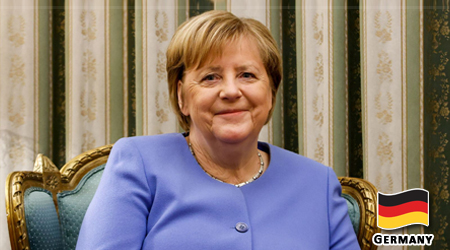
Angela Merkel
Seoul Peace Prize 2014
While serving as UN Secretary-General from January 2007, Ban Ki-moon aggressively pursued the three core goals of the UN: international peace and security, sustainable development, and human rights improvement. He demonstrated outstanding leadership during unprecedented global challenges, including political crises, globalization issues, and environmental threats.A significant achievement was his active fulfillment of the UN's 'Responsibility to Protect' during the 2011 Arab Spring, preventing anti-humanitarian crimes, saving many lives, and earning praise for making the principle normative. Through preventive diplomacy and seeking root causes of conflicts, he contributed significantly to resolving disputes, including aiding democratization in Egypt and Libya and assisting South Sudan’s independence efforts.Secretary-General Ban also championed global strategy to promote the health care of women and children and secured an assistance fund of $60 billion to implement the UN Millennium Development Goals and reduce poverty.Furthermore, he led continuous efforts to reform the UN into a more transparent, efficient, and results-oriented organization, introducing asset disclosure for senior officials and establishing an ethics office. As the first Korean national to serve and be reelected as UN head, he significantly upgraded South Korea's international recognition.
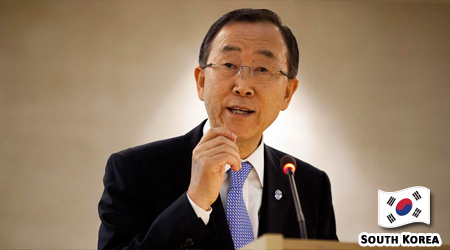
Ban Ki moon
Seoul Peace Prize 2012
Dr. Jose Antonio Abreu, recognizing the social problems of violence and drug abuse in the slums of Caracas, Venezuela, began teaching music to 11 juveniles, including delinquents, in 1975. He purchased instruments out of his own pocket, asking the youth to hold clarinets instead of guns.This effort evolved into 'El Sistema' (The System), a music arts education system for children and youth, expanded with the support of Venezuela's Ministry of Welfare. Dr. Abreu conceived of 'El Sistema' as a social movement, viewing the orchestra as an example of an ideal society where early participation promotes positive changes in social adaptation.The purpose of 'El Sistema' is not to raise professional musicians, but to free youngsters from crime and drug abuse. Over 35 years, 300,000 children and juveniles participated, 80% of whom were from low-income classes. By learning and practicing music, participants' daily focus shifted from drug trafficking to something worthwhile.'El Sistema' improved social welfare by providing educational opportunities, allowing marginalized children to express themselves, find a sense of belonging, and build hope for a better future. The orchestra's performances also promoted social integration in developing countries like Venezuela by uniting people from different social strata through harmonious music.
Seoul Peace Prize Laureates (2010 ~ 1990)
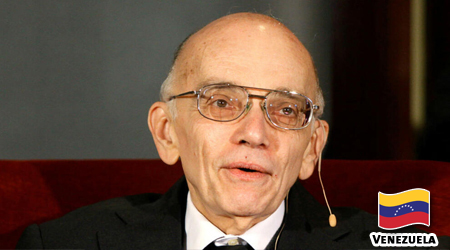
José Antonio Abreu
Seoul Peace Prize 2010
Dr. Jose Antonio Abreu began teaching music to juveniles living in poverty in 1975 in a garage in the slums of Caracas, Venezuela. The area was plagued by violence, gun crime, and drug abuse. The program started as an education and rehabilitation effort for 11 juveniles, including some with multiple previous convictions. Dr. Abreu bought the instruments himself, asking the participants only to hold instruments instead of guns.This grew into 'El Sistema' (The System), a music arts education system for infants and juveniles. Dr. Abreu viewed the orchestra as the best model of an ideal society and the program's primary goal is not to produce successful musicians, but to free youngsters from crime and drug abuse. Over 35 years, 300,000 infants and juveniles participated, 80% of whom were from the low-income class. Participants learn and practice music for 4 hours daily in over 200 regional centers, switching their focus from activities like drug trafficking to something worthwhile.'El Sistema' improved social welfare by providing educational opportunities to street children, giving them a means to express themselves and hope for a better future. Participation fostered a sense of belonging, and the harmony created in the orchestra led them to embrace and respect one another. The program entirely changed the values and view of life for the juveniles and infants. Furthermore, 'El Sistema' performances promoted social integration among different social strata in developing countries like Venezuela, where the gap between the rich and the poor is wide, by uniting people through music.
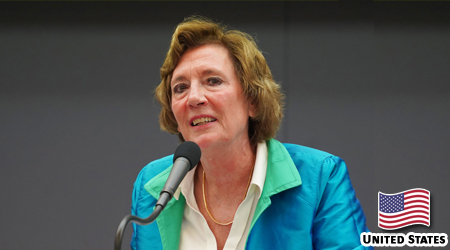
Suzanne Scholte
Seoul Peace Prize 2008
Suzanne Scholte is a prominent human rights activist who began her career as an advisor to a U.S. legislator before becoming president of the Defense Forum Foundation. Since then, she has been dedicated to promoting the human rights conditions of the underprivileged globally.Her work intensified regarding North Korean human rights starting in 1996, after hearing testimonies of atrocities. Scholte was instrumental in organizing the first U.S. Senate hearing on North Korea’s political prison camps in 1999. She raised international awareness by revealing the realities of human rights violations in North Korea and the miserable conditions facing defectors in China. Her continuous efforts were decisive in the unanimous passage of the North Korea Human Rights Act of 2004 in the U.S. Congress.Scholte also organized the first North Korea Freedom Day in 2004 and North Korea Freedom Week 2006, exposing the regime's abduction of Japanese citizens and its continued holding of Korean War POWs. She used the 2008 Beijing Summer Olympics to protest the repatriation of North Korean refugees by leading a campaign to wear 'Freedom to North Koreans' bracelets.Her humanitarian focus is not limited to North Korea; she has also raised awareness about the plight of the Sahrawi people of Western Sahara, petitioning the U.N. General Assembly to address the issue of Sahrawi refugees and their self-determination referendum.
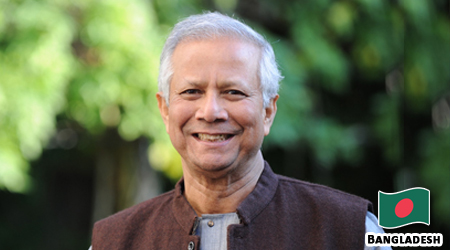
Muhammad Yunus
Seoul Peace Prize 2006
Dr. Muhammad Yunus, born in Chittagong, Bangladesh in 1940, received a doctorate in economics from Vanderbilt University before teaching at the University of Chittagong. Faced with the economic hardship of his countrymen, he grew skeptical of traditional economics and devoted his life to fighting poverty.Dr. Yunus concluded that poverty was due to social institutions that demanded collateral for loans, not laziness. This led him to develop the epoch-making microcredit system, which provides small, collateral-free loans to the poor. This system has enabled tens of millions globally to start income-generating activities.Championing individual liberty and free enterprise, Dr. Yunus regards credit as a human right. Believing women and homemakers acutely feel poverty, he decided to lend money primarily to women, who constitute about 96 percent of borrowers at his Grameen Bank. This approach has brought amazing results, enhancing the status of women in a male-dominant society.The microcredit movement is hailed as a "revolutionary" method in fighting poverty and has been adopted worldwide, including in the United States and Korea. The United Nations underscored its global commitment to this fight by designating 2005 as the year of the microcredit.
View More
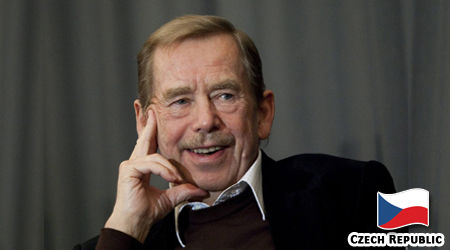
Václav Havel
Seoul Peace Prize 2004
Václav Havel was a pivotal leader of the intellectual dissidence that helped bring about the collapse of Communism in central and eastern Europe. Following the Soviet invasion of Czechoslovakia after the 1968 Prague Spring, he courageously protested the hard-line Communist regime with his writings, choosing to remain in the country despite the repression. He refused exile, stating, "The solution to the situation does not lie in leaving it. Fourteen million people can’t just go and leave Czechoslovakia".Havel spent the 1980s frequently imprisoned while writing plays that were banned in his own country. His courageous stance galvanized dissident movements across central and eastern Europe, ultimately leading to the downfall of the totalitarian system.He became the first non-Communist president of his country since 1948 and served for 13 years. As a respected senior statesman today, Havel remains a fierce advocate for democracy and human rights. He uses his moral authority to condemn abuses globally, including in Myanmar, Cuba, and North Korea, and has urged the international community to take firm action against the Stalinist state.

Oxfam
Seoul Peace Prize 2002
Oxfam is one of the world's largest non-governmental relief organizations, established in 1942 by citizens of Oxford, United Kingdom, to aid Greeks suffering under Nazi rule during World War II. The organization is committed to building a "world without poverty and suffering".Oxfam's work focuses on identifying the structural causes of poverty and redressing the resulting social injustice. Instead of relying only on food aid, the organization assists people in combating food shortages by "enabling them to grow enough to feed themselves". Additionally, Oxfam helps many people start their own businesses through technical education aimed at self-reliance.Oxfam was awarded the Seoul Peace Prize in 2002 in recognition of its outstanding achievements in relieving people from poverty, plight, and calamity.
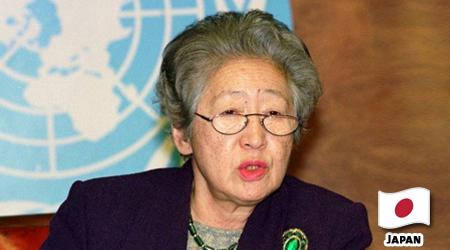
Sadako Ogata
Seoul Peace Prize 2000
Mrs. Sadako Ogata, born in Tokyo, Japan in 1927, earned a Ph.D. in Political Science from the University of California at Berkeley in 1963. Prior to her work with refugees, she held various distinguished roles, including Dean of the Faculty of Foreign Studies at Sophia University in Tokyo from 1989. She also served as Chairman of the Executive Board of UNICEF from 1976 to 1979, and as Envoy Extraordinary and Minister Plenipotentiary at the Permanent Mission of Japan to the United Nations from 1978 to 1979.Mrs. Ogata assumed office as the UN High Commissioner for Refugees (UNHCR) on February 18, 1991. Guided by her belief that "No one becomes a refugee at his or her own will", she spent 10 years visiting numerous conflict-torn locations to alleviate the plight of refugees.To help those displaced, she urged governments to sign conventions on refugee protection, make donations for relief funds, and establish refugee camps. Her efforts helped make the UNHCR one of the world's principal humanitarian agencies, leading tens of millions of refugees globally to widely consider her a "godmother".
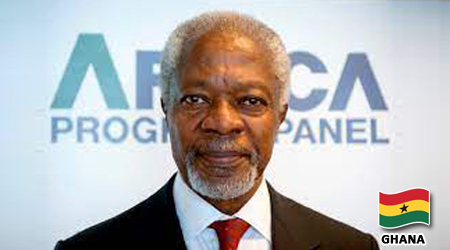
Kofi Annan
Seoul Peace Prize 1998
Mr. Kofi Annan dedicated his career to the United Nations, beginning in 1962 at the age of 24 as an Administrative Office and Budget Officer at the World Health Organization (WHO). His varied career focused extensively on management, refugee issues, and peacekeeping.Key UN Roles and Experience
His roles across the UN system included:Special Representative of the Secretary-General to the former Yugoslavia.Assistant Secretary-General for Peace-keeping Operations.Director of Budget in the Financial Services.Deputy Director of Administration and Head of Personnel at the office of the United Nations High Commissioner for Refugees (UNHCR).Post-Cold War Peacekeeping and Reform
Based on his expertise, Mr. Annan helped the UN formulate new approaches for the complex post-Cold War world. He worked to strengthen the Organization's capacity for both traditional peace-keeping missions and multi-functional operations, introducing new tasks like "preventive deployment." To manage the dramatic growth in operations, he also oversaw the creation of a "situation center" that monitors peacekeeping operations 24/7.Diplomacy and Conflict Resolution
Mr. Annan successfully carried out a number of sensitive diplomatic assignments, demonstrating a strong ability to avert crises and negotiate peace:He negotiated the repatriation of over 900 international staff and the release of Western hostages in Iraq after the 1990 Gulf War.In February of one year (the source doesn't specify which), he visited Iraq and reached an agreement with Saddam Hussein to end a standoff over UN arms inspections, thereby averting the threat of another war in the Gulf.He made great contributions to the peaceful resolution of conflicts and the maintenance of security in locations such as the former Yugoslavia and Africa.Advocacy for Global Justice
Mr. Annan played a leading role in the conclusion of the convention for the International Criminal Court (ICC), which is designed to administer justice for criminal acts against humanity, including war crimes and genocide. His efforts continued to focus on the enhancement of world peace and harmony through the United Nations.

Médecins Sans Frontières
Sample Award
Médecins Sans Frontières (MSF), or Doctors Without Borders, was formally established as an international non-governmental organization in 1971, with its headquarters in Paris, France. It is recognized as the world's largest relief organization for those suffering from war, natural disaster, disease, and famine.Core Principles and Operations
Founding Principles: MSF operates under the principles of neutrality, impartiality, and the volunteer spirit.Independence: It is free of political, regional, and economic influence.Structure: MSF maintains a decentralized structure with an International Office in Brussels, Operational Centers in 6 countries (including France), and Delegate Offices in 13 countries (including Australia and Japan).Relief System: MSF maintains well-organized, large-scale independent relief systems, capable of supplying relief materials and carrying out aid activities within 24 hours anywhere in the world, even in the most remote regions.Personnel: Most members are volunteer medical doctors and nurses, averaging 2,900 annually.Funding: Its financial resources come from 2.7 million individual contributors across the globe.Global Impact
MSF has provided aid and relief to 70 countries and, as of the time of this summary, had medical aid teams stationed for relief efforts in 35 nations, including Rwanda, Bosnia, and Chechnya. For instance, the organization was the only non-governmental entity to dispatch aid personnel to flood-stricken North Korea (last year, as of the time of the summary) to provide medicine, medical equipment, and contain epidemics.The Seoul Peace Prize Screening Committee highly recognized MSF as a "manifestation of humanitarianism in action," believing its contributions to the harmony of mankind and world peace well deserved the award.

George Shultz
Seoul Peace Prize 1992
George P. Shultz, who earned his Ph.D. in Industrial Economics from MIT in 1949, had a distinguished career spanning academia and U.S. government. He taught at MIT and the University of Chicago, where he served as Dean of the Graduate School of Business.Government and Diplomacy
Shultz held four cabinet-level posts under Presidents Eisenhower and Nixon, including Secretary of Labor (1969–70), Director of the Office of Management and Budget (1970–72), and Secretary of the Treasury (1972–74).His most pivotal role was as the 60th U.S. Secretary of State (1982–89) under President Reagan. In this capacity, Shultz played a decisive role in ending the Cold War, assisting in successful U.S.-Soviet summit meetings and arms reduction talks, establishing himself as a major contributor to world peace.Commitment to Peace
Driven by a philosophy of peace and anti-terrorism, Shultz took decisive action during the 1983 Korean Airlines incident. He also personally conveyed his firm resolve to Soviet leadership (Gorbachev and Shevardnadze) that the U.S. would not tolerate any outside terrorist activities at the Seoul Olympics, securing assurances for the Games' successful and peaceful hosting.

Juan Antonio Samaranch
Seoul Peace Prize 1990
Juan Antonio Samaranch, IOC President from 1980, was the first recipient of the Seoul Peace Prize, recognized for his immense contribution to global harmony and peace through the Olympic ideal.Samaranch believed the Olympic Games could overcome political, ideological, and religious distrust. He successfully expanded the number of IOC member nations from 143 to 167, ensuring the Movement's near-universal reach.His most critical achievement was ensuring the 1988 Seoul Olympics succeeded despite boycott threats following two politically tainted Games. He personally worked to secure the participation of East-bloc nations and those without diplomatic ties to Korea, ensuring East and West could meet in the spirit of reconciliation and fair competition. He also facilitated dialogue between the two Koreas' Olympic Committees.Furthermore, Samaranch increased financial resources through the Olympic Solidarity Fund to promote sports in developing countries, championed women's participation in the Movement, reinforced the fight against doping, and actively opposed racial discrimination (e.g., against apartheid). His efforts embodied the ideals of world peace and harmony.