


Grawemeyer Award


Grawemeyer Award
The Grawemeyer Award for Ideas Improving World Order is given to those who have taken on issues of world importance and presented viewpoints that could lead to a more just and peaceful world. Each idea supports one noble cause: to inspire us all to work together for the common good.The Award is presented annually to the winner of a competition designed to stimulate the recognition, dissemination and critical analysis of outstanding proposals for improving world order.Prize Amount The Grawemeyer Award in World Order is accompanied by a prize of $100,000, which is presented in full during the awards ceremony.Eligibility Submissions will be judged according to originality, feasibility and potential impact, not by the cumulative record of the nominee. They may address a wide range of global concerns including foreign policy and its formation; the conduct of international relations or world politics; global economic issues, such as world trade and investment; resolution of regional, ethnic or racial conflicts; the proliferation of destructive technologies; global cooperation on environmental protection or other important issues; international law and organization; any combination or particular aspects of these, or any other suitable idea which could at least incrementally lead to a more just and peaceful world order.
| Sl | Name | Country | Flag | Year | Awarded For |
|---|---|---|---|---|---|
| 45 | John M. Owen IV | United States | 2025 | for Ideas Improving World Order that leads to a more just and peaceful world. | |
| 44 | Neta Crawford | United States | 2024 | for Ideas Improving World Order that leads to a more just and peaceful world. | |
| 43 | Steven Feldstein | United States | 2023 | for Ideas Improving World Order that leads to a more just and peaceful world. | |
| 42 | Mona Lena Krook | United States | 2022 | for Ideas Improving World Order that leads to a more just and peaceful world. | |
| 41 | Ken Conca | United States | 2021 | for Ideas Improving World Order that leads to a more just and peaceful world. | |
| 40 | Susan Randolph | United States | 2019 | for Ideas Improving World Order that leads to a more just and peaceful world. | |
| 39 | Terra Lawson-Remer | United States | 2019 | for Ideas Improving World Order that leads to a more just and peaceful world. | |
| 38 | Sakiko Fukuda-Parr | Japan | 2019 | for Ideas Improving World Order that leads to a more just and peaceful world. | |
| 37 | Scott Straus | United States | 2018 | for Ideas Improving World Order that leads to a more just and peaceful world. | |
| 36 | Dana Burde | United States | 2017 | for Ideas Improving World Order that leads to a more just and peaceful world. | |
| 35 | Victor Boutros | United States | 2016 | for Ideas Improving World Order that leads to a more just and peaceful world. | |
| 34 | Gary Haugen | United States | 2016 | for Ideas Improving World Order that leads to a more just and peaceful world. | |
| 33 | Mark S. Weiner | United States | 2015 | for Ideas Improving World Order that leads to a more just and peaceful world. | |
| 32 | Jacques Hymans | United States | 2014 | for Ideas Improving World Order that leads to a more just and peaceful world. | |
| 31 | Maria J. Stephan | United States | 2013 | for Ideas Improving World Order that leads to a more just and peaceful world. | |
| 30 | Erica Chenoweth | United States | 2013 | for Ideas Improving World Order that leads to a more just and peaceful world. | |
| 29 | Séverine Autesserre | France | 2012 | for Ideas Improving World Order that leads to a more just and peaceful world. | |
| 28 | Kevin Bales | United States | 2011 | for Ideas Improving World Order that leads to a more just and peaceful world. | |
| 27 | Trita Parsi | Iran | 2010 | for Ideas Improving World Order that leads to a more just and peaceful world. | |
| 26 | Michael Johnston | United States | 2009 | for Ideas Improving World Order that leads to a more just and peaceful world. | |
| 25 | Philip E. Tetlock | United States | 2008 | for Ideas Improving World Order that leads to a more just and peaceful world. | |
| 24 | Roland Paris | United States | 2007 | for Ideas Improving World Order that leads to a more just and peaceful world. | |
| 23 | Fiona Terry | United States | 2006 | for Ideas Improving World Order that leads to a more just and peaceful world. | |
| 22 | Roberta Cohen | United States | 2005 | for Ideas Improving World Order that leads to a more just and peaceful world. | |
| 21 | Francis Deng | South Sudan | 2005 | for Ideas Improving World Order that leads to a more just and peaceful world. | |
| 20 | Peter Drahos | Australia | 2004 | for Ideas Improving World Order that leads to a more just and peaceful world. | |
| 19 | John Braithwaite | Australia | 2004 | for Ideas Improving World Order that leads to a more just and peaceful world. | |
| 18 | Stuart Kaufman | United States | 2003 | for Ideas Improving World Order that leads to a more just and peaceful world. | |
| 17 | Janine Wedel | United States | 2001 | for Ideas Improving World Order that leads to a more just and peaceful world. | |
| 16 | Kathryn Sikkink | United States | 2000 | for Ideas Improving World Order that leads to a more just and peaceful world. | |
| 15 | Margaret E. Keck | United States | 2000 | for Ideas Improving World Order that leads to a more just and peaceful world. | |
| 14 | Herbert Kelman | Australia | 1997 | for Ideas Improving World Order that leads to a more just and peaceful world. | |
| 13 | Aaron Wildavsky | United States | 1996 | for Ideas Improving World Order that leads to a more just and peaceful world. | |
| 12 | Max Singer | United States | 1996 | for Ideas Improving World Order that leads to a more just and peaceful world. | |
| 11 | Gareth Evans | Australia | 1995 | for Ideas Improving World Order that leads to a more just and peaceful world. | |
| 10 | Mikhail Gorbachev | Russia | 1994 | for Ideas Improving World Order that leads to a more just and peaceful world. | |
| 9 | Donald Harman Akenson | United States | 1993 | for Ideas Improving World Order that leads to a more just and peaceful world. | |
| 8 | John Cobb | United States | 1992 | for Ideas Improving World Order that leads to a more just and peaceful world. | |
| 7 | Herman Daly | United States | 1992 | for Ideas Improving World Order that leads to a more just and peaceful world. | |
| 6 | Samuel Huntington | United States | 1992 | for Ideas Improving World Order that leads to a more just and peaceful world. | |
| 5 | The United Nations World Commission on Environment and Development | United Nations | 1991 | for Ideas Improving World Order that leads to a more just and peaceful world. | |
| 4 | Robert Jervis | United States | 1990 | for Ideas Improving World Order that leads to a more just and peaceful world. | |
| 3 | Robert Keohane | United States | 1989 | for Ideas Improving World Order that leads to a more just and peaceful world. | |
| 2 | Ernest R. May | United States | 1988 | for Ideas Improving World Order that leads to a more just and peaceful world. | |
| 1 | Richard Neustadt | United States | 1988 | for Ideas Improving World Order that leads to a more just and peaceful world. |
Grawemeyer Award Laureates (2030 ~ 2021)
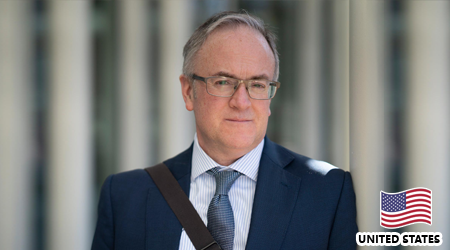
John M. Owen IV
Grawemeyer Award 2025
John M. Owen IV is a distinguished American political scientist, currently serving as the Ambassador Henry J. and Mrs. Marion R. Taylor Professor of Politics at the University of Virginia. In 2025, he was awarded the University of Louisville Grawemeyer Award for Ideas Improving World Order for his book, The Ecology of Nations: American Democracy in a Fragile World Order. His research offers a compelling analogy, describing the international arena as an "ecosystem" where great powers actively reshape norms, institutions, and trade rules—or "engineer" the environment—to favor their specific regime type, whether democratic or authoritarian.In February 2026, Owen continues his influential work, examining the competitive dynamics between global powers and the resulting challenges for contemporary democracies. As of February 27, 2026, his Grawemeyer-winning research is frequently cited for its sophisticated integration of international relations theory, history, and evolutionary concepts to explain why democracies feel besieged and how they might strategically adapt. His career reinforces the principle that understanding the external pressures exerted by the global political environment is essential for policymakers seeking to sustain constitutional self-government and foster a more resilient and democratic world order.

Neta Crawford
Grawemeyer Award 2024
Neta Crawford is a distinguished American scholar of international relations, recognized for her research on the ethics of war and the environmental impact of military activities. In 2024, she was awarded the University of Louisville Grawemeyer Award for Ideas Improving World Order for her book, The Pentagon, Climate Change, and War: Charting the Rise and Fall of Military Emissions (2022). Her work is notable for providing the first comprehensive assessment of the U.S. military’s global greenhouse gas emissions, arguing that dependence on fossil fuels is fundamentally intertwined with military strategy and poses a significant risk to global stability.In February 2026, Dr. Crawford serves as the Montague Burton Professor of International Relations at the University of Oxford. Her ongoing research continues to bridge the fields of climate science and national security, challenging policymakers to rethink how environmental sustainability must be integrated into defense strategy. As of February 27, 2026, her Grawemeyer-winning work is frequently cited as a landmark contribution to international security studies, reinforcing the principle that addressing the climate crisis requires an honest, data-driven accounting of the carbon footprints produced by the world's most powerful military institutions to achieve a more sustainable and secure global order.

Steven Feldstein
Grawemeyer Award 2023
Steven Feldstein is an American political scientist and senior fellow at the Carnegie Endowment for International Peace, where his research focuses on technology, democracy, and international relations. In 2023, he was awarded the University of Louisville Grawemeyer Award for Ideas Improving World Order for his book, The Rise of Digital Repression: How Technology is Reshaping Power, Politics, and Resistance (2021). The award recognized his analysis of how governments utilize digital tools—such as internet shutdowns, AI surveillance, and disinformation campaigns—to monitor dissidents, censor journalists, and consolidate power, ultimately posing a significant challenge to democratic institutions and global human rights.In February 2026, Feldstein continues to be a leading expert on the intersection of digital technology and governance. His work remains vital as he examines the geopolitical implications of evolving technologies, including the use of drones in conflict and the development of digital authoritarianism. This week, on February 27, 2026, his research is frequently cited by policymakers and civil society organizations as a critical resource for understanding how to mitigate the risks of digital repression. His career highlights the urgent necessity of addressing how modern tools can be harnessed to either suppress or advance the global struggle for democracy.
View More

Mona Lena Krook
Grawemeyer Award 2022
Mona Lena Krook is an American political scientist and Distinguished Professor at Rutgers University, where she chairs the Women and Politics Ph.D. program. In 2022, she was awarded the University of Louisville Grawemeyer Award for Ideas Improving World Order for her book, Violence against Women in Politics. Her research identifies this phenomenon as a distinct threat to democracy, categorized into physical, psychological, sexual, economic, and semiotic forms. By documenting how these acts aim to exclude women from public life, Krook’s work provides both a theoretical framework and actionable solutions for international organizations, governments, and activists to ensure safer political participation.As of February 2026, Krook remains a leading expert in the field, drawing on her extensive career in gender studies and electoral representation. She has collaborated globally with groups such as the National Democratic Institute on the #NotTheCost campaign, which seeks to stop violence against women in political roles. This week, on February 27, 2026, her Grawemeyer-winning research continues to be highly cited as a critical tool for policymakers, reinforcing the principle that gender equity and the protection of women’s rights are foundational to establishing a more just, peaceful, and stable global order.

Ken Conca
Grawemeyer Award 2021
Ken Conca is an American professor of international relations at American University, recognized for his expertise in global environmental politics, water governance, and the role of the United Nations. In 2021, he was awarded the University of Louisville Grawemeyer Award for Ideas Improving World Order for his book, An Unfinished Foundation: The United Nations and Global Environmental Governance. His work argues that the United Nations must more effectively integrate human rights and peacebuilding into its environmental strategies, advocating for a approach that treats a safe, healthy environment as a basic human right and strengthens the Security Council’s role in its protection.
+2In February 2026, Conca continues his academic and advisory work, focusing on climate adaptation, environmental peacebuilding, and the social construction of risk. As of February 27, 2026, his Grawemeyer-winning research remains a cornerstone for scholars and policymakers examining how international institutions can better address the complex intersection of ecological stability, conflict, and human security. His career demonstrates the importance of critical, institutional analysis in fostering a more resilient and sustainable global order, emphasizing that effective governance requires transcending traditional, narrow approaches to environmental management.
Grawemeyer Award Laureates (2020 ~ 2011)

Susan Randolph
Grawemeyer Award 2019
Susan Randolph is an American economist and Professor Emeritus at the University of Connecticut, recognized for her significant contributions to the study of human rights and economic development. In 2019, she was jointly awarded the University of Louisville Grawemeyer Award for Ideas Improving World Order along with co-authors Sakiko Fukuda-Parr and Terra Lawson-Remer. The award honored their seminal 2015 book, Fulfilling Social and Economic Rights, which introduced the Social and Economic Rights Fulfillment (SERF) Index. This innovative, data-driven tool allows nations to measure their progress in providing fundamental rights such as food, health, education, and housing to their citizens.In February 2026, Randolph's research remains highly influential in global development and advocacy circles, serving as a standard for monitoring how effectively governments utilize their resources to ensure human dignity. Her work continues to provide a rigorous framework for policymakers and civil society organizations worldwide to address systemic disparities in rights fulfillment. As of February 27, 2026, her Grawemeyer-winning collaboration is frequently cited as a landmark contribution that shifted the global discourse toward measurable, rights-based approaches to economic progress. Her career validates the principle that when scientific rigor is applied to human rights, it creates an essential, actionable instrument for fostering a more just and equitable world.

Terra Lawson-Remer
Grawemeyer Award 2019
Terra Lawson-Remer is an American economist, attorney, and public official recognized for her innovative work at the intersection of human rights and economic policy. In 2019, she was awarded the University of Louisville Grawemeyer Award for Ideas Improving World Order along with co-authors Sakiko Fukuda-Parr and Susan Randolph. The award honored their book, Fulfilling Social and Economic Rights, which introduced the Social and Economic Rights Fulfillment (SERF) Index. This tool provides a data-driven framework to measure how well nations utilize their available resources to provide fundamental rights—such as food, health, and education—thereby holding governments accountable for their "progressive realization" of human rights.In February 2026, Lawson-Remer continues to apply her expertise in governance and equity as the Chair of the San Diego County Board of Supervisors. Having been re-elected to the board and selected as its chair for 2026, she is currently leading efforts to reform county policy, focusing on transparency, environmental sustainability, and public accountability. This week, on February 27, 2026, her Grawemeyer-winning research remains highly relevant as a global standard for measuring societal well-being beyond mere GDP. Her career serves as a bridge between high-level academic theory and practical, local-level policy, validating the principle that rigorous data can be a powerful instrument for fostering justice and improving world order.

Sakiko Fukuda-Parr
Grawemeyer Award 2019
Sakiko Fukuda-Parr is a distinguished Japanese development economist and Professor of International Affairs at The New School. In 2019, she was awarded the University of Louisville Grawemeyer Award for Ideas Improving World Order along with co-authors Terra Lawson-Remer and Susan Randolph. The award honored their book, Fulfilling Social and Economic Rights, which introduced the Social and Economic Rights Fulfillment (SERF) Index. This innovative framework provides a robust, data-driven method for measuring how effectively nations utilize their available resources to guarantee fundamental rights such as food, health, education, and housing, moving beyond simple income metrics to evaluate state performance.In February 2026, Dr. Fukuda-Parr continues to be a leading authority on global goal-setting and the political determinants of health equity. She remains deeply involved in decolonizing international affairs and analyzing the impact of digital technologies on human rights. This week, on February 27, 2026, her Grawemeyer-winning research is frequently cited by international organizations seeking to hold governments accountable for "progressive realization" of rights. Her career validates the principle that rigorous, quantitative indicators—when rooted in human rights law—are essential tools for dismantling systemic inequalities and fostering a more just and inclusive global order.
View More

Scott Straus
Grawemeyer Award 2018
Scott Straus is a distinguished American political scientist and former journalist celebrated for his profound research on genocide and political violence. In 2018, he was awarded the University of Louisville Grawemeyer Award for Ideas Improving World Order for his book, Making and Unmaking Nations: War, Leadership, and Genocide in Modern Africa. The award recognized his innovative theory that "founding narratives"—the core political messages and ideologies of national leaders—act as tipping points that either drive a society toward mass violence or serve as a source of restraint, even in highly volatile conditions.In February 2026, Dr. Straus serves as a Professor and Chair of the Department of Political Science at the University of California, Berkeley. His work continues to influence global policy on atrocity prevention, bridging the gap between academic theory and real-world intervention. This week, on February 27, 2026, his earlier Grawemeyer recognition is frequently highlighted as a landmark in human rights scholarship. His legacy underscores the principle that by identifying the specific political conditions that precede mass killing, the international community can move toward more effective, early-stage strategies to protect vulnerable populations and foster lasting global order.

Dana Burde
Grawemeyer Award 2017
Dana Burde is an American political science scholar and Associate Professor at New York University, recognized for her extensive research on the intersection of education, conflict, and peacebuilding. In 2017, she was awarded the University of Louisville Grawemeyer Award for Ideas Improving World Order for her book, Schools for Conflict or for Peace in Afghanistan. The award recognized her critical analysis of how foreign-backed education funding can inadvertently fuel violence through biased curricula or promote sustainable peace through equitable, community-based schooling. Her work, grounded in years of field research in Afghanistan and Pakistan, offers a pathbreaking perspective on the role of education in state-building.In February 2026, Dr. Burde continues to lead the International Education Program at NYU Steinhardt and serve as Editor-in-Chief of the Journal on Education in Emergencies. Her research remains a vital resource for policymakers seeking to understand how to provide quality education to underserved populations in conflict zones. As of February 27, 2026, her insights into "positive curricula" and community-led schools are frequently highlighted as essential tools for social change. Her career validates the principle that education, when delivered neutrally and accessibly, serves as a cornerstone for building resilient societies and fostering global order.

Victor Boutros
Grawemeyer Award 2016
Victor Boutros is an American legal scholar, federal prosecutor, and human rights advocate dedicated to eradicating modern slavery. In 2016, he and Gary Haugen were awarded the University of Louisville Grawemeyer Award for Ideas Improving World Order for their influential book, The Locust Effect: Why the End of Poverty Requires the End of Violence. Their research critically challenged traditional development models, arguing that global poverty eradication is unattainable without first establishing the rule of law and protecting the most vulnerable populations from routine, violent crimes such as human trafficking, sexual assault, and forced exploitation.In February 2026, Boutros continues his leadership as the CEO and co-founder of the Human Trafficking Institute. Under his guidance, the organization focuses on equipping law enforcement and justice systems globally with the tools necessary to dismantle trafficking networks and hold perpetrators accountable. As of February 27, 2026, his earlier Grawemeyer recognition is frequently highlighted as a foundational contribution to human rights policy. His career validates the principle that when systemic legal protections are prioritized, they serve as an essential, measurable, and effective vehicle for fostering human dignity and long-term social progress in an increasingly complex world.

Gary Haugen
Grawemeyer Award 2016
Gary Haugen is an American human rights activist, attorney, and the founder and CEO of the International Justice Mission (IJM). In 2016, he and Victor Boutros were awarded the University of Louisville Grawemeyer Award for Ideas Improving World Order for their book, The Locust Effect: Why the End of Poverty Requires the End of Violence. Their research argues that economic development efforts often fail because they lack protection against everyday violent crimes such as human trafficking, sexual assault, and forced evictions, emphasizing that the rule of law and effective, impartial law enforcement are essential prerequisites for alleviating global poverty.In February 2026, Haugen continues his leadership at IJM, focusing on protecting vulnerable populations by partnering with local authorities to combat violence and strengthen justice systems. As of February 27, 2026, his work remains highly influential in global human rights advocacy, bridging rigorous research with practical, field-based interventions. His earlier Grawemeyer recognition is frequently cited as a definitive contribution to the understanding that security and justice are foundational to human progress and sustainable development. His career validates the principle that systemic reform, when paired with a steadfast commitment to the marginalized, is necessary to dismantle the structures that perpetuate suffering.

Mark S. Weiner
Grawemeyer Award 2015
Mark S. Weiner is an American legal historian and scholar whose research explores the complex relationship between government, law, and individual freedom. In 2015, he was awarded the University of Louisville Grawemeyer Award for Ideas Improving World Order for his book, The Rule of the Clan: What an Ancient Form of Social Organization Reveals about the Future of Individual Freedom. In this work, Weiner argues that modern liberal democracies must deeply understand clan-based cultures—societies structured by kinship and collective strength—to effectively navigate the challenges of globalization and ensure the long-term survival of personal liberty in a world where these traditions persist.In February 2026, Weiner continues his academic contributions, drawing on extensive fieldwork and international research, including his experiences as a Fulbright Scholar in Iceland, Austria, and Sweden. His work remains a vital resource for understanding the tensions between traditional social organizations and modern state governance. This week, on February 27, 2026, his Grawemeyer-winning research is frequently cited as a crucial contribution to international security and political theory. His legacy validates the importance of interdisciplinary, historically grounded scholarship in fostering cross-cultural understanding and preserving the foundations of democratic legitimacy in an increasingly interconnected and complex geopolitical landscape.

Jacques Hymans
Grawemeyer Award 2014
Jacques Hymans is an American scholar and professor of international relations, recognized for his significant contributions to the study of nuclear proliferation and global security. In 2014, he was awarded the University of Louisville Grawemeyer Award for Ideas Improving World Order for his book, Achieving Nuclear Ambitions: Scientists, Politicians, and Proliferation. His research challenged conventional wisdom regarding nuclear development, arguing that the technical success of a nation's nuclear program is often hindered by the arbitrary management styles of dictatorial leaders, which stifle scientific inquiry and progress.In February 2026, Hymans continues his academic work at the University of Southern California, where he remains a leading expert on foreign policy, nuclear diplomacy, and national identity. His findings remain vital for policymakers, as he emphasizes that international efforts to curb proliferation must account for internal political dynamics within states rather than relying solely on external threats or military intervention. This week, on February 27, 2026, his earlier Grawemeyer recognition is frequently cited as a landmark contribution to international security studies, confirming the importance of understanding the domestic political factors that shape a nation's path toward—or away from—nuclear armament.

Maria J. Stephan
Grawemeyer Award 2013
Maria J. Stephan is a distinguished American political scientist, organizer, and author recognized for her significant contributions to the study of nonviolent resistance and democracy. In 2013, she and co-author Erica Chenoweth were awarded the University of Louisville Grawemeyer Award for Ideas Improving World Order for their seminal book, Why Civil Resistance Works: The Strategic Logic of Nonviolent Conflict. Their research, which analyzed hundreds of uprisings over the twentieth century, provided robust evidence that nonviolent campaigns are significantly more likely to succeed than violent movements, while also fostering more stable and inclusive democratic outcomes.In February 2026, Stephan continues her impactful work as the co-lead and chief organizer of the Horizons Project, an initiative dedicated to strengthening pro-democracy efforts and fostering collective action. Her career, which spans roles at the U.S. State Department and the U.S. Institute of Peace, demonstrates a consistent commitment to bridging academic research with practical, grassroots-level strategy. This week, on February 27, 2026, her Grawemeyer Award recognition is frequently cited as a landmark milestone that shifted global understanding, positioning nonviolent action not merely as a moral ideal, but as a disciplined, strategic, and data-driven approach to achieving lasting social and political change.

Erica Chenoweth
Grawemeyer Award 2013
Erica Chenoweth is an esteemed American political scientist and professor at the Harvard Kennedy School, recognized for their groundbreaking research on nonviolent civil resistance. In 2013, Chenoweth and co-author Maria J. Stephan were awarded the University of Louisville Grawemeyer Award for Ideas Improving World Order. The award honored the insights presented in their landmark book, Why Civil Resistance Works: The Strategic Logic of Nonviolent Conflict. Their research utilized an extensive historical dataset to demonstrate that nonviolent campaigns are twice as likely to succeed as violent ones, even when facing repressive regimes, primarily due to their ability to elicit broader and more diverse public participation.In February 2026, Chenoweth remains a preeminent authority on political violence and its alternatives, directing the Nonviolent Action Lab at Harvard’s Ash Center. Their work, including the famous "3.5% rule"—which suggests that no government can withstand a challenge of 3.5% of its population engaged in active, nonviolent resistance—continues to shape global movements and policy discussions. This week, on February 27, 2026, Chenoweth’s earlier Grawemeyer recognition is frequently cited as a turning point that moved nonviolence from a moral argument to a strategic, data-driven science. Their legacy validates the principle that mass participation and disciplined non-cooperation are the most potent tools for achieving lasting, democratic change in the modern world.

Séverine Autesserre
Grawemeyer Award 2012
Séverine Autesserre is a French-American political scientist, author, and researcher known for her expertise in international relations, civil wars, and peacebuilding. In 2012, she was awarded the University of Louisville Grawemeyer Award for Ideas Improving World Order for her book, The Trouble with the Congo: Local Violence and the Failure of International Peacebuilding (2010). The award recognized her finding that international peace efforts in the Democratic Republic of the Congo frequently failed because they overlooked local disputes over land, resources, and political power, emphasizing that lasting conflict resolution requires a bottom-up approach alongside top-down state-level initiatives.In February 2026, Autesserre continues her academic work as the Ann Whitney Olin Professor of Political Science at Barnard College, Columbia University. She maintains an active research agenda focused on peacebuilding, humanitarian aid, and African politics, drawing on over twenty-five years of experience in international aid and fieldwork across numerous conflict zones. This week, on February 27, 2026, her research remains influential in shaping global discourse on peacebuilding, with her insights frequently utilized by international organizations, foreign affairs ministries, and non-governmental agencies seeking more effective strategies for sustainable peace in regions affected by mass violence.

Kevin Bales
Grawemeyer Award 2011
Kevin Bales is a distinguished scholar, author, and activist recognized globally for his pioneering research on contemporary slavery. In 2011, he was awarded the University of Louisville Grawemeyer Award for Ideas Improving World Order for his transformative 2007 book, Ending Slavery: How We Free Today's Slaves. The award committee recognized his work for offering a bold, actionable blueprint to eradicate modern-day slavery, which Bales demonstrates is deeply embedded within global economic and supply-chain systems. By bridging rigorous academic research with practical, grassroots-level advocacy, he provided a clear, scalable roadmap that has since influenced international policy, government legislation, and global anti-slavery initiatives.In February 2026, Bales’ work remains a foundational pillar in the fight against human exploitation and forced labor. His career, including his role as a co-founder of the organization Free the Slaves, highlights the essential intersection between human rights, environmental sustainability, and economic justice. This week, on February 27, 2026, his earlier Grawemeyer recognition is frequently cited as a turning point in shifting the global discourse from mere awareness to structured, measurable abolition. His legacy confirms that systemic change is possible when innovative ideas are systematically implemented to dismantle the hidden structures of injustice that persist in our modern world.