

Charlemagne Prize


Charlemagne Prize
The International Charlemagne Prize of Aachen, first awarded in 1950, is the oldest and most prestigious award given to individuals or institutions for work done in the service of European unification.The Prize is named after Charlemagne, the Frankish king, who is considered the first unifier of Europe, who was revered by his contemporaries as the ‘Father of Europe’, and who chose Aachen as his favorite Palatinate at the end of the eighth century; thus, a bridge is built between European past and future.
| Sl | Name | Country | Flag | Year | Awarded For |
|---|---|---|---|---|---|
| 66 | Ursula von der Leyen | German | 2025 | for recognition of the work done in the service of Europian unification | |
| 65 | Pinchas Goldschmidt and the Jewish communities in Europe | Switzerland | 2024 | for recognition of the work done in the service of Europian unification | |
| 64 | Volodymyr Zelenskyy and the Ukrainian people | Ukraine | 2023 | for recognition of the work done in the service of Europian unification | |
| 63 | Sviatlana Tsikhanouskaya, Maria Kalesnikava, Veronika Tsepkalo | Belarus | 2022 | for recognition of the work done in the service of Europian unification | |
| 62 | Klaus Iohannis | Romania | 2020/21 | for recognition of the work done in the service of Europian unification | |
| 61 | António Guterres | Portugal | 2019 | for recognition of the work done in the service of Europian unification | |
| 60 | Emmanuel Macron | France | 2018 | for recognition of the work done in the service of Europian unification | |
| 59 | Timothy Garton Ash | United Kingdom | 2017 | for recognition of the work done in the service of Europian unification | |
| 58 | Pope Francis | Vatican | 2016 | for recognition of the work done in the service of Europian unification | |
| 57 | Martin Schulz | Germany | 2015 | for recognition of the work done in the service of Europian unification | |
| 56 | Herman Van Rompuy | Belgium | 2014 | for recognition of the work done in the service of Europian unification | |
| 55 | Dalia Grybauskaite | Lithuania | 2013 | for recognition of the work done in the service of Europian unification | |
| 54 | Wolfgang Schäuble | Germany | 2012 | for recognition of the work done in the service of Europian unification | |
| 53 | Jean-Claude Trichet | France | 2011 | for recognition of the work done in the service of Europian unification | |
| 52 | Donald Tusk | Poland | 2010 | for recognition of the work done in the service of Europian unification | |
| 51 | Andrea Riccardi | Italy | 2009 | for recognition of the work done in the service of Europian unification | |
| 50 | Germany Angela Merkel | Spain | 2008 | for recognition of the work done in the service of Europian unification | |
| 49 | Spain Javier Solana | Spain | 2007 | for recognition of the work done in the service of Europian unification | |
| 48 | Luxembourg Jean-Claude Juncker | Luxembourg | 2006 | for recognition of the work done in the service of Europian unification | |
| 47 | Italy Carlo Azeglio Ciampi | Italy | 2005 | for recognition of the work done in the service of Europian unification | |
| 46 | Pope John Paul II (extraordinary prize) | Vatican | 2004 | for recognition of the work done in the service of Europian unification | |
| 45 | Pat Cox | Ireland | 2004 | for recognition of the work done in the service of Europian unification | |
| 44 | Valéry Giscard d'Estaing | France | 2003 | for recognition of the work done in the service of Europian unification | |
| 43 | The Euro | European Union | 2002 | for recognition of the work done in the service of Europian unification | |
| 42 | György Konrád | Hungary | 2001 | for recognition of the work done in the service of Europian unification | |
| 41 | Bill Clinton | USA | 2000 | for recognition of the work done in the service of Europian unification | |
| 40 | Tony Blair | United Kingdom | 1999 | for recognition of the work done in the service of Europian unification | |
| 39 | Bronislaw Geremek | Poland | 1998 | for recognition of the work done in the service of Europian unification | |
| 38 | Roman Herzog | Germany | 1997 | for recognition of the work done in the service of Europian unification | |
| 37 | Beatrix of the Netherlands | Netherlands | 1996 | for recognition of the work done in the service of Europian unification | |
| 36 | Franz Vranitzky | Austria | 1995 | for recognition of the work done in the service of Europian unification | |
| 35 | Gro Harlem Brundtland | Norway | 1994 | for recognition of the work done in the service of Europian unification | |
| 34 | Felipe González | Austria | 1993 | for recognition of the work done in the service of Europian unification | |
| 33 | Jacques Delors | France | 1992 | for recognition of the work done in the service of Europian unification | |
| 32 | Václav Havel | Czechoslovakia | 1991 | for recognition of the work done in the service of Europian unification | |
| 31 | Gyula Horn | Hungary | 1990 | for recognition of the work done in the service of Europian unification | |
| 30 | Frère Roger | Switzerland | 1989 | for recognition of the work done in the service of Europian unification | |
| 29 | François Mitterrand & Helmut Kohl | France & West Germany | 1988 | for recognition of the work done in the service of Europian unification | |
| 28 | Henry Kissinger | USA | 1987 | for recognition of the work done in the service of Europian unification | |
| 27 | The People of Luxembourg | Luxembourg | 1986 | for recognition of the work done in the service of Europian unification | |
| 26 | Karl Carstens | West Germany | 1984 | for recognition of the work done in the service of Europian unification | |
| 25 | Juan Carlos of Spain | Spain | 1982 | for recognition of the work done in the service of Europian unification | |
| 24 | Simone Veil | France | 1981 | for recognition of the work done in the service of Europian unification | |
| 23 | Emilio Colombo | Italy | 1979 | for recognition of the work done in the service of Europian unification | |
| 22 | Konstantinos Karamanlis | Greece | 1978 | for recognition of the work done in the service of Europian unification | |
| 21 | Walter Scheel | West Germany | 1977 | for recognition of the work done in the service of Europian unification | |
| 20 | Leo Tindemans | Belgium | 1976 | for recognition of the work done in the service of Europian unification | |
| 19 | Salvador de Madariaga | Spain | 1973 | for recognition of the work done in the service of Europian unification | |
| 18 | Roy Jenkins | United Kingdom | 1972 | for recognition of the work done in the service of Europian unification | |
| 17 | François Seydoux de Clausonne | France | 1970 | for recognition of the work done in the service of Europian unification | |
| 16 | European Commission | European Union | 1969 | for recognition of the work done in the service of Europian unification | |
| 15 | Joseph Luns | Netherlands | 1967 | for recognition of the work done in the service of Europian unification | |
| 14 | Jens Otto Krag | Denmark | 1966 | for recognition of the work done in the service of Europian unification | |
| 13 | Antonio Segni | Italy | 1964 | for recognition of the work done in the service of Europian unification | |
| 12 | Edward Heath | United Kingdom | 1963 | for recognition of the work done in the service of Europian unification | |
| 11 | Walter Hallstein | West Germany | 1961 | for recognition of the work done in the service of Europian unification | |
| 10 | Joseph Bech | Luxembourg | 1960 | for recognition of the work done in the service of Europian unification | |
| 9 | George C. Marshall | USA | 1959 | for recognition of the work done in the service of Europian unification | |
| 8 | Robert Schuman | France | 1958 | for recognition of the work done in the service of Europian unification | |
| 7 | Paul Henri Spaak | Belgium | 1957 | for recognition of the work done in the service of Europian unification | |
| 6 | Winston Churchill | United Kingdom | 1956 | for recognition of the work done in the service of Europian unification | |
| 5 | Konrad Adenauer | West Germany | 1954 | for recognition of the work done in the service of Europian unification | |
| 4 | Jean Monnet | France | 1953 | for recognition of the work done in the service of Europian unification | |
| 3 | Alcide de Gasperi | Italy | 1952 | for recognition of the work done in the service of Europian unification | |
| 2 | Hendrik Brugmans | Netherlands | 1951 | for recognition of the work done in the service of Europian unification | |
| 1 | Richard von Coudenhove-Kalergi | Austria | 1950 | for recognition of the work done in the service of Europian unification |
Charlemagne Prize Award Laureates (2030 ~ 2021)

Ursula von der Leyen
Charlemagne Prize 2025
The European Union faces historic challenges: geopolitical threats, economic change, climate protection and digital transformation. As President of the European Commission, Ursula von der Leyen has played a key role in keeping Europe united, resilient and capable of action.Whether in the pandemic, in dealing with Russia's war of aggression or in strengthening the European economy, she has represented Europe's interests with determination and strategic vision and set a decisive course for the future.Ursula von der Leyen was awarded the International Charlemagne Prize of Aachen for her outstanding commitment to European unity, security and competitiveness on 29 May 2025.

Pinchas Goldschmidt
Charlemagne Prize 2024
An Christi Himmelfahrt, dem 9. Mai 2024, wurde im Krönungssaal des Aachener Rathauses, der ehemaligen Kaiserpfalz, der Internationale Karlspreis zu Aachen an Oberrabbiner Pinchas Goldschmidt und die jüdischen Gemeinschaften in Europa verliehen als Signal gegen Antisemitismus, Gewalt und Hass, für Toleranz, Dialog und Verständigung sowie als Zeichen der Selbstverständlichkeit jüdischen Lebens in Europa.
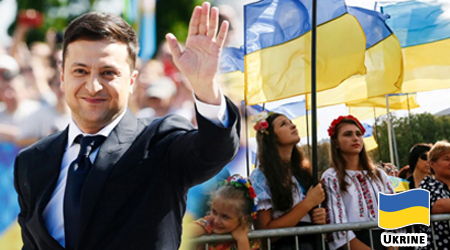
Volodymyr Zelenksyy & Ukraine
Charlemagne Prize 2023
On 14th May 2023, in the Coronation Hall of the Town Hall on the site of the former Imperial Palace, the International Charlemagne Prize of Aachen was awarded to H.E. Volodymyr Zelenskyy, President of Ukraine, and to the People of Ukraine, in recognition of their courageous struggle for freedom, self-determination, democracy, and the defence of our European values.
View More
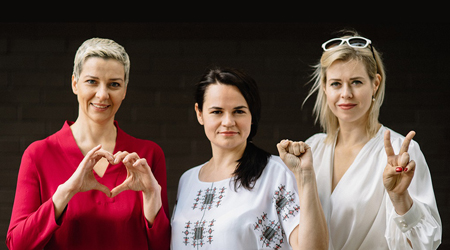
Maria Kalesnikava, Sviatlana Tsikhanouskaya and Veronica Tsepkalonnis
Charlemagne Prize 2022
Maria Kalesnikava was born in Minsk on 24 April 1982.
She studied flute and conducting at the Belarusian State Academy of Music in Minsk, then Early Music and New Music at the State University of Music and Performing Arts Stuttgart (until 2012).
She taught music from 1999 to 2019, firstly in Belarus then in Germany.
In 2019, she became the art director of the "OK-16" culture centre in Minsk.
She has been imprisoned as a political prisoner in Belarus since September 2020.
Sviatlana Tsikhanouskaya was born in Mikashevichy on 11 September 1982.
From 2000, she studied Educational Sciences at the State Pedagogical University in Mazyr, specialising in English and German. She then worked as a translator. After the birth of her two children, she worked primarily as a homemaker.
In 2020, she ran for the office of the President of Belarus. When the alleged result of the "elections" – which violated all international standards – was announced, Alexander Lukashenka was claimed to have received a good 80%, Sviatlana Tsikhanouskaya just 10% of the votes. However, according to independent observers, she had, in reality, won the majority of the votes.
When she protested against the election fraud, she was threatened by Belarusian security officials and forced to flee into exile in Lithuania in August 2020.
Veronica Tsepkalo was born in Mogilev on 7 September 1976.
In 1998, she graduated from the Faculty of International Relations at the Belarus State University. This was followed by further studies at the Belarus State Economic University from 2004 to 2006. Until she found herself forced to flee the country in August 2020, she worked in Belarus as Senior Manager for Business Development for Microsoft.
Currently, she is the Chairwoman of the Belarus Women’s Foundation.
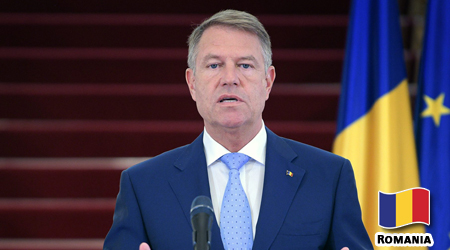
Klaus Iohannis
Charlemagne Prize 2020-21
Klaus Iohannis was born on June 13, 1959 in Sibiu/Hermannstadt; he is a member of the Romanian-German ethnic group of Transylvanian Saxons.
After completing his studies in Physics at the Babeș-Bolyai University in Cluj-Napoca in 1983, he worked as a high school physics teacher in Sibiu/Hermannstadt.
1997 Deputy General School Inspector of Sibiu County
1999 General School Inspector.
2000-2014 Mayor of Sibiu Hermannstadt.
Since 2014 President of Romania.
Charlemagne Prize Award Laureates (2020 ~ 2011)
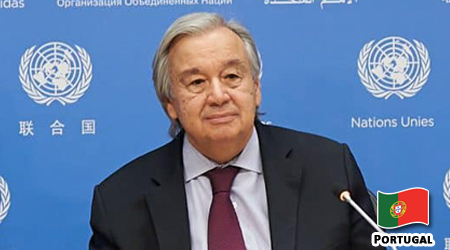
António Guterres
Charlemagne Prize 2019
António Guterres was born on April 30, 1949 in Santos-o-Velho, Lisbon, and graduated from the Instituto Superior Técnico with a degree in engineering.
In 1976 he was elected to the Portuguese Parliament where he served as a member for 17 years.
1981-1983 Member of the Parliamentary Assembly of the Council of Europe.
1991-2002 Member of the Portuguese Council of State.
1992-2002 Secretary-General of Partido Socialista (PS).
1995-2002 Prime Minister of the Portuguese Republic.
1999-2005 President of the Socialist International.
2005-2015 United Nations High Commissioner for Refugees.
Since 1 January 2017 Secretary-General of the United Nations.
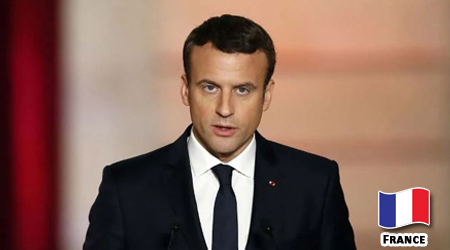
Emmanuel Macron
Charlemagne Prize 2018
Born on December 21, 1977 in Amiens, in the Somme, Emmanuel Macron studied philosophy before joining the École Nationale d'Administration (ENA), from which he graduated in 2004.
Emmanuel Macron then joined the General Inspection of Finance (IGF) where he worked for four years before joining the banking sector.
In 2012, he became Deputy Secretary General of the Presidency of the Republic. He left his post in July 2014 before becoming Minister of the Economy, Industry and Digital Affairs from August 2014 to August 2016.
Founder of the movement “En Marche!” created on April 6, 2016, he led it until his victory in the presidential election on May 7, 2017.
Emmanuel Macron is the eighth President of the Fifth French Republic.
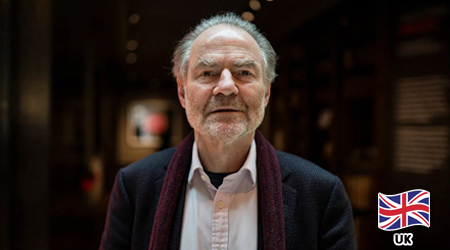
Timothy Garton Ash
Charlemagne Prize 2017
Born on 12 July 1955 in London
After reading Modern History at Oxford, his research into the German resistance to Hitler took him to Berlin, where he lived, in both the western and eastern halves of the divided city, for several years.
From there, he started to travel widely behind the iron curtain. Throughout the nineteen eighties, he became one of the leading chroniclers and journalistic escorts of the emancipation of Central Europe from communism.
From 1986 to 87 he was a Fellow at the Woodrow Wilson International Center for Scholars in Washington DC.
Since 1990, he has been a Fellow of St Antony’s College, Oxford, where he directed the European Studies Centre from 2001 to 2006 and is now Isaiah Berlin Professorial Fellow.
He became a Senior Fellow of the Hoover Institution, Stanford University, in 2000.
In addition to his scientific work, his other activities also include involvement in the Berlin-Brandenburg Academy of Sciences and writing regular columns for the “Guardian” – which are also published in leading European newspapers – as well as contributions for the “New York Review of Books”.
View More
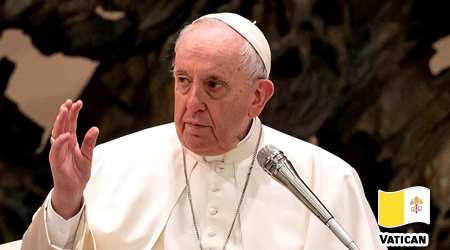
His Holiness Pope Francis
Charlemagne Prize 2016
Born on 17 December 1936 in Buenos Aires
After his school years, graduation as chemical technician
March 1958, entry in the Society of Jesus
From 1960 study of human sciences and philosophy
1964-1966 professor for literature and psychology in Santa Fe and Bueno Aires
1967-1970 study of theology and graduation with licentiate
1973-1979 Provincial Superior of the Society of Jesus in Argentina
From 1980 rector of the Colegio Máximo San José of San Miguel
Ordination as Coadjutor Archbishop in Buenos Aires and Titular Bishop of Auca in May 1992
Appointment as Archbishop of Buenes Aires in February 1998
Appointment as Cardinal by Pope John Paul II in 2001
2005-2011 head of the Argentinian Conference of Bishops
13 March 2013 election as 265th successor of St Peter; Jorge Mario Bergoglio takes the papal name Francis

Martin Schulz
Charlemagne Prize 2015
Born in Hehlrath on 20 December 1955
Apprentice bookseller (1975-1977)
Worked in various bookshops and publishing houses (1977-1982)
Bookshop proprietor (1982-1994)
Municipal councillor, City of Würselen (1984-1998)
Mayor of the City of Würselen (1987-1998)
Member of the European Parliament (since 1994)
Socialist Group coordinator, Subcommittee on Human Rights (1994-1996)
Socialist Group coordinator, Committee on Civil Liberties and Home Affairs (1996-2000)
Member, SPD Bureau and Federal Executive (since 1999)
Chairman, SPD Group, European Parliament (2000-2004)
First Vice-Chairman, Socialist Group (2002-2004)
Chairman Socialist Group (2004-2009)
SPD Representative for EU Relations (since 2009)
Chairman S&D Group (2009-2012)
President of the European Parliament (since January 2012)
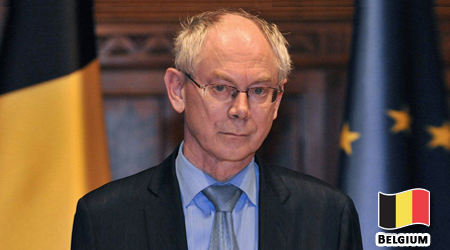
Herman Van Rompuy
Charlemagne Prize 2014
Elected as the first full-time President of the European Council in November 2009, Herman Van Rompuy took office when the Lisbon Treaty came into force on 1 December 2009. In 2012, he was re-elected for a second term starting on 1 June 2012 and running until 30 November 2014.At the time of his first election, Herman Van Rompuy was Prime Minister of Belgium. Prior to that he had served in Belgium as Speaker of the House of Representatives (2007-2008) and in several government positions, including as Vice-Prime Minister and Minister of Budget (1993-1999), Minister of State (2004) and Secretary of State for Finance and Small Businesses (1988).A former economist at the National Bank of Belgium, Herman Van Rompuy began his political career in 1973 as national vice-president of his party’s youth council. He has held various responsibilities within his party and in the Belgian Parliament, serving in turn as Senator (1988-1995) and Member of Parliament (1995-2009).Herman Van Rompuy holds a Bachelor in Philosophy, and a Master in Applied Economics from the university K.U. Leuven. He was born in Etterbeek, Belgium, on 31 October 1947.
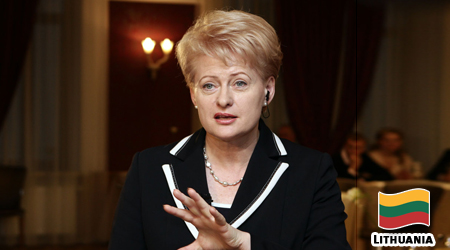
Dalia Grybauskaitė
Charlemagne Prize 2013
Born on 1 March 1956 in Vilnius.
She studied political economy at Leningrad University. In 1988, she defended her Ph. D. thesis at Moscow Academy of Public Sciences.In 1991, she became a program director in Prime Minister’s office. The same year, she was appointed Director of the European Department at the Ministry of International Economic Relations.In 1993, she served as Director of the Economic Relations Department at the Ministry of Foreign Affairs. A year later she was appointed Envoy Extraordinary and Minister Plenipotentiary at the Lithuanian Mission to the EU.From 1996-1999, Dalia Grybauskaitė acted as Minister Plenipotentiary at the Lithuanian Embassy in the USA.
She served as deputy finance minister from 1999 to 2000, deputy foreign minister from 2000 to 2001, and finance minister from 2001 to 2004.In 2004, she was appointed EU commissioner responsible for financial programming and budget.
In the first round of voting on May 17, 2009, she was elected President of the Republic of Lithuania.
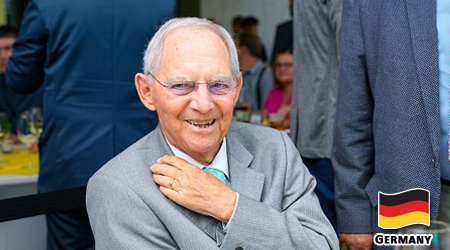
Wolfgang Schäuble
Charlemagne Prize 2012
Born 18 September 1942 in Freiburg.
He studied Law and Economics and completed his doctoral studies in Law as Dr. jur. in 1971.
Dr Schäuble has been a member of the German Bundestag since 1972. From 1981 to 1984 he served as the Parliamentary Secretary of the CDU/CSU Parliamentary Group. He then held the offices of Federal Minister for Special Affairs and Head of the Federal Chancellery before serving as Federal Minister of the Interior from 1989 to 1991.
Since 1989 he has been a member of the CDU Federal Executive Committee. From 1991 to 2000, he headed the CDU/CSU Parliamentary Group in the German Bundestag. From 1998 to 2000 he was also National Chairman of the CDU. Since then, he has been a Member of the CDU Presidium.
From 2002 on, he held the office of Vice-Chairman of the CDU/CSU Parliamentary Group in the German Bundestag for Foreign, Security and European Policy, until he was appointed once more in 2005 as Federal Minister of the Interior.
Since 2009, Dr Schäuble has held the office of Federal Minister of Finance.
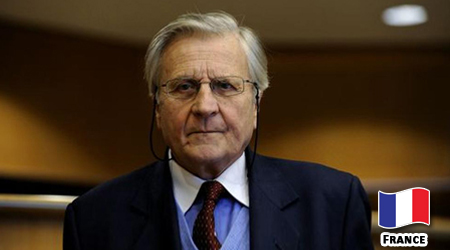
Jean-Claude Trichet
Charlemagne Prize 2011
Born on 22 December 1942 in Lyon.
He attended the Ecole nationale supérieure des Mines de Nancy, from which he graduated in 1964 as an “Ingénieur civil des Mines”. In 1966 he graduated from the Institut d’études politiques de Paris and was also awarded a bachelor’s degree in economics. He subsequently gained initial experience in the competitive sector as an engineer. From 1969 to 1971 he attended the elite Ecole nationale d’administration (ENA).
In 1971 he joined the Ministry of Economics and Finance, subsequently holding various positions in the French civil service. In 1978 he was appointed as an adviser in the general secretariat of the then President of France Valéry Giscard d’Estaing.
In 1987 he took over the leadership of the French Treasury. He subsequently represented France in, among others, the World Bank and the International Monetary Fund, and in the negotiations for Economic and Monetary Union.
From 1993 to 2003 he was Governor of the Banque de France.
On 1 November 2003 he began his eight-year term of office as President of the European Central Bank.
Charlemagne Prize Award Laureates (2010 ~ 2001)
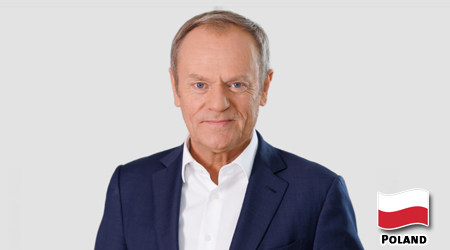
Donald Tusk
Charlemagne Prize 2010
Born on 22nd April 1957 in Gdansk.
In 1980 he completed a degree course in history at Gdansk University. Previously he had been involved in the establishment of the Polish Independent Students’ Union and been part of the Solidarno??-Movement.
After martial law was declared in Poland and the Solidarno?? banned before he had had a chance to obtain state employment, he spent seven years as a plain worker in a cooperative association and continued covertly with his political and journalistic activities.
In 1991 he was voted into the Sejm for the first time.
From 1997 until 2001 he was a member of the Senate.
Since April 2003 he has been Chairman of the Citizens Platform (PO).
In November 2007 he was voted in as the Prime Minister of the Republic of Poland.
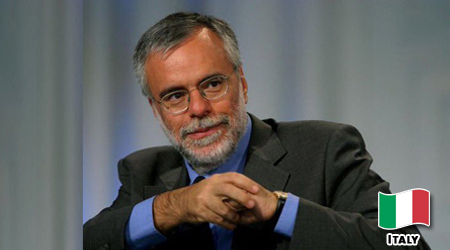
Andrea Riccardi
Charlemagne Prize 2009
Born on 16th January 1950 in Rome.
Law studies.
Specialization in contemporary and church history.
Working as university faculty since 1981.
Professor of History at the Universitá degli Studi Roma Tré.
‘Spiritus rector’ of the Society of Sant’Egidio, after co-founding it as high school student in 1968.
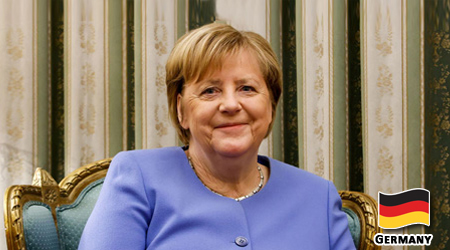
Angela Merkel
Charlemagne Prize 2008
Born on 17th July 1954 in Hamburg.
Doctorate in Physics; between 1978 and 1990 member of the research staff at the Central Institute for Physical Chemistry at the Academy of Sciences in East Berlin.
After the Volkskammer elections in March 1990 and the setting up of de Maiziere’s coalition government she became deputy government spokesperson.
In 1990 she joined the CDU; she was elected to the German Bundestag.
From January 1991 to November 1994 she was Minister for Women and Youth, later until October 1998 Minister for the Environment and Reactor Safety. After she had been Deputy Federal Chair of the German CDU from 1991 to November 1998 she took on the position of Secretary General of the CDU in November 1998.
On 10th April 2000 she was elected Federal Chair of the German CDU. In September 2002 she also became leader of the CDU/CSU parliamentary group in the German Bundestag.
On 22nd November 2005 she was elected as first woman Chancellor of the Federal Republic of Germany.
View More
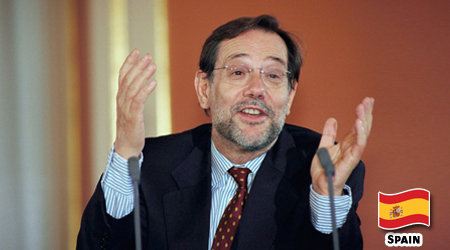
Javier Solana Madariaga
Charlemagne Prize 2007
Born on 9th July 1942 in Madrid.
Doctorate in Physics; Fulbright scholarships at several American universities; Professor for Solid-State Physics at the Autonomous University of Madrid; wrote more than 30 articles in this field.
In 1964 joined the Spanish Socialist Party; from 1977 Member of Parliament.
From 1982 to July 1988 he was Spanish Minister for Culture, at the same time from July 1985 to July 1988 also Government Spokesman, before heading the Ministry of Education and Science for four years.
From July 1992 to December 1995 he was Minister for Foreign Affairs of the Kingdom of Spain.
On 5th December 1995 he was elected Secretary General of NATO.
On 18th October he took office as High Representative for the Common Foreign and Security Policy and Secretary General of the Council of the European Union; on 25th November 1999 he took on in addition the position of Secretary General of the Western European Union.
In June 2004 he was confirmed in his office for another five years.

Jean-Claude Juncker
Charlemagne Prize 2006
Born on 9th December 1954 in Redange-sur-Attert.
After attaining a Master of Law degree at the Faculty of Law of the University of Strasbourg he was appointed Parliamentary Secretary of the Christian–Socialist People’s Party (CSV) in October 1979. In June 1984 he was elected to the Luxembourg Parliament for the first time, became Employment Minister and Budget Minister in Jacques Santer’s first government.
After the parliamentary elections of June 1989 he was appointed Minister of Finance and Employment. From January 1990 he also took on the position of Leader of the CSV (until 1995).
On 20th January 1995 he was appointed to Prime Mininster of the Grand Duchy of Luxembourg by the Grand Duke Jean, an office in which he was impressively confirmed in 1999 and 2004.
On 1st January 2005 moreover he took on the presidency of the Euro group.
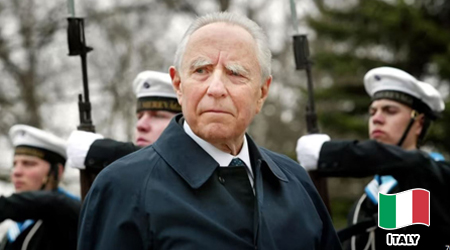
Carlo Azeglio Ciampi
Charlemagne Prize 2005
Born on 9th December 1920 in Livorno.
After gaining a university degree in Literature and a further specialization in 1941 at the University of Pisa he passed his state examination in Law in 1946. The same year he joined the Banca d’Italia, and was appointed into the central administration of the bank in 1960. After promotion to Secretary General of the Banca d’Italia in 1973, then in 1976 to Vice Director General and in 1978 to Director General, he was appointed to Governor of the Central Bank and President of the Italian Exchange Office in October 1979.
From April 1993 to May 1994 he was Prime Minister of a caretaker government.
Between April 1996 and May 1999 he served his country as Minister for Budgetary and Economic Planning in the Prodi and D’Alema governments.
Following Oscar Luigi Scalfaro he was elected at the first ballot on 13th May 1999 as 10th President of the Italian Republic (until 2006).
Died on 16th September 2016.
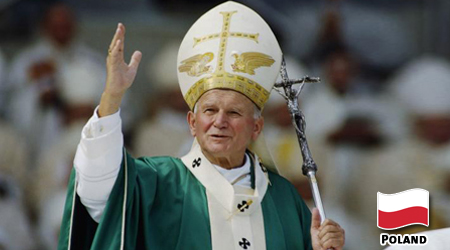
Pope John Paul II
Charlemagne Prize 2004
Karol Józef Wojtyla was born on 18th May 1920 in Wadowice.
At the age of 9 years he took his First Holy Communion and was confirmed at the age of 18. After A-levels he was admitted in 1938 to the Jagellonen University in Krakau and to drama school; later he attended courses at the forbidden seminary in Krakau.#
After World War II he carried on with his studies and was ordained a priest on 1st November 1946. In 1948 he was conferred a doctorate in Theology with a thesis on the subject of ‘the Doctrine of Faith According to St. John of the Cross’.
On 4th July 1958 Pope Pius XII appointed him to auxiliary bishop of Krakau; on 28th September he was ordained to the Episcopate.
On 13th January 1964 he was appointed Archbishop of Krakau by Pope Paul VI, who also appointed him as Cardinal on 26th June 1967. In addition to his participation in the Second Vatican Council, to which he made an important contribution in the compilation of the Constitution on the Church in the Modern World (Gaudium et spes) Cardinal Wojtyla participated in all the assemblies of the Synod of Bishops.
On 16th October 1978 Cardinal Prof. Dr. Karol Józef Wojtyla became the first non-Italian Head of the Catholic Church since 1522. With the power of words Pope John Paul II left a lasting impression on the European continent as no other personage of his time. And with the power of words he has addressed more people personally, reached more people and fascinated more people than anyone before him.
Died on 2nd April 2005.
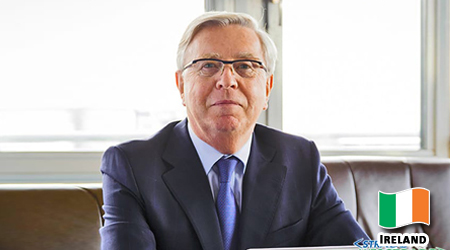
Patrick Cox
Charlemagne Prize 2004
Born on 28th November 1952 in Dublin.
In 1974 he completed his study of Economics with a Bachelor of Arts degree; two years later he attained a Master of Arts degree and thereafter lectured at the University in Limerick. At this time a great interest in the European integration process developed, leading to the setting up of the first European degree course at an Irish university.
From 1982 to 1986 he worked as a political reporter, presenter and journalist for the television programme ‘Today Tonight’, before changing to politics as Secretary General of the liberal ‘Progressive Democrats’ (until 1989), of which he was co-founder.
In 1989 he was elected to the European Parliament for the first time and there joined the liberal parliamentary group. After having left his party the now independent candidate succeeded in 1994 in being re-elected to the Brussels Parliament. The Liberals thereupon appointed him to the position of deputy parliamentary leader. In 1998 he became President, an office in which he was also confirmed after the European elections in 1999.
Following the EVP delegate, Nicole Fontaine, he was elected President of the European Parliament on 15th January 2002 (until 2004).
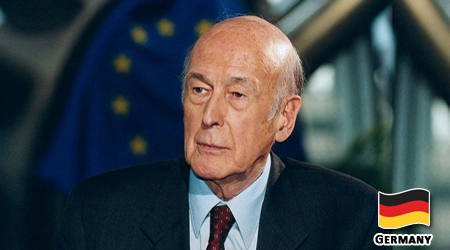
Valéry Giscard d´Estaing
Charlemagne Prize 2003
Born on 2nd February 1926 in Koblenz/Rhine.
At 18 years of age he joined the First French Army and took part in the military campaigns in France and Germany (1944–1945). After completing his studies at the Ecole Polytechnique and the Ecole Nationale d'Administration he was appointed Inspector of Finances in 1952.
In January 1956 he began his parliamentary career as a deputy for the Puy-de-Dôme département. In 1959 he was appointed first of all as Secretary of State, then in 1962 as Minister of Economy and Finance (until 1966 and subsequently again from 1969 to 1974). After the unexpected death of Georges Pompidou, Valéry Giscard d’Estaing was elected in May 1974 as one of the youngest presidents of the French Republic (until 1981).
After losing the office of President he still remained politically active at a federal state, regional and European level. Amongst others he was Chair of the UDF from 1988 to 1996 and was repeatedly elected as Member of the French National Assembly (1984, 1986, 1988, 1993 and 1997). Between 1989 and 1993 he was a Member of the European Parliament.
At the proposal of the European Council Giscard took on the Chairmanship of the Convention on the Future of Europe at the beginning of the year 2002.
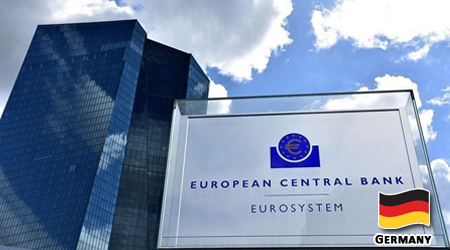
The European Central Bank
Charlemagne Prize 2002
Awarded to the European Central Bank: Wim Duisenberg, the President of the ECB, received the Karlspreis as representative of the ECB. With the EURO a proceeding was honoured, which, as no other step towards integration before, promotes identification with Europe and with it achieves a decisive, ground-breaking contribution towards the growing together of the family of nations.
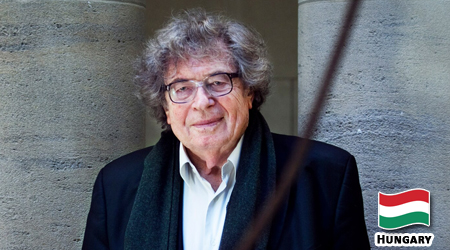
György Konrád
Charlemagne Prize 2001
Born on 2nd April 1933 in Berettyonifalu (eastern Hungary)
Studied Literature, Sociology and Psychology in Budapest (until 1956), worked subsequently as a social worker, sociologist and psychologist. From 1959 to 1965 he worked as a child-welfare inspector for the Guardianship Authority in an urban district in Budapest; his first essays were also published at this time. In 1965 he was employed as a Sociologist in the Budapest Institute and Town Planning Office.
He published his first novel ‚The Case Worker‘, which brought him widespread recognition, in 1969; from then on he concentrated increasingly on his literary works. Between 1978 and 1988, when he was banned from publishing his works in Hungary, he undertook expansive studies and trips through Western Europe, America and Australia.
After the democratic reforms in Central and Eastern Europe he was elected President of the International PEN Club in May 1990 (until 1993), in 1997 he became President of the Academy of the Arts in Berlin (until 2003). He is considered one of the most important novelists and essayists of his country, has won several awards for his literary works and enjoys world-wide recognition as one of the most important theoreticians of a ‚new Central Europe‘.