

Charlemagne Prize


Charlemagne Prize
The International Charlemagne Prize of Aachen, first awarded in 1950, is the oldest and most prestigious award given to individuals or institutions for work done in the service of European unification.The Prize is named after Charlemagne, the Frankish king, who is considered the first unifier of Europe, who was revered by his contemporaries as the ‘Father of Europe’, and who chose Aachen as his favorite Palatinate at the end of the eighth century; thus, a bridge is built between European past and future.
| Sl | Name | Country | Flag | Year | Awarded For |
|---|---|---|---|---|---|
| 66 | Ursula von der Leyen | German | 2025 | for recognition of the work done in the service of Europian unification | |
| 65 | Pinchas Goldschmidt and the Jewish communities in Europe | Switzerland | 2024 | for recognition of the work done in the service of Europian unification | |
| 64 | Volodymyr Zelenskyy and the Ukrainian people | Ukraine | 2023 | for recognition of the work done in the service of Europian unification | |
| 63 | Sviatlana Tsikhanouskaya, Maria Kalesnikava, Veronika Tsepkalo | Belarus | 2022 | for recognition of the work done in the service of Europian unification | |
| 62 | Klaus Iohannis | Romania | 2020/21 | for recognition of the work done in the service of Europian unification | |
| 61 | António Guterres | Portugal | 2019 | for recognition of the work done in the service of Europian unification | |
| 60 | Emmanuel Macron | France | 2018 | for recognition of the work done in the service of Europian unification | |
| 59 | Timothy Garton Ash | United Kingdom | 2017 | for recognition of the work done in the service of Europian unification | |
| 58 | Pope Francis | Vatican | 2016 | for recognition of the work done in the service of Europian unification | |
| 57 | Martin Schulz | Germany | 2015 | for recognition of the work done in the service of Europian unification | |
| 56 | Herman Van Rompuy | Belgium | 2014 | for recognition of the work done in the service of Europian unification | |
| 55 | Dalia Grybauskaite | Lithuania | 2013 | for recognition of the work done in the service of Europian unification | |
| 54 | Wolfgang Schäuble | Germany | 2012 | for recognition of the work done in the service of Europian unification | |
| 53 | Jean-Claude Trichet | France | 2011 | for recognition of the work done in the service of Europian unification | |
| 52 | Donald Tusk | Poland | 2010 | for recognition of the work done in the service of Europian unification | |
| 51 | Andrea Riccardi | Italy | 2009 | for recognition of the work done in the service of Europian unification | |
| 50 | Germany Angela Merkel | Spain | 2008 | for recognition of the work done in the service of Europian unification | |
| 49 | Spain Javier Solana | Spain | 2007 | for recognition of the work done in the service of Europian unification | |
| 48 | Luxembourg Jean-Claude Juncker | Luxembourg | 2006 | for recognition of the work done in the service of Europian unification | |
| 47 | Italy Carlo Azeglio Ciampi | Italy | 2005 | for recognition of the work done in the service of Europian unification | |
| 46 | Pope John Paul II (extraordinary prize) | Vatican | 2004 | for recognition of the work done in the service of Europian unification | |
| 45 | Pat Cox | Ireland | 2004 | for recognition of the work done in the service of Europian unification | |
| 44 | Valéry Giscard d'Estaing | France | 2003 | for recognition of the work done in the service of Europian unification | |
| 43 | The Euro | European Union | 2002 | for recognition of the work done in the service of Europian unification | |
| 42 | György Konrád | Hungary | 2001 | for recognition of the work done in the service of Europian unification | |
| 41 | Bill Clinton | USA | 2000 | for recognition of the work done in the service of Europian unification | |
| 40 | Tony Blair | United Kingdom | 1999 | for recognition of the work done in the service of Europian unification | |
| 39 | Bronislaw Geremek | Poland | 1998 | for recognition of the work done in the service of Europian unification | |
| 38 | Roman Herzog | Germany | 1997 | for recognition of the work done in the service of Europian unification | |
| 37 | Beatrix of the Netherlands | Netherlands | 1996 | for recognition of the work done in the service of Europian unification | |
| 36 | Franz Vranitzky | Austria | 1995 | for recognition of the work done in the service of Europian unification | |
| 35 | Gro Harlem Brundtland | Norway | 1994 | for recognition of the work done in the service of Europian unification | |
| 34 | Felipe González | Austria | 1993 | for recognition of the work done in the service of Europian unification | |
| 33 | Jacques Delors | France | 1992 | for recognition of the work done in the service of Europian unification | |
| 32 | Václav Havel | Czechoslovakia | 1991 | for recognition of the work done in the service of Europian unification | |
| 31 | Gyula Horn | Hungary | 1990 | for recognition of the work done in the service of Europian unification | |
| 30 | Frère Roger | Switzerland | 1989 | for recognition of the work done in the service of Europian unification | |
| 29 | François Mitterrand & Helmut Kohl | France & West Germany | 1988 | for recognition of the work done in the service of Europian unification | |
| 28 | Henry Kissinger | USA | 1987 | for recognition of the work done in the service of Europian unification | |
| 27 | The People of Luxembourg | Luxembourg | 1986 | for recognition of the work done in the service of Europian unification | |
| 26 | Karl Carstens | West Germany | 1984 | for recognition of the work done in the service of Europian unification | |
| 25 | Juan Carlos of Spain | Spain | 1982 | for recognition of the work done in the service of Europian unification | |
| 24 | Simone Veil | France | 1981 | for recognition of the work done in the service of Europian unification | |
| 23 | Emilio Colombo | Italy | 1979 | for recognition of the work done in the service of Europian unification | |
| 22 | Konstantinos Karamanlis | Greece | 1978 | for recognition of the work done in the service of Europian unification | |
| 21 | Walter Scheel | West Germany | 1977 | for recognition of the work done in the service of Europian unification | |
| 20 | Leo Tindemans | Belgium | 1976 | for recognition of the work done in the service of Europian unification | |
| 19 | Salvador de Madariaga | Spain | 1973 | for recognition of the work done in the service of Europian unification | |
| 18 | Roy Jenkins | United Kingdom | 1972 | for recognition of the work done in the service of Europian unification | |
| 17 | François Seydoux de Clausonne | France | 1970 | for recognition of the work done in the service of Europian unification | |
| 16 | European Commission | European Union | 1969 | for recognition of the work done in the service of Europian unification | |
| 15 | Joseph Luns | Netherlands | 1967 | for recognition of the work done in the service of Europian unification | |
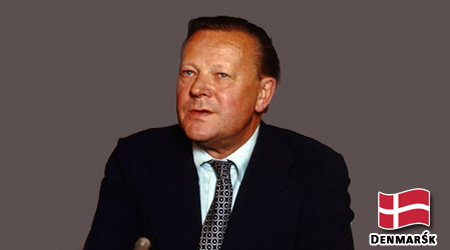
| 14 | Jens Otto Krag | Denmark | 1966 | for recognition of the work done in the service of Europian unification | |
| 13 | Antonio Segni | Italy | 1964 | for recognition of the work done in the service of Europian unification | |
| 12 | Edward Heath | United Kingdom | 1963 | for recognition of the work done in the service of Europian unification | |
| 11 | Walter Hallstein | West Germany | 1961 | for recognition of the work done in the service of Europian unification | |
| 10 | Joseph Bech | Luxembourg | 1960 | for recognition of the work done in the service of Europian unification | |
| 9 | George C. Marshall | USA | 1959 | for recognition of the work done in the service of Europian unification | |
| 8 | Robert Schuman | France | 1958 | for recognition of the work done in the service of Europian unification | |
| 7 | Paul Henri Spaak | Belgium | 1957 | for recognition of the work done in the service of Europian unification | |
| 6 | Winston Churchill | United Kingdom | 1956 | for recognition of the work done in the service of Europian unification | |
| 5 | Konrad Adenauer | West Germany | 1954 | for recognition of the work done in the service of Europian unification | |
| 4 | Jean Monnet | France | 1953 | for recognition of the work done in the service of Europian unification | |
| 3 | Alcide de Gasperi | Italy | 1952 | for recognition of the work done in the service of Europian unification | |
| 2 | Hendrik Brugmans | Netherlands | 1951 | for recognition of the work done in the service of Europian unification | |
| 1 | Richard von Coudenhove-Kalergi | Austria | 1950 | for recognition of the work done in the service of Europian unification |
Charlemagne Prize Award Laureates (1970 ~ 1961)

François Seydoux de Clausonne
Charlemagne Prize 1970
Born on 15th February 1905 as the son of a French diplomat in Berlin.
Studied Philosophy and Law at the Sorbonne and the Ecole des Sciences Politiques in Paris.
In 1928 he entered the diplomatic service of the French Foreign Ministry. After a period as Secretary at the French Embassy in Berlin (1933–1936) he held the position of Director of the German Department at the Foreign Ministry in Paris from 1936 to 1941. In 1942 he joined the Resistance. From 1949 to 1955 he was Head of the European Department in the French Foreign Ministry. Afterwards he was the Ambassador in Vienna (1956–1958) and twice the Ambassador in the Federal Republic of Germany in Bonn (1958–1962 and 1965–1970); he played an active role in the conclusion of the German–French friendship treaty which was signed in 1963.
Died on 30th August 1981.


View More
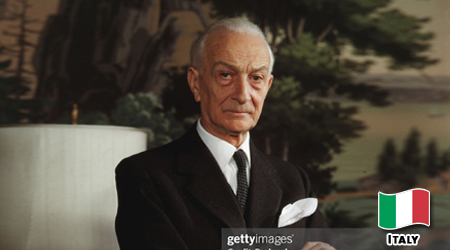
Antonio Segni
Charlemagne Prize 1964
Born on 2nd February 1891 in Sassari (Sardinien).
Studied Law at the University of Rome, was conferred a doctorate (LLD). In 1920 he was appointed as professor at the University of Perugia; later he was a professor at various universities (Cagliari, Pavia, Sassari, from 1954 Rome).
His academic career accompanied his political career.He ranks as one of the founders of Italy’s Christian Democratic Party (1944); after the end of the war a member of the Constituent Assembly. He was a member of parliament for more than three legislative periods and held several minister offices in various governments (1946–1951 Minister for Agriculture; 1951–1954 Minister for Education, 1960–1962 Foreign Minister). From 1955–1957 and 1959–1960 he was Prime Minister; during this period the Treaties of Rome were signed and the European Economic Community was established. He was a consequent advocate of the concept of European agreement.
From 1962 to 1964 he was President of the Italian Republic.
Died on 1st December 1972.
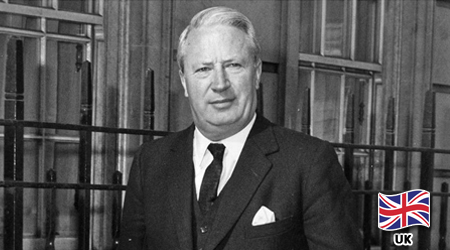
Edward Heath
Charlemagne Prize 1963
Born on 9th July 1916 in Broadstairs (Kent).
Studied Philosophy, Politics and Economics at Balliol College in Oxford. Military service in World War II.
He was a Member of the House of Commons for the Conservative Party from 1950, and an early campaigner for the inclusion of his country in the European integration process; from 1955 to 1959 he acted as Parliamentary State Secretary in the Treasury. He was later Secretary of State for Employment (1959–1960).
In 1960 he was appointed the office of Lord Privy Seal with the double function of representing the Foreign Minister in Parliament and addressing the European issue; he held this office until 1963. He was head of the delegation for the first negotiations for Great Britain’s membership in the European Economic Community (1961–1963), which was vetoed by the French. In the years 1963/1964 he acted as Secretary of State for Industry, Trade and Regional Development.
From 1965 to 1970 he was Leader of the Opposition of the Conservative Party in the House of Commons; after his party won the elections in 1970 he became Prime Minister and Chairman of the Board for the Commonwealth Relations Office. He held these positions until 1974.
Died on 17th July 2005.
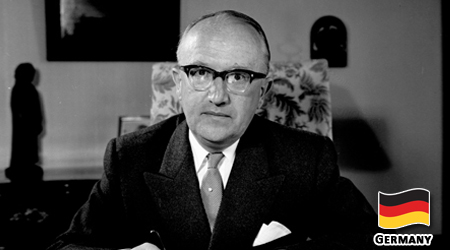
Walter Hallstein
Charlemagne Prize 1961
Born on 17th November 1901 in Mainz.
Studied Law and Political Science in Bonn, Munich and Berlin; was conferred a doctorate in 1925 (LLD). After qualifying as a university lecturer (1929) he lectured as Professor at Rostock University until 1941 and afterwards at Frankfurt University (1941–1944), where he was at the same time Director of the Institute for Comparative Law and Economic Law.
After military service and a period as a prisoner of war in the USA (1944–1946) he was Rector of the University of Frankfurt am Main until 1948. Afterwards he lectured for one year as visiting professor at Georgetown University (USA).
He was Head of the German delegation at the negotiations for the establishment of the European Coal and Steel Community (Schuman Plan Conference 1950); in 1950 he became State Secretary in the Federal Chancellery. As State Secretary in the Foreign Ministry (1951–1958) he played an active role in the negotiations for establishing the European Economic Community. In 1958 he was appointed first President of the Commission of the European Economic Community; he held this office until 1967. He played a decisive role in the building up and development of the Common Market and the European institutions.
From 1969 to 1972 he was a Member of the German Bundestag.
Died on 29th March 1982.
Charlemagne Prize Award Laureates (1960 ~ 1950)
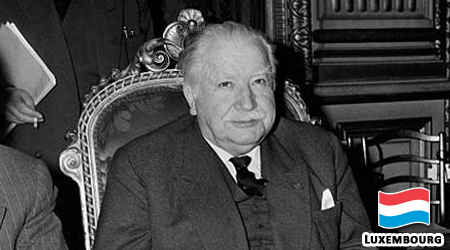
Joseph Bech
Charlemagne Prize 1960
Born on 17th February 1887 in Diekirch (Luxembourg).
Studied Law in Fribourg (Switzerland) and Paris, was conferred a doctorate in 1912 (LLD); afterwards practiced as a lawyer. He was a Member of Parliament in the Luxembourg Parliament from 1914; in 1921 he became Justice Minister and Minister for Education for four years, from 1926 to 1937 he was Minister of State and Prime Minister.
From 1937 to 1953 he was Foreign Minister and Minister for Viniculture, between 1940 and 1945 he was a member of the government in exile.
From 1953 to 1958 he held the office of Minister of State and Prime Minister; thereafter he took on again the office of Foreign Minister (1958–1959) as well as the office of Minister for Foreign Trade and for Viniculture. In the post-war period in his various governmental offices he was actively involved in the European integration process; he is considered to be one of the founding fathers of the European Coal and Steel Community and one of the most consequent exponents of the European concept.
From 1959 to 1964 he was President of the Luxembourg Chamber of Deputies.
Died on 8th March 1975.
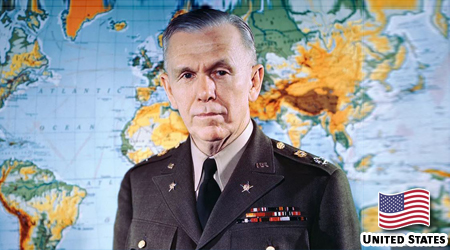
George C. Marshall
Charlemagne Prize 1959
Born on 31st December 1880 in Uniontown (Pennsylvania, USA).
Graduate of military institute followed by a military career. During World War II he was Chief of Staff from 1939 to 1945 and thus Head of organisation and modernization of the American Army as well as the strategic planning of the operations of the Allied Forces.
He was American Secretary of State from 1947 to 1949; as part of the policy to contain Soviet striving for world power he proposed a European recovery plan which became known as the Marshall Plan. The Marshall Plan played a decisive role in the economic and political reconstruction of post-war Europe. He was involved in the creation of the North Atlantic Pact (1949). In 1950 he was appointed Secretary of Defence (Korean War); In 1951 he withdrew to private life.
He was awarded the Nobel Peace Prize in 1953.
Died on 16th October 1959.
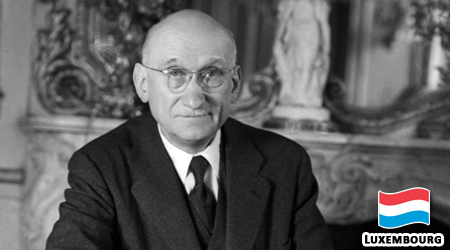
Robert Schuman
Charlemagne Prize 1958
Born on 29th June 1886 in Luxembourg.
Studied Law in Metz, Berlin, Munich, Bonn und Strasbourg and was later conferred a doctorate (LLD).
With the return of Alsace-Lorraine to France he became a French citizen and in 1919 was elected as a deputé to Parliament on a regional list (initially until 1940); he was arrested by the Gestapo in 1940, but was able to flee in 1942.
From 1946 bis 1962 he was Representative of the National Assembly. During this time he held several ministries (1946 Minister of Finance, 1948 to 1952 Foreign Minister, 1955 to 1956 Minister of Justice) and in 1947/1948 he was Prime Minister for eight months. In May 1950 he proposed the establishment of a European Coal and Steel Community (so-called Schuman Plan), which gave impetus to the creation of the European Economic Community. He campaigned actively for the German–French reconciliation.
Together with Monnet he is considered to be one of the founding fathers of the European Union.
In March 1958 he was elected unanimously as President of the European Assembly, forerunner to the European Parliament; he resigned in 1960 and was appointed Honorary President.
Died on 4th September 1963.
View More
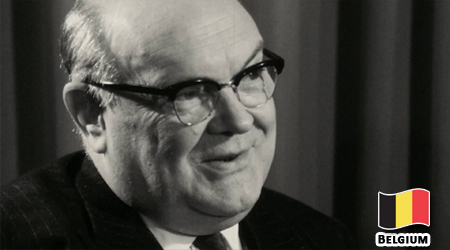
Paul Henri Spaak
Charlemagne Prize 1957
Born on 25th January 1899 in Schaerbeck near Brussels.
Studied Law in Brussels and was conferred a doctorate (LLD); he practiced as a lawyer in Brussels from 1921 bis 1931.
In the period from 1932 to 1966 he was a Member of the Belgian Parliament for the Socialist Party for a total of 30 years; he held several ministries, amongst others he was Foreign Minister on several occasions (1936 to 1938; 1939 to 1945; 1945 to 1947; 1954 to 1957; 1961 to 1966) and Prime Minister (1938 to 1939; 1947 to 1950).
In 1946 he presided over the first session of the General Assembly of the UN. He drafted the plan for the Belgian–Dutch–Luxemburg union and, as advocate of a European agreement, played a decisive role in the establishment of the European Coal and Steel Community and the European Economic Community.
He was Secretary General of Nato from 1957 to 1961.
Died on 31st July 1972.
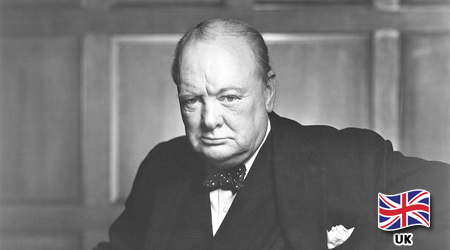
Sir Winston S. Churchill
Charlemagne Prize 1955
Born on 30th November 1874 at Blenheim Palace near Oxford.
Graduate of the Royal Military Academy (1894) then began military service at the same time working as a war correspondent. He quit military service in 1899 and turned to politics, journalism and writing. He was a Conservative member of Parliament in the House of Commons from 1900 to 1905; he pursued various activities in the Government between 1906 and 1929 (amongst others 1908 Secretary of Trade, 1910 Home Secretary; 1917 Minister of Munitions; 1919 to 1922 Secretary of State for War and Secretary of State for Air; 1924 to 1929 Chancellor of the Exchequer). In the thirties he concentrated on his writing.
After the outbreak of World War II he was appointed First Lord of the Admiralty; during the war years (1940 to 1945) and from 1951 to 1955 he was Prime Minister and Leader of the Conservative Party.
He played an active role in the building up of the North Atlantic Pact and the Council of Europe. His speech in Zürich on 19th September 1946, in which he called for the establishment of the united states of Europe as a European peace project, has become famous.
In 1953 he received the Nobel Prize in Literature for his memoires of World War II.
Died on 24th January 1965.
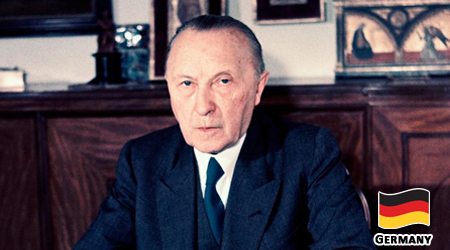
Konrad Adenauer
Charlemagne Prize 1954
Born on 5th January 1876 in Cologne.
Studied law and economics in Freiburg, Munich and Bonn.
In 1906 he became Deputy Mayor of the City of Cologne and member of the Centre Party.
He served as Mayor of Cologne from 1917 to 1933, when he was dismissed by the National Socialists; later he was imprisoned on several occasions by the Gestapo.
In 1946 he became Chairman of the CDU in the British zone and was their Federal Chairman from 1949.
President of the Parliamentary Council, which compiled the draft of the constitution for the creation of the Federal Republic of Germany in 1948/1949. From 1949 he was a member of the Bundestag of West Germany and became the first Chancellor of the Federal Republic of Germany until his resignation in 1963. He played a decisive role in the west-oriented integration of the Federal Republic of Germany and campaigned during his term in office for European unity and German–French understanding and reconciliation (signing of the German–French Friendship Treaty in 1963).
Died on 19th April 1967.
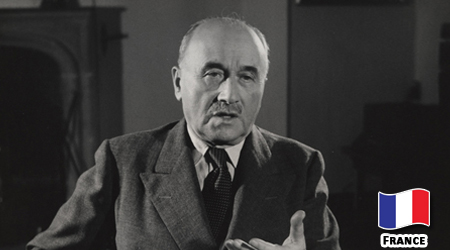
Jean Monnet
Charlemagne Prize 1953
Born on 9th November 1888 in Cognac (Charante).
Entered into his father’s company at age 16 (dealing in Cognac and wines); from 1914 he took various tasks for the development of inter-allied positions (buying cereals, merchant shipping).
In 1919 he was chosen as deputy to the General Secretary of the League of Nations; he held this office until 1923. He was subsequently active as, amongst others, economic advisor in Shanghai and Romania; Worked as part of the American plan to coordinate the restructuring of arms production.
From 1943 to 1945 he assumed the office of the state commissioner for food, arms and reconstruction in the French Liberation Committee. From 1946 to 1950 he was head of the newly constructed national planning office; when the French Minister of Foreign Affairs, Schuman, produced the plan to found the European Coal and Steel Community in May 1950, Monnet, who developed the plan, was named as president of the Parisian Schuman Plan conference. In 1952 he became the first president of High Authority of the European Coal and Steel Community.
Alongside aiding the development of the foundations for the creation of the European Community and Euratom, he is deemed as the architect of European unification.
In 1955 he evoked an action committee for the United States of Europe, following the aim of political union in Europe from his position as its president. In 1976 he was given freedom of Europe by the heads of government in the European Community.
Died on 16th March 1979.
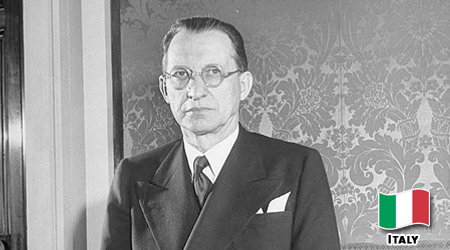
Alcide de Gasperi
Charlemagne Prize 1952
Born on 3rd April 1881 in Pievo Tesino (municipality of Trient; Austria/Hungary).
Studied philosophy as well as Italian and German literature in Vienna, 1905 Promotion to Dr. Phil.
1911 to 1918 member of parliament in the Austrian Reichsrat [imperial council]. In 1919 he was co-founder of the Italian People’s Party, for which he acted as member of parliament and party leader from 1921 to 1926. After the party was banned in 1927, he was imprisoned until 1929.
In 1943 he was co-founder of the Christian Democratic Party, becoming its chairman and general secretary (until 1954). From 1945 to 1953 he held the office of the Italian Prime Minister. He played an active role in the construction of the European institutions involved (Coal and Steal Community, European Council) and was one of the founding fathers of the European Community, participating in its construction.
Died on 19th August 1954.
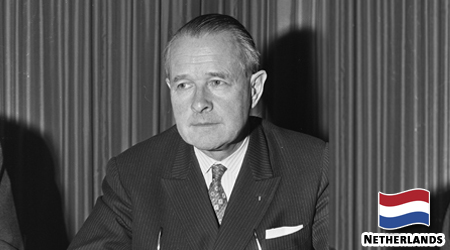
Hendrik Brugmans
Charlemagne Prize 1951
Born on 13th December 1906 in Amsterdam.
Studied history of French literature at the University of Amsterdam and the Sorbonne in Paris, promoted to Dr. Phil. in 1934, thereafter active as a grammar school teacher.
Member of Dutch parliament for the Dutch Labour Party from 1939 to 1940.
From 1942 to 1944 he was detained by the Gestapo; he joined the resistance movement after his release.
In 1946 he had a significant involvement in the founding of the Union of European Federalists, becoming its first President. He was also among the founding members of the European Movement.
From 1950 to 1972 he was rector of the College of Europe in Bruges, which he himself had established, and belonged to the professor’s council of the University of Utrecht.
From 1973 to 1980 he held the chair of Professorship for Cultural History at the University of Leuwen.
Numerous publications regarding European matters (literature, culture, history, federalism, European union).
Died on 12th March 1997.
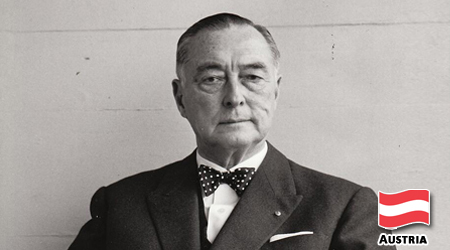
Richard Nikolaus Eijiro
Charlemagne Prize 1950
Born on 16th November 1894 in Tokyo.
Studied history and philosophy at the University of Vienna, 1916 Promotion to Dr. Phil. Active as independent writer.
Published the political text ‘Paneuropa’ in 1923; he founded the Paneuropean Movement in the same year. Between the years 1924 and 1938 he published the journal ‘Paneuropa’, in which he did all he could to form a European confederation.
During the war he stayed in Pressburg, Bern and, from 1940, in New York, where he taught as professor of history and set up a research department for a European post-war federation. He relocated to Switzerland in 1946.
In 1947 he became General Secretary of the European Parliamentary Union, which he had founded himself.
Died on 27th July 1972.