


Templetion Prize


Templetion Prize
Established in 1972, the Templeton Prize was celebrated investor Sir John Templeton’s first major philanthropic venture. He created the Templeton Prize because he wanted to recognize discoveries that yielded new insights about religion and he set the award amount above that of the Nobel Prizes in order to recognize the importance of what he called “progress in religion.” His understanding of progress in religion evolved during his lifetime and is shown in the variety among the 53 Laureates who have received the Prize. Winners have come from all major faiths and dozens of countries and have included Nobel Prize winners, philosophers, theoretical physicists, and one canonized saint.Throughout the decades, the Prize always reflected Sir John’s core conviction that there is a deeper level of reality that can be accessed through rigorous research, especially in the sciences. For the first few decades of the Prize, HRH Prince Philip presented the award, and distinguished leaders such as His Holiness the Dalai Lama, Dame Margaret Thatcher, and Presidents George H.W. Bush and Gerald Ford served as judges.
| Sl | Name | Country | Flag | Year | Awarded For |
|---|---|---|---|---|---|
| 55 | Ecumenical Patriarch Bartholomew | Turkey | 2025 | “made an exceptional contribution to affirming life's spiritual dimension, whether through insight, discovery, or practical works.” | |
| 54 | Pumla Gobodo-Madikizela | South Africa | 2024 | “made an exceptional contribution to affirming life's spiritual dimension, whether through insight, discovery, or practical works.” | |
| 53 | Edna Adan Ismail | Somalia | 2023 | “made an exceptional contribution to affirming life's spiritual dimension, whether through insight, discovery, or practical works.” | |
| 52 | Frank Wilczek | United States | 2022 | “made an exceptional contribution to affirming life's spiritual dimension, whether through insight, discovery, or practical works.” | |
| 51 | Jane Goodall | United Kingdom | 2021 | “made an exceptional contribution to affirming life's spiritual dimension, whether through insight, discovery, or practical works.” | |
| 50 | Francis Collins | United States | 2020 | “made an exceptional contribution to affirming life's spiritual dimension, whether through insight, discovery, or practical works.” | |
| 49 | Marcelo Gleiser | Brazil | 2019 | “made an exceptional contribution to affirming life's spiritual dimension, whether through insight, discovery, or practical works.” | |
| 48 | Abdullah II of Jordan | Jordan | 2018 | “made an exceptional contribution to affirming life's spiritual dimension, whether through insight, discovery, or practical works.” | |
| 47 | Alvin Plantinga | United States | 2017 | “made an exceptional contribution to affirming life's spiritual dimension, whether through insight, discovery, or practical works.” | |
| 46 | Jonathan Sacks | United Kingdom | 2016 | “made an exceptional contribution to affirming life's spiritual dimension, whether through insight, discovery, or practical works.” | |
| 45 | Jean Vanier | Canada | 2015 | “made an exceptional contribution to affirming life's spiritual dimension, whether through insight, discovery, or practical works.” | |
| 44 | Tomáš Halík | Czech Republic | 2014 | “made an exceptional contribution to affirming life's spiritual dimension, whether through insight, discovery, or practical works.” | |
| 43 | Desmond Tutu | South Africa | 2013 | “made an exceptional contribution to affirming life's spiritual dimension, whether through insight, discovery, or practical works.” | |
| 42 | 14th Dalai Lama, Tenzin Gyatso | China | 2012 | “made an exceptional contribution to affirming life's spiritual dimension, whether through insight, discovery, or practical works.” | |
| 41 | Martin Rees, Baron Rees of Ludlow | United Kingdom | 2011 | “made an exceptional contribution to affirming life's spiritual dimension, whether through insight, discovery, or practical works.” | |
| 40 | Francisco J. Ayala | Spain | 2010 | “made an exceptional contribution to affirming life's spiritual dimension, whether through insight, discovery, or practical works.” | |
| 39 | Bernard d'Espagnat | Spain | 2009 | “made an exceptional contribution to affirming life's spiritual dimension, whether through insight, discovery, or practical works.” | |
| 38 | Michal Heller | Poland | 2008 | “made an exceptional contribution to affirming life's spiritual dimension, whether through insight, discovery, or practical works.” | |
| 37 | Charles Taylor | Canada | 2007 | “made an exceptional contribution to affirming life's spiritual dimension, whether through insight, discovery, or practical works.” | |
| 36 | John D. Barrow | United Kingdom | 2006 | “made an exceptional contribution to affirming life's spiritual dimension, whether through insight, discovery, or practical works.” | |
| 35 | Charles Hard Townes | United States | 2005 | “made an exceptional contribution to affirming life's spiritual dimension, whether through insight, discovery, or practical works.” | |
| 34 | George F. R. Ellis | South Africa | 2004 | “made an exceptional contribution to affirming life's spiritual dimension, whether through insight, discovery, or practical works.” | |
| 33 | Holmes Rolston III | United States | 2003 | “made an exceptional contribution to affirming life's spiritual dimension, whether through insight, discovery, or practical works.” | |
| 32 | John Polkinghorne | United Kingdom | 2002 | “made an exceptional contribution to affirming life's spiritual dimension, whether through insight, discovery, or practical works.” | |
| 31 | Arthur Peacocke | England | 2001 | “made an exceptional contribution to affirming life's spiritual dimension, whether through insight, discovery, or practical works.” | |
| 30 | Freeman Dyson | England | 2000 | “made an exceptional contribution to affirming life's spiritual dimension, whether through insight, discovery, or practical works.” | |
| 29 | Ian Barbour | China | 1999 | “made an exceptional contribution to affirming life's spiritual dimension, whether through insight, discovery, or practical works.” | |
| 28 | Sir Sigmund Sternberg | Hungary | 1998 | “made an exceptional contribution to affirming life's spiritual dimension, whether through insight, discovery, or practical works.” | |
| 27 | Pandurang Shastri Athavale | India | 1997 | “made an exceptional contribution to affirming life's spiritual dimension, whether through insight, discovery, or practical works.” | |
| 26 | Bill Bright | United States | 1996 | “made an exceptional contribution to affirming life's spiritual dimension, whether through insight, discovery, or practical works.” | |
| 25 | Paul Davies | England | 1995 | “made an exceptional contribution to affirming life's spiritual dimension, whether through insight, discovery, or practical works.” | |
| 24 | Michael Novak | United States | 1994 | “made an exceptional contribution to affirming life's spiritual dimension, whether through insight, discovery, or practical works.” | |
| 23 | Charles Colson | United States | 1993 | “made an exceptional contribution to affirming life's spiritual dimension, whether through insight, discovery, or practical works.” | |
| 22 | Kyung-Chik Han | South Korea | 1992 | “made an exceptional contribution to affirming life's spiritual dimension, whether through insight, discovery, or practical works.” | |
| 21 | Baron Jakobovits | United Kingdom | 1991 | “made an exceptional contribution to affirming life's spiritual dimension, whether through insight, discovery, or practical works.” | |
| 20 | Charles Birch | Australia | 1990 | “made an exceptional contribution to affirming life's spiritual dimension, whether through insight, discovery, or practical works.” | |
| 19 | Baba Amte | India | 1990 | “made an exceptional contribution to affirming life's spiritual dimension, whether through insight, discovery, or practical works.” | |
| 18 | George MacLeod | Scotland | 1989 | “made an exceptional contribution to affirming life's spiritual dimension, whether through insight, discovery, or practical works.” | |
| 17 | Carl Friedrich Freiherr von Weizsäcker | Germany | 1989 | “made an exceptional contribution to affirming life's spiritual dimension, whether through insight, discovery, or practical works.” | |
| 16 | Inamullah Khan | Pakistan | 1988 | “made an exceptional contribution to affirming life's spiritual dimension, whether through insight, discovery, or practical works.” | |
| 15 | Stanley Jaki | Hungary | 1987 | “made an exceptional contribution to affirming life's spiritual dimension, whether through insight, discovery, or practical works.” | |
| 14 | James I. McCord | United States | 1986 | “made an exceptional contribution to affirming life's spiritual dimension, whether through insight, discovery, or practical works.” | |
| 13 | Sir Alister Hardy | England | 1985 | “made an exceptional contribution to affirming life's spiritual dimension, whether through insight, discovery, or practical works.” | |
| 12 | Ralph Wendell Burhoe | United Kingdom | 1984 | “made an exceptional contribution to affirming life's spiritual dimension, whether through insight, discovery, or practical works.” | |
| 11 | Aleksandr Solzhenitsyn | Russia | 1983 | “made an exceptional contribution to affirming life's spiritual dimension, whether through insight, discovery, or practical works.” | |
| 10 | Billy Graham | United States | 1982 | “made an exceptional contribution to affirming life's spiritual dimension, whether through insight, discovery, or practical works.” | |
| 9 | Cicely Saunders | England | 1981 | “made an exceptional contribution to affirming life's spiritual dimension, whether through insight, discovery, or practical works.” | |
| 8 | Ralph Wendell Burhoe | United States | 1980 | “made an exceptional contribution to affirming life's spiritual dimension, whether through insight, discovery, or practical works.” | |
| 7 | Nikkyo Niwano | Japan | 1979 | “made an exceptional contribution to affirming life's spiritual dimension, whether through insight, discovery, or practical works.” | |
| 6 | Thomas F. Torrance | Scotland | 1978 | “made an exceptional contribution to affirming life's spiritual dimension, whether through insight, discovery, or practical works.” | |
| 5 | Chiara Lubich | Italy | 1977 | “made an exceptional contribution to affirming life's spiritual dimension, whether through insight, discovery, or practical works.” | |
| 4 | Leo Joseph Suenens | Belgium | 1976 | “made an exceptional contribution to affirming life's spiritual dimension, whether through insight, discovery, or practical works.” | |
| 3 | Sarvepalli Radhakrishnan | India | 1975 | “made an exceptional contribution to affirming life's spiritual dimension, whether through insight, discovery, or practical works.” | |
| 2 | Frère Roger | Switzerland | 1974 | “made an exceptional contribution to affirming life's spiritual dimension, whether through insight, discovery, or practical works.” | |
| 1 | Mother Teresa | India | 1973 | “made an exceptional contribution to affirming life's spiritual dimension, whether through insight, discovery, or practical works.” |
Templetion Prize Laureates (2000 ~ 1991)


Ian Graeme Barbour
Templetion Prize 1999
Ian Barbour was one of the world pioneers in the integration of science and religion.
His books and articles have helped to expand the field of theology not only for Christianity but also for other faiths. A physicist and former chair of the religion department, Barbour was Winifred and Atherton Bean Professor Emeritus of Science, Technology and Society at Carleton College.

Sir Sigmund Sternberg
Templetion Prize 1998
Sir Sigmund Sternberg, a Hungarian-born businessman who settled in London in 1939, was a tireless force for interfaith dialogue over five decades.
His quiet diplomacy played a critical role in relocating a Carmelite convent at Auschwitz in 1993, helping to organize the first papal visit to a synagogue in 1986, cultivating links which led to the recognition of the State of Israel by the Holy See in 1993, and promoting better relations among Jews, Christians, and Muslims.
View More

Pandurang Shastri Athavale
Templetion Prize 1997
Pandurang Shastri Athavale was 19 when he and his co-workers began bhaktiferi—devotional visits to villages in India to spread the message of love for God and others.
Athavale and his co-workers developed the Hindu practice of swadhyaya, a form of self-study that inspires each individual to recognize an inner God, cultivate an increased self-respect, and abandon immoral behavior.

William R. Brigh
Templetion Prize 1996
William R. “Bill” Bright began a person-to-person sharing of New Testament scripture on the campus of the University of California, Los Angeles in the 1950s, calling his movement Campus Crusade for Christ.
The organization grew to become an international ministry. His later efforts included calling for worldwide spiritual revival through prayer and fasting.

Paul Charles William Davies
Templetion Prize 1995
Paul Davies, a theoretical physicist and cosmologist, holds the post of College Professor at Arizona State University.
His research has been in the fields of quantum gravity, black holes, early-universe cosmology, and astrobiology as it relates to the origin of life and the transfer of microorganisms between planets.

Michael John Novak Jr.
Templetion Prize 1994
A former university professor and U.S. ambassador and the George Frederick Jewett Scholar in Religion, Philosophy, and Public Policy at the American Enterprise Institute from 1983 until 2009,
Michael Novak developed influential new insights into the spiritual foundations of economic and political systems. His book, The Spirit of Democratic Capitalism, and other writings won the enthusiastic notice of such world leaders as Pope John Paul II, Margaret Thatcher, Lech Walesa, and Vaclav Havel.

Charles Wendell Colson
Templetion Prize 1993
Charles W. Colson, former special counsel to President Richard Nixon, began Prison Fellowship after serving a federal prison sentence for obstructing justice in the Pentagon Papers case. It is now the largest prison outreach program in the world, operating a network of ministries in more than 120 nations. The organization has made substantial gains in breaking the cycle of crime and recidivism.

Kyung-Chik Han
Templetion Prize 1992
Kyung-Chik Han was the founder of Seoul’s 60,000-member Young Nak Presbyterian Church.
His fervent work for refugees and the poor epitomized the growth of Christianity in South Korea. His experience as a survivor of war and political oppression made him one of his country’s most respected religious leaders.

Baron Jakobovits
Templetion Prize 1991
Lord Jakobovits, Chief Rabbi of the United Hebrew Congregations of the Commonwealth from 1967 to 1991, was a spiritual leader of steadfast principles and unwavering ethics for more than 50 years.
His book, Jewish Medical Ethics, helped to establish that field. His prominent public voice extended his moral authority far beyond the Jewish community. He was known for his moderation and compassion on Arab/Israeli issues, his enlightened approach to interfaith relations, and his originality in interpreting traditional values of Judaism.
Templetion Prize Laureates (1990 ~ 1981)

Louis Charles Birch
Templetion Prize 1990
L. Charles Birch, who was Emeritus Professor at the University of Sydney, Australia, engaged in adventurous reflection on questions of science and faith throughout his career as a biologist and geneticist.
The son of a Methodist minister, he saw modern discoveries about natural science as expanding the understanding of God as designer and creator of the universe and its creatures. His research focused on population biology, especially principles concerned with distribution, abundance, and evolution.
Baba Amte
Templetion Prize 1990
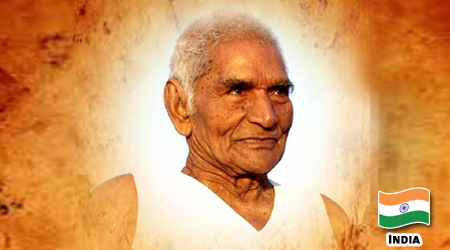
Baba Amte left his comfortable life as a wealthy Hindu lawyer to follow a personal calling, developing modern communities to help those with Hansen’s Disease (leprosy) and other so-called untouchables of his native India.
Rebelling against the “fast lane lifestyle” of his family, he sought out the poor, listening with mounting outrage of the stories of their plight, their destitution, and the scorn of which they were often the subject. He was awarded a United Nations Human Rights Award and attended a Christian college, where the seeds of the Christian value of care and service were first sown.

George MacLeod
Templetion Prize 1989
Lord MacLeod, founder of the monastic Iona Community on an island off the west coast of Scotland, spent his life reviving a prayer-centered spiritual movement.
Applying a simple monastic rule of prayer-centered life to its daily routine, the community became one of the most innovative and progressive spiritual movements in the Christian Church. This ecumenical community’s work continues, encouraging peace in the world and helping ordinary men and women with their personal struggles.
View More

Carl Friedrich von Weizsäcker
Templetion Prize 1989
Carl Friedrich von Weizsäcker explored the intersection of physics, cosmology, and theology in work that placed him at the forefront of the reconciliation between religion and natural science.
His key discoveries in nuclear physics, along with his application of nuclear physics to astrophysics, caused him to question the estrangement of religion and science and led to his investigation of Christianity’s obligation to technology.

Inamullah Khan
Templetion Prize 1988
Inamullah Kahn, founder and former secretary-general of the Modern World Muslim Congress in Karachi, Pakistan, devoted his life to advancing peace among Muslims, Christians, and Jews.
His interfaith activism provided important new opportunities to foster good will and understanding, in particular, by playing a crucial role in helping to settle the war between Iran and Iraq and to bring a message of peace to apartheid-era South Africa.

Stanley Jaki
Templetion Prize 1987
Stanley L. Jaki, a Benedictine monk and Professor of Astrophysics at Seton Hall University, was a leading thinker in areas at the boundary of science and theology.
He was a Fellow of Princeton from 1960-1962 and a visiting Fellow of the Institute of Advanced Studies at Princeton from 1966-1968. His many books carefully delineate the importance of differences as well as similarities between science and religion. The judges of the Prize said that he offered the world a reinterpretation of the history of science.

James I. McCord
Templetion Prize 1986
James McCord was chancellor of the Center for Theological Inquiry in Princeton, New Jersey and president of the Princeton Theological Seminary.
He spent his professional life investigating the relationship between science and religion through studies on the nature of reality. He was instrumental to inaugurating the Center of Theological Inquiry, which was devoted to interrelation between science and theology and their areas of mutual influence.

Sir Alister Clavering Hardy
Templetion Prize 1985
Sir Alister Hardy, founder of the Sir Alister Hardy Research Centre at Manchester College, Oxford, began his career as a marine biologist but went on to gain prominence for original empirical studies that used scientific methodology to investigate religious experience.
He spent a lifetime seeking evidence of God’s centrality to the human condition.

Michael Bourdeaux
Templetion Prize 1984
Michael Bourdeaux, founder of Keston College in England, worked to examine and explain the systematic destruction of religion in Iron Curtain nations during the Cold War and to defend the rights of faiths in these countries to worship as they chose.
When the Soviet Union and the Eastern Bloc regimes collapsed, Bourdeaux’s efforts for universal religious freedom were widely embraced.

Aleksandr Solzhenitsyn
Templetion Prize 1983
Aleksandr Solzhenitsyn’s struggle for open expression made him one of the world’s most respected men.
Under the repressive Soviet regime, he held firm in his beliefs and shared his worldview through powerful writings and devastating critiques of Russian Communism. His works renewed vitality in the Orthodox tradition and evidenced a profound spirituality.

Billy Graham
Templetion Prize 1982
Billy Graham took his message of Christianity into the electronic world of radio and television, invigorating an entire generation with a simple and poignant message of salvation.
He maintained a dignity that drew enormous audiences and enthusiastic support with an interpretation of the Gospel that still speaks to the problems and pressures of today.

Cicely Saunders
Templetion Prize 1981
Dame Cicely Saunders spent years close to terminally ill patients as they expressed their physical, psychological, and spiritual pain.
She went on to found the Hospice and Palliative Care Movement, combining a scientifically rigorous program with a unique social and spiritual awareness.
Templetion Prize Laureates (1980 ~ 1971)

Ralph Wendell Burhoe
Templetion Prize 1980
Ralph Wendell Burhoe was the founder and editor of Zygon: Journal of Religion and Science.
Burhoe pursued a passionate investigation into the differences and similarities between theology and science, becoming one of the world’s most informed voices in communicating this evolving research.

Nikkyō Niwano
Templetion Prize 1979
Nikkyo Niwano co-founded the Japanese Buddhist movement Rissho Kosei-Kai, which aims to establish “the teaching of the true Law in the world, mutual exchange of thought among people of faith, and the perfection of the personality.”
The movement blossomed from a handful of adherents into the world’s largest Buddhist lay group. Niwano was also the founder of the World Conference on Religion and Peace.

Thomas F. Torrance
Templetion Prize 1978
Thomas Torrance, former Moderator of the Church of Scotland, was one of the first religious thinkers to win the respect of both theologians and scientists.
In his long career as Professor of Christian Dogmatics at New College, University of Edinburgh, his insights on the rationality of the universe attempted to provide evidence of God through scientific reasoning.
View More

Chiara Lubich
Templetion Prize 1977
Chiara Lubich founded and developed Italy’s Focolare Movement, a community dedicated to serving the poor.
With roots in Trent, it expanded to other Italian cities, followed by Focolare settlements worldwide, including in Belgium, Germany, France, the United States, Japan, and Hong Kong.

Leo Joseph Suenens
Templetion Prize 1976
Cardinal Suenens, Archbishop of Malines-Brussels, Belgium, was a pioneer in the research and discourse of the Charismatic Renewal Movement.
The Cardinal’s enlightened discourse provided guidance and reassurance about the movement, eliminating misunderstanding and offering thoughtful insight to followers and observers alike.

Sarvepalli Radhakrishnan
Templetion Prize 1975
Sir Sarvepalli Radhakrishnan was President of India from 1962 to 1967.
An Oxford Professor of Eastern Religions and Ethics, he consistently advocated non-aggression in India’s conflicts with neighboring Pakistan. His accessible writings underscored his country’s religious heritage and sought to convey a universal reality of God that embraced love and wisdom for all people.
Frère Roger
Templetion Prize 1974
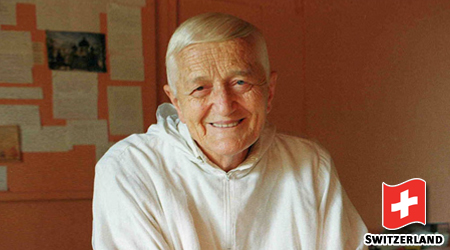
Brother Roger was founder and Prior (director) of the religious brotherhood known as the Taizé Community in France.
He initiated efforts to aide orphans in the region surrounding the community, which led to the founding of the Council of Youth and then the Intercontinental Meetings of Young Adults, which annually bring tens of thousands of young adults from throughout the world to pray and reflect in Taizé.
Mary Teresa Bojaxhiu
Templetion Prize 1973
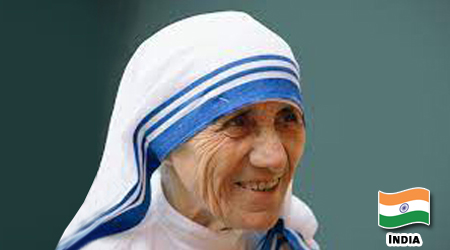
Mother Teresa, founder of India’s Missionaries of Charity, was recognized by the inaugural Templeton Prize (six years before she received the Nobel Peace Prize) for her extraordinary efforts to help the homeless and neglected children of Kolkata.
Her heroic work brought about real change among those she served and continues to inspire millions around the world. Mother Teresa was canonized as Saint Teresa of Kolkata by Pope Francis on September 4, 2016.