


World Food Prize

World Food Prize
The World Food Prize is the premier global award for food and agriculture, often called the "Nobel Prize for Food," recognizing individuals who advance human development by improving food quality, quantity, or availability. Founded by Nobel Laureate Norman Borlaug in 1986, it honors breakthroughs in plant science, nutrition, food tech, sustainability, and more, awarding $500,000 to laureates for significant impact on the world's food system.
| Sl | Name | Country | Flag | Year | Awarded For |
|---|---|---|---|---|---|
| 56 | Mariangela Hungria | Brazil | 2025 | for significantly advanced human development by improving the quality, quantity, or availability of food in the world. | |
| 55 | Geoffrey Hawtin | United Kingdom | 2024 | for significantly advanced human development by improving the quality, quantity, or availability of food in the world. | |
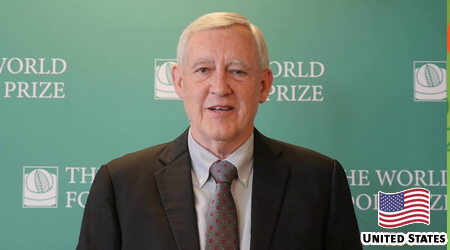
| 54 | Cary Fowler | United States | 2024 | for significantly advanced human development by improving the quality, quantity, or availability of food in the world. | |
| 53 | Heidi Kühn | United States | 2023 | for significantly advanced human development by improving the quality, quantity, or availability of food in the world. | |
| 52 | Cynthia Rosenzweig | United States | 2022 | for significantly advanced human development by improving the quality, quantity, or availability of food in the world. | |
| 51 | Shakuntala Haraksingh Thilsted | Trinidad & Tobago | 2021 | for significantly advanced human development by improving the quality, quantity, or availability of food in the world. | |
| 50 | Rattan Lal | United States | 2020 | for significantly advanced human development by improving the quality, quantity, or availability of food in the world. | |
| 49 | Simon N. Groot | Netherlands | 2019 | for significantly advanced human development by improving the quality, quantity, or availability of food in the world. | |
| 47 | Lawrence Haddad | United Kingdom | 2018 | for significantly advanced human development by improving the quality, quantity, or availability of food in the world. | |
| 48 | David Nabarro | United Kingdom | 2018 | for significantly advanced human development by improving the quality, quantity, or availability of food in the world. | |
| 46 | Akinwumi Adesina | Nigeria | 2017 | for significantly advanced human development by improving the quality, quantity, or availability of food in the world. | |
| 42 | Maria Andrade | Cape Verde | 2016 | for significantly advanced human development by improving the quality, quantity, or availability of food in the world. | |
| 43 | Robert Mwanga | Uganda | 2016 | for significantly advanced human development by improving the quality, quantity, or availability of food in the world. | |
| 44 | Jan Low | United States | 2016 | for significantly advanced human development by improving the quality, quantity, or availability of food in the world. | |
| 45 | Howarth Bouis | United States | 2016 | for significantly advanced human development by improving the quality, quantity, or availability of food in the world. | |
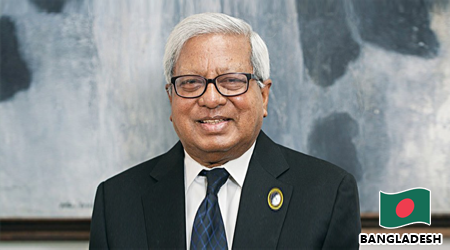
| 41 | Sir Fazle Hasan Abed | Bangladesh | 2015 | for significantly advanced human development by improving the quality, quantity, or availability of food in the world. | |
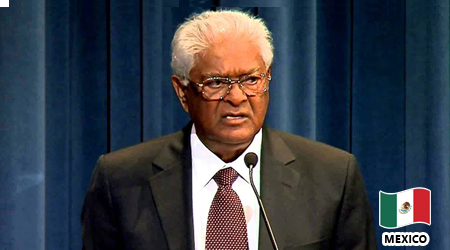
| 40 | Sanjaya Rajaram | Mexico | 2014 | for significantly advanced human development by improving the quality, quantity, or availability of food in the world. | |
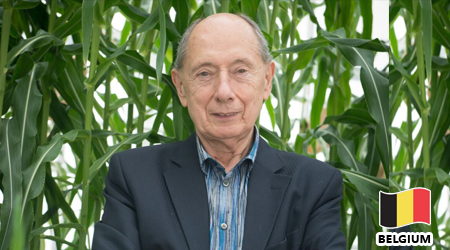
| 39 | Marc Van Montagu | Belgium | 2013 | for significantly advanced human development by improving the quality, quantity, or availability of food in the world. | |
| 37 | Mary-Dell Chilton | United States | 2013 | for significantly advanced human development by improving the quality, quantity, or availability of food in the world. | |
| 38 | Robert T. Fraley | United States | 2013 | for significantly advanced human development by improving the quality, quantity, or availability of food in the world. | |
| 36 | Daniel Hillel | Israel | 2012 | for significantly advanced human development by improving the quality, quantity, or availability of food in the world. | |
| 34 | John Agyekum Kufuor | Ghana | 2011 | for significantly advanced human development by improving the quality, quantity, or availability of food in the world. | |
| 35 | Luiz Inácio Lula da Silva | Brazil | 2011 | for significantly advanced human development by improving the quality, quantity, or availability of food in the world. | |
| 32 | David Beckmann | United States | 2010 | for significantly advanced human development by improving the quality, quantity, or availability of food in the world. | |
| 33 | Jo Luck | United States | 2010 | for significantly advanced human development by improving the quality, quantity, or availability of food in the world. | |
| 31 | Gebisa Ejeta | Ethiopia | 2009 | for significantly advanced human development by improving the quality, quantity, or availability of food in the world. | |
| 29 | Robert Dole | United States | 2008 | for significantly advanced human development by improving the quality, quantity, or availability of food in the world. | |
| 30 | George McGovern | United States | 2008 | for significantly advanced human development by improving the quality, quantity, or availability of food in the world. | |
| 28 | Philip E. Nelson | United States | 2007 | for significantly advanced human development by improving the quality, quantity, or availability of food in the world. | |
| 25 | Edson Lobato | Brazil | 2006 | for significantly advanced human development by improving the quality, quantity, or availability of food in the world. | |
| 27 | Andrew Colin McClung | United States | 2006 | for significantly advanced human development by improving the quality, quantity, or availability of food in the world. | |
| 26 | Alysson Paolinelli | Brazil | 2006 | for significantly advanced human development by improving the quality, quantity, or availability of food in the world. | |
| 24 | Modadugu Vijay Gupta | India | 2005 | for significantly advanced human development by improving the quality, quantity, or availability of food in the world. | |
| 22 | Yuan Longping | China | 2004 | for significantly advanced human development by improving the quality, quantity, or availability of food in the world. | |
| 23 | Monty Jones | Sierra Leone | 2004 | for significantly advanced human development by improving the quality, quantity, or availability of food in the world. | |
| 21 | Catherine Bertini | United States | 2003 | for significantly advanced human development by improving the quality, quantity, or availability of food in the world. | |
| 20 | Pedro A. Sanchez | Cuba | 2002 | for significantly advanced human development by improving the quality, quantity, or availability of food in the world. | |
| 19 | Per Pinstrup-Andersen | Denmark | 2001 | for significantly advanced human development by improving the quality, quantity, or availability of food in the world. | |
| 18 | Surinder Vasal | India | 2000 | for significantly advanced human development by improving the quality, quantity, or availability of food in the world. | |
| 17 | Evangelina Villegas | Mexico | 2000 | for significantly advanced human development by improving the quality, quantity, or availability of food in the world. | |
| 16 | Walter Plowright | United Kingdom | 1999 | for significantly advanced human development by improving the quality, quantity, or availability of food in the world. | |
| 15 | B. R. Barwale | India | 1998 | for significantly advanced human development by improving the quality, quantity, or availability of food in the world. | |
| 14 | Perry Adkisson | United States | 1997 | for significantly advanced human development by improving the quality, quantity, or availability of food in the world. | |
| 13 | Ray F. Smith | United States | 1997 | for significantly advanced human development by improving the quality, quantity, or availability of food in the world. | |
| 11 | Henry Beachell | United States | 1996 | for significantly advanced human development by improving the quality, quantity, or availability of food in the world. | |
| 12 | Gurdev Khush | India | 1996 | for significantly advanced human development by improving the quality, quantity, or availability of food in the world. | |
| 10 | Hans Rudolf Herren | Switzerland | 1995 | for significantly advanced human development by improving the quality, quantity, or availability of food in the world. | |
| 9 | Muhammad Yunus | Bangladesh | 1994 | for significantly advanced human development by improving the quality, quantity, or availability of food in the world. | |
| 8 | He Kang | China | 1993 | for significantly advanced human development by improving the quality, quantity, or availability of food in the world. | |
| 6 | Edward F. Knipling | United States | 1992 | for significantly advanced human development by improving the quality, quantity, or availability of food in the world. | |
| 7 | Raymond C. Bushland | United States | 1992 | for significantly advanced human development by improving the quality, quantity, or availability of food in the world. | |
| 5 | Nevin S. Scrimshaw | United States | 1991 | for significantly advanced human development by improving the quality, quantity, or availability of food in the world. | |
| 4 | John Niederhauser | United States | 1990 | for significantly advanced human development by improving the quality, quantity, or availability of food in the world. | |
| 3 | Verghese Kurien | India | 1989 | for significantly advanced human development by improving the quality, quantity, or availability of food in the world. | |
| 2 | Robert F. Chandler, Jr. | United States | 1988 | for significantly advanced human development by improving the quality, quantity, or availability of food in the world. | |
| 1 | M. S. Swaminathan | India | 1987 | for significantly advanced human development by improving the quality, quantity, or availability of food in the world. |
World Food Prize Laureates (2030 ~ 2021)
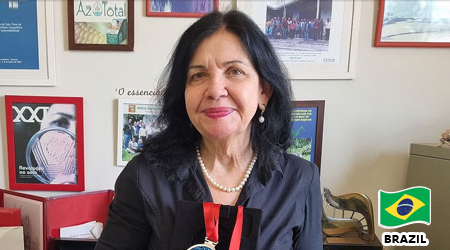
Mariangela Hungria
World Food Prize 2025
Dr. Mariangela Hungria (born 1958) is a pioneering Brazilian microbiologist who revolutionized tropical agriculture through biological nitrogen fixation (BNF). A senior researcher at the Brazilian Agricultural Research Corporation (Embrapa) for over four decades, she is credited with driving Brazil's "Micro Green Revolution" by replacing costly, environmentally harmful chemical fertilizers with beneficial soil bacteria.Her research focused on identifying elite strains of bacteria, such as Bradyrhizobium and Azospirillum brasilense, which enable crops like soybeans, maize, and wheat to pull nitrogen directly from the air. These microbial inoculants are now used on over 40 million hectares in Brazil, saving farmers an estimated $25 billion annually in input costs and preventing millions of tons of $CO_2$ emissions.In 2025, Dr. Hungria became the first Brazilian woman to be named a World Food Prize laureate. Her work is a cornerstone of regenerative agriculture, proving that high-yield farming can be both sustainable and affordable.
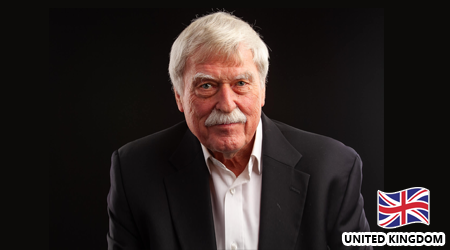
Dr. Geoffrey Hawtin
World Food Prize 2024
Dr. Geoffrey Hawtin (born 1949) is a British-Canadian agricultural scientist who has spent five decades protecting the world’s agricultural heritage. He is best known as a co-founder and "father" of the Svalbard Global Seed Vault, a facility carved into the Arctic permafrost to safeguard over 1.3 million seed samples as a fail-safe against global catastrophes.Early in his career, while working with ICARDA in the 1970s, Hawtin risked his life to rescue a precious collection of legumes during the Lebanese Civil War, moving seeds across mined roads to safety. He later founded the Global Crop Diversity Trust, establishing an endowment to fund genebanks in perpetuity. His leadership was also instrumental in negotiating the International Treaty on Plant Genetic Resources, ensuring that crop diversity remains a shared global resource.In 2024, Dr. Hawtin was named a World Food Prize laureate, sharing the honor with Cary Fowler for their visionary leadership in seed conservation.

Dr. Cary Fowler
World Food Prize 2024
Dr. Cary Fowler (born 1949) is a world-renowned American agriculturalist and a champion of biodiversity, famously known as the "father" of the Svalbard Global Seed Vault. Located deep within an Arctic mountain in Norway, the vault serves as the ultimate "insurance policy" for the world's food supply, safeguarding over 1.3 million seed samples against extinction, conflict, and climate change.Throughout his fifty-year career, Fowler has held pivotal roles, including Executive Director of the Global Crop Diversity Trust and U.S. Special Envoy for Global Food Security. In the 1990s, he led the first global assessment of plant genetic resources for the UN’s FAO and was the chief architect of the first Global Plan of Action, adopted by 150 countries to conserve crop diversity.In 2024, Dr. Fowler was named a World Food Prize laureate, sharing the honor with Dr. Geoffrey Hawtin for their visionary leadership in seed conservation. His work ensures that the "raw material" of agriculture remains available for future generations to breed resilient crops.
View More

Heidi Kühn
World Food Prize 2023
Heidi Kühn is a visionary American humanitarian and the founder of Roots of Peace, a nonprofit organization dedicated to turning "mines into vines." Inspired by the late Princess Diana, Kühn launched her mission in 1997 with the goal of replacing the "seeds of terror"—landmines—with productive agricultural fields.Her pioneering "Mines to Vines" model has transformed former battlefields into thriving vineyards and orchards in countries like Croatia, Vietnam, and Afghanistan. The organization’s approach is three-fold: Demine, Replant, and Rebuild. By partnering with demining agencies and providing farmers with modern tools and access to international markets, she has helped over one million farmers and families transition from conflict to economic stability. In Afghanistan alone, her work helped increase agricultural exports from $250 million to over $1.4 billion.In 2023, Kühn was awarded the World Food Prize for her lifelong commitment to restoring food security and livelihoods in war-torn regions. Her work demonstrates that agriculture can be a powerful instrument for peace, healing both the land and its people.
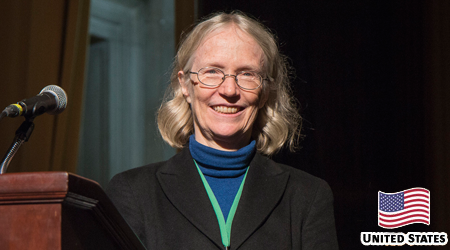
Dr. Cynthia Rosenzweig
World Food Prize 2022
Dr. Cynthia Rosenzweig is an American agronomist and climatologist who pioneered the study of how climate change impacts global food systems. A Senior Research Scientist at the NASA Goddard Institute for Space Studies, she began her career as a farmer, an experience that informs her "farmer-centric" approach to climate resilience.She is the founder of the Agricultural Model Intercomparison and Improvement Project (AgMIP), a global network of over 1,000 researchers. By integrating climate, crop, and economic models, AgMIP provides decision-makers in more than 90 countries with the evidence needed to adapt to increasing climate extremes. Rosenzweig also played a critical role in the IPCC, serving as a Coordinating Lead Author on reports that laid the scientific foundation for the Paris Agreement.In 2022, she was awarded the World Food Prize for her four decades of leadership in modeling the relationship between climate and agriculture. Her work shifted the global conversation from simply understanding the causes of climate change to proactively managing its consequences for food security.
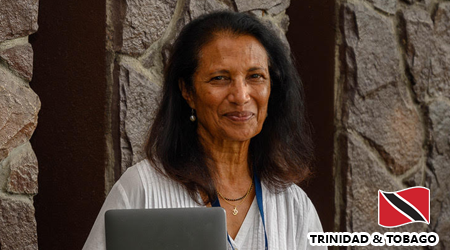
Dr. Shakuntala Haraksingh Thilsted
World Food Prize 2021
Dr. Shakuntala Haraksingh Thilsted is a visionary native of Trinidad and Tobago and a citizen of Denmark, celebrated for her groundbreaking research on small fish species and their role in global nutrition. As the Global Lead for Nutrition and Public Health at WorldFish, she shifted the focus of aquatic food systems from just "feeding" people to "nourishing" them.Her landmark research in Bangladesh and Cambodia revealed that small, locally consumed fish—eaten whole with heads and bones—are "superfoods" exceptionally rich in micronutrients like Vitamin A, iron, calcium, and zinc. She developed "nutrition-sensitive" aquaculture practices, such as pond polyculture, where large fish are raised alongside small ones to increase nutrient output without increasing costs.In 2021, she was awarded the World Food Prize for these life-changing innovations. Her work has fundamentally improved the health and cognitive development of millions of children and mothers in Asia and Africa, ensuring that the world's most vulnerable populations have access to essential, sustainable nutrition.
World Food Prize Laureates (2020 ~ 2011)
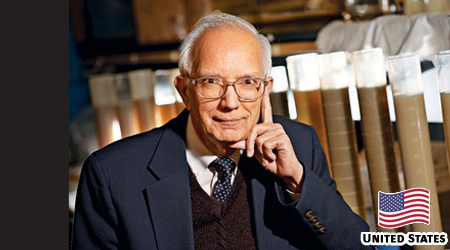
Dr. Rattan Lal
World Food Prize 2020
Dr. Rattan Lal (born 1944) is an Indian-American soil scientist whose work has fundamentally changed how the world views "the dirt under our feet." Growing up on a small subsistence farm, Lal witnessed firsthand the challenges of degraded land, which fueled his lifelong mission to prove that soil health is the foundation of global food security and climate mitigation.His pioneering research centers on soil carbon sequestration—the process of capturing atmospheric carbon dioxide and storing it in the soil as organic matter. By advocating for practices like no-till farming, cover cropping, and mulching, Lal demonstrated that healthy soils act as a "bank account" for the planet, reducing greenhouse gases while simultaneously doubling crop yields.In 2020, Dr. Lal was awarded the World Food Prize for his "soil-centric" approach, which has benefited over 500 million smallholder farmers. He is a Distinguished University Professor at The Ohio State University and was a lead author for the IPCC, contributing to work that earned the 2007 Nobel Peace Prize.
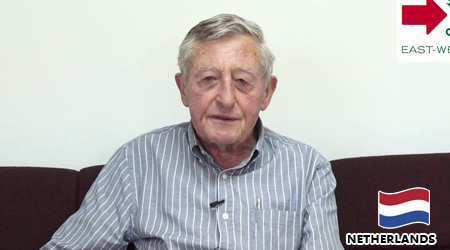
Simon N. Groot
World Food Prize 2019
Dr. Simon N. Groot (1934–2025) was a Dutch agronomist and sixth-generation seedsman who transformed tropical agriculture. In 1982, he founded East-West Seed in the Philippines, driven by the realization that high-quality vegetable seeds—common in Europe—were unavailable to smallholder farmers in the tropics.Partnering with Filipino seed trader Benito Domingo, Groot developed the first locally adapted commercial hybrid vegetables, such as the "Jade Star" bitter gourd. These varieties were bred specifically for tropical climates, offering resistance to local diseases and significantly higher yields. His work shifted the focus of the global seed industry toward the needs of small-scale farmers, helping millions transition from subsistence to commercial horticulture.In 2019, Groot was awarded the World Food Prize for his "transformative role in empowering millions of smallholder farmers" across more than 60 countries. He also established a renowned Knowledge Transfer program, providing hands-on training to tens of thousands of farmers annually to ensure they could maximize the potential of improved seeds.
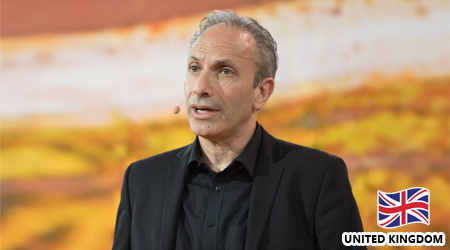
Dr. Lawrence Haddad
World Food Prize 2018
Dr. Lawrence Haddad (born 1959) is a world-renowned British economist and a leading advocate for global nutrition. As the Executive Director of the Global Alliance for Improved Nutrition (GAIN), he has spent decades working to bridge the gap between economic research and public health, arguing that nutrition is not just a health issue, but a critical driver of national economic growth.Before joining GAIN in 2016, Dr. Haddad served as the Director of the Institute of Development Studies (IDS) and was a founding co-chair of the Global Nutrition Report. His work focused on providing the evidence needed to convince world leaders to prioritize the "first 1,000 days" of a child's life. He famously demonstrated that for every $1 invested in nutrition, countries could see up to $16 in economic returns.In 2018, he was named a World Food Prize laureate, sharing the award with David Nabarro. They were recognized for their extraordinary leadership in reducing the number of stunted children worldwide by 10 million through political mobilization and evidence-based policy.
View More
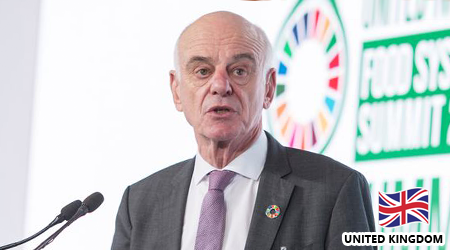
David Nabarro
World Food Prize 2018
Sir David Nabarro (1949–2025) was a British physician and diplomat who dedicated his career to global public health and food security. He is best known for his "extraordinary intellectual and policy leadership" in uniting diverse stakeholders to tackle maternal and child undernutrition.His most enduring legacy is the Scaling Up Nutrition (SUN) Movement, which he helped launch in 2010. As its first coordinator, Nabarro brought together over 50 countries and hundreds of organizations to prioritize nutrition during the critical "first 1,000 days"—the window from pregnancy to a child's second birthday. This collaborative effort is credited with reducing the number of stunted children worldwide by 10 million between 2012 and 2017.In 2018, he was named a World Food Prize laureate, sharing the honor with Lawrence Haddad. Beyond nutrition, Nabarro was a key figure in managing global crises, serving as the UN Special Envoy for Ebola and later as a Special Envoy of the WHO Director-General on COVID-19.
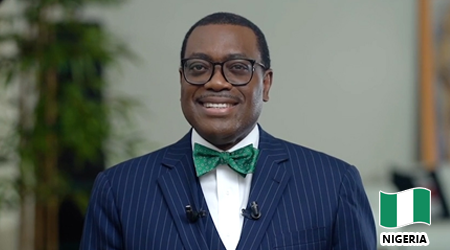
Dr. Akinwumi Adesina
World Food Prize 2017
Dr. Akinwumi Adesina (born 1960) is a world-renowned development economist and the current President of the African Development Bank (AfDB). Often called "Africa’s Optimist-in-Chief," he is the first Nigerian to lead the institution. His leadership is defined by the "High 5" agenda, a bold strategy to power, feed, industrialize, and integrate Africa while improving the quality of life for its people.Before joining the AfDB, Dr. Adesina served as Nigeria’s Minister of Agriculture (2011–2015). He revolutionized the sector by introducing the Electronic Wallet (E-Wallet) system, which used mobile technology to deliver subsidized seeds and fertilizers directly to farmers, effectively ending decades of corruption in the fertilizer supply chain.In 2017, he was named the World Food Prize laureate for his two decades of work in agricultural innovation. He famously pledged his $250,000 prize money to establish the World Hunger Fighters Foundation, providing grants and fellowships to support young African "agripreneurs."
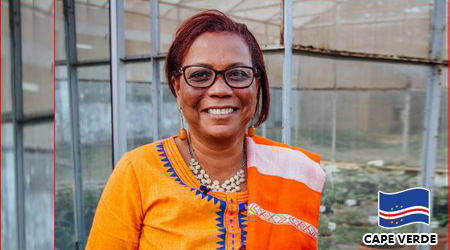
Dr. Maria Andrade
World Food Prize 2016
Dr. Maria Andrade is a Cape Verdean scientist who has spent over two decades in Mozambique revolutionizing the role of the sweetpotato in African agriculture. Known as "Senhora Polpa Alaranjada" (the Orange Flesh Lady), she has been a driving force behind the development and distribution of orange-fleshed sweetpotatoes (OFSP).Working with the International Potato Center (CIP), Dr. Andrade has released 30 biofortified varieties, 20 of which are specifically bred to be drought-tolerant. Her "accelerated breeding scheme" halved the time required to develop new varieties from eight years to four, allowing for a faster response to food insecurity. By using an "integrated approach" that includes nutrition education and creative marketing—such as "orange brand" campaigns with songs and colorful clothing—she helped reach over four million people.In 2016, she was a co-recipient of the World Food Prize for her success in using biofortification to combat Vitamin A deficiency. Her work has fundamentally shifted the sweetpotato from a "crop of the poor" to a vital tool for public health and climate resilience across sub-Saharan Africa.
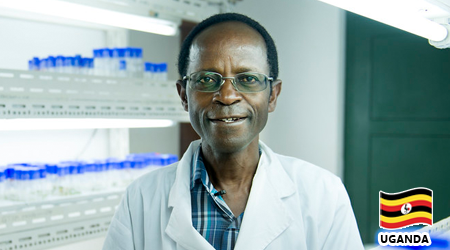
Dr. Robert Mwanga
World Food Prize 2016
Dr. Robert Mwanga (born 1954) is a distinguished Ugandan plant breeder celebrated for his transformative work in biofortification. He is a central figure in the development and dissemination of orange-fleshed sweetpotatoes (OFSP), a nutrient-dense crop designed to combat Vitamin A deficiency in sub-Saharan Africa.Starting in the 1980s, Mwanga led efforts to replace traditional white-fleshed varieties—which are high in starch but low in nutrients—with Vitamin A-rich orange varieties. He successfully bred cultivars that were not only high-yielding and resistant to the devastating sweetpotato virus but also possessed the "dry-fleshed" texture preferred by African consumers. His research at the Namulonge facility in Uganda became a regional model, training scientists from across the continent.In 2016, Dr. Mwanga was named a World Food Prize laureate, sharing the honor with Maria Andrade, Jan Low, and Howarth Bouis. His contributions have been instrumental in reaching millions of households, helping to reduce childhood blindness and improve maternal health through sustainable, food-based nutrition.
Dr. Jan Low
World Food Prize 2016
Dr. Jan Low is an American agricultural economist and principal scientist at the International Potato Center (CIP). She is renowned for her pioneering work in combatting Vitamin A deficiency (VAD) through the promotion of orange-fleshed sweetpotatoes (OFSP) in sub-Saharan Africa.While white-fleshed sweetpotatoes are widely grown in Africa, they lack pro-vitamin A. Dr. Low spearheaded the "integrated agriculture-nutrition-marketing" approach, proving that biofortified crops could not only be successfully grown but also widely accepted by local communities. Her research demonstrated that regular consumption of OFSP significantly increased Vitamin A intake among children and women, reducing the risk of blindness and immune system failure.In 2016, Dr. Low was named a World Food Prize co-laureate, sharing the honor with her CIP colleagues Maria Andrade and Robert Mwanga, and Howarth Bouis of HarvestPlus. She led the "Sweetpotato for Profit and Health Initiative," which reached millions of households across multiple African countries, establishing OFSP as a primary tool for nutritional security.
Dr. Howarth Bouis
World Food Prize 2016
Dr. Howarth "Howdy" Bouis is an American economist and a pioneer in the fight against "hidden hunger"—the chronic lack of essential vitamins and minerals in the diet. He is the founding director of HarvestPlus, a global program that uses biofortification to improve the nutritional quality of staple crops.In the early 1990s, while at the International Food Policy Research Institute (IFPRI), Bouis hypothesized that breeding higher levels of micronutrients directly into crops like rice, wheat, and maize could sustainably improve the health of poor, rural families. Despite initial skepticism from the scientific community, his leadership turned this vision into a global movement.In 2016, Dr. Bouis was awarded the World Food Prize for his 25 years of dedication to this field. His work has led to the release of iron, zinc, and Vitamin A-fortified varieties in over 40 countries, benefiting more than 50 million people. He currently serves as an Emeritus Fellow at IFPRI and continues to advocate for nutrition-smart agricultural policies.
Sir Fazle Hasan Abed
World Food Prize 2015
Sir Fazle Hasan Abed (1936–2019) was a visionary social entrepreneur and the founder of BRAC, which grew from a small relief effort in post-war Bangladesh into the world’s largest non-governmental organization. Originally a senior corporate executive at Shell Oil, Abed’s life path shifted dramatically following the 1970 Bhola cyclone and the 1971 Liberation War, leading him to sell his London flat to fund initial rehabilitation efforts for refugees.Under his leadership, BRAC pioneered a holistic, "market-oriented" approach to poverty alleviation. He introduced scalable models in microfinance, healthcare, and education, famously training millions of women to treat dehydration and establishing a network of non-formal schools for girls. In 2015, he was awarded the World Food Prize for his "unparalleled achievement" in building a self-sustaining system that integrated agricultural research with social enterprise, directly improving food security for millions. Abed was knighted by the British Crown in 2010 for his global services to humanity.
Dr. Sanjaya Rajaram
World Food Prize 2014
Dr. Sanjaya Rajaram (1943–2021) was an Indian-born Mexican agronomist and one of the most influential wheat breeders in history. A "worthy successor" to Nobel Laureate Norman Borlaug, Rajaram led the wheat breeding program at the International Maize and Wheat Improvement Center (CIMMYT) in Mexico for decades.His most significant scientific breakthrough was the successful crossing of winter and spring wheat varieties, which had been genetically isolated for centuries. This innovation created wheat plants with higher yields, superior grain quality, and a broad genetic base that allowed them to thrive in diverse climates—from the acidic soils of Brazil to the high altitudes of remote China.In 2014, Dr. Rajaram was awarded the World Food Prize for developing an astounding 480 wheat varieties. These cultivars, grown on over 58 million hectares in 51 countries, increased global wheat production by more than 200 million tons. He also introduced the concept of "slow rusting" to provide durable resistance against devastating fungal diseases, ensuring more stable food supplies for millions.
Dr. Marc Van Montagu
World Food Prize 2013
Dr. Marc Van Montagu (born 1933) is a Belgian molecular biologist celebrated as a pioneer of plant biotechnology. Working at Ghent University with his colleague Jozef Schell, he made the revolutionary discovery in 1974 that Agrobacterium tumefaciens—a soil bacterium—carries a circular DNA molecule called the Ti plasmid.They demonstrated that this plasmid is responsible for transferring genetic material into plant cells, a process they successfully harnessed to create the first genetically engineered plants in 1983. This breakthrough provided the foundational technology for modern agricultural biotechnology, enabling the development of crops with enhanced yields and resistance to pests, disease, and environmental stress.In 2013, Dr. Van Montagu was honored as a World Food Prize laureate, sharing the award with Mary-Dell Chilton and Robert T. Fraley. Beyond his research, he founded the Institute of Plant Biotechnology Outreach (IPBO) to help developing nations access biotechnological advancements. In recognition of his immense scientific contributions, he was granted the title of Baron by the King of the Belgians in 1990.
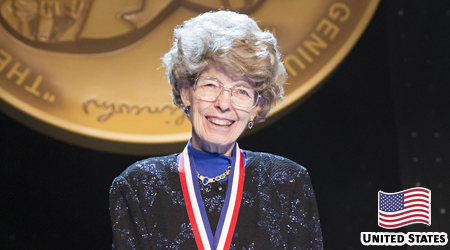
Dr. Mary-Dell Chilton
World Food Prize 2013
Dr. Mary-Dell Chilton (born 1939) is a pioneering American scientist widely regarded as one of the founders of modern plant biotechnology. Often called the "Queen of Agrobacterium," she led the first research team to produce a transgenic (genetically modified) plant in 1983.Her groundbreaking work began with the study of Agrobacterium tumefaciens, a bacterium that causes tumors in plants. In 1977, Chilton and her team at the University of Washington demonstrated that the bacterium transfers a specific piece of its own DNA—the T-DNA from a Ti plasmid—into the plant's genome. She later proved that this natural process could be harnessed by "disarming" the bacterium, removing its tumor-causing genes and replacing them with desirable traits.In 2013, Dr. Chilton was awarded the World Food Prize for these revolutionary discoveries, which paved the way for crops with increased yields and resistance to insects and disease. Beyond her research at Washington University and Syngenta, she is known for her dedication to mentorship, famously hosting dozens of international scientists at her home, dubbed the "Chilton Hilton."
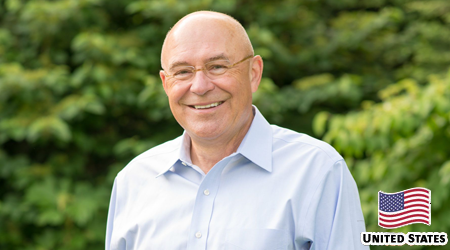
Dr. Robert T. Fraley
World Food Prize 2013
Dr. Robert T. Fraley is a renowned American microbiologist and a central figure in the birth of agricultural biotechnology. Often referred to as the "father of agricultural biotechnology," Fraley spent nearly four decades at Monsanto, where he led the team that first successfully transferred foreign genes into plant cells in the early 1980s.His groundbreaking work led to the development of the first genetically modified (GM) crops, including the Roundup Ready soybean and insect-resistant corn. These innovations transformed global farming by allowing for more efficient weed control and reducing the need for chemical insecticides, significantly increasing crop yields and farm productivity worldwide.In 2013, Dr. Fraley was awarded the World Food Prize, sharing the honor with Marc Van Montagu and Mary-Dell Chilton. The award recognized their collective achievements in using plant biotechnology to improve the quality, quantity, and availability of food. Despite his retirement as Chief Technology Officer, Fraley remains a prominent advocate for using science to address global food security challenges.
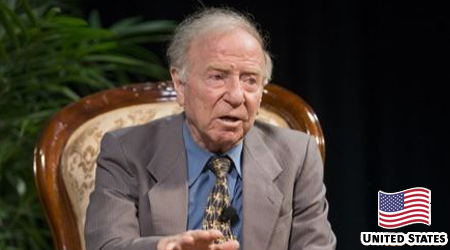
Dr. Daniel Hillel
World Food Prize 2012
Dr. Daniel Hillel (1930–2021) was an Israeli-American agronomist and hydrologist who revolutionized global agriculture through the development of micro-irrigation. Born in Los Angeles and raised in Palestine, Hillel's pioneering work began in the 1950s in Israel's Negev Desert.He is celebrated for shifting irrigation away from "flooding" methods to a system of providing small, continuous amounts of water directly to plant roots. This "spoon-feeding" approach, often called drip irrigation, significantly increased crop yields while using up to 50% less water. His work was particularly transformative for arid and semi-arid regions, helping to combat desertification and improve food security in over 30 countries.In 2012, Dr. Hillel was awarded the World Food Prize. Notably, his nomination was supported by scientists from several Arab nations, highlighting his role in using scientific cooperation to bridge political and cultural divides. He authored over 20 books and served as a senior research scientist at Columbia University and NASA’s Goddard Institute for Space Studies.
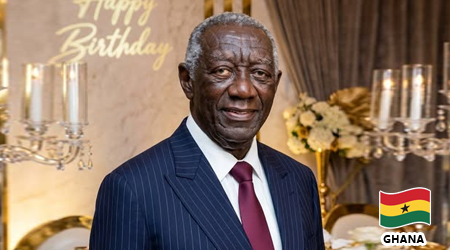
John Agyekum Kufuor
World Food Prize 2011
John Agyekum Kufuor, often called the "Gentle Giant," served as the President of Ghana from 2001 to 2009. His election was a landmark moment, marking the first peaceful democratic transfer of power in Ghana since independence. An Oxford-educated lawyer, Kufuor’s presidency was defined by a commitment to liberal democracy and economic stabilization.Domestically, Kufuor is credited with transitioning Ghana from a "Heavily Indebted Poor Country" (HIPC) to a middle-income economy. He introduced transformative social programs, including the National Health Insurance Scheme (NHIS) and the School Feeding Programme, which significantly improved public welfare. Under his leadership, Ghana’s cocoa production reached record levels, and the country achieved its highest GDP growth rates.On the global stage, he served as Chairperson of the African Union (2007–2008) and played a pivotal role in mediating conflicts in Kenya and Liberia. In 2011, he was a joint recipient of the World Food Prize for his dedication to food security—an honor he shared with Brazil's Lula da Silva.
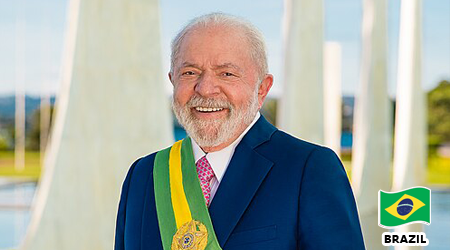
Luiz Inácio Lula da Silva
World Food Prize 2011
Luiz Inácio Lula da Silva, widely known as Lula, is a transformative figure in Brazilian politics, currently serving his third term as President. Born into extreme poverty in 1945, Lula worked as a shoeshine boy and metalworker before rising to prominence as a bold trade union leader during Brazil's military dictatorship.As a co-founder of the Workers' Party (PT), he was first elected president in 2002. His initial two terms (2003–2010) were defined by a commodities boom and landmark social programs like Bolsa Família, which lifted millions out of poverty and established him as one of the world's most popular leaders.His legacy, however, is polarizing. After leaving office with record-high approval ratings, he was imprisoned in 2018 on corruption charges—convictions that were later annulled, allowing his political resurrection. In 2022, he narrowly defeated Jair Bolsonaro, returning to power with a focus on environmental protection, social equity, and restoring Brazil’s diplomatic standing on the global stage.