

World Methodist Peace Award

World Methodist Peace Award
The World Methodist Peace Award was proposed by Dr. Stanley Leyland at the Thirteenth World Methodist Conference held in Dublin, Ireland in 1976. The Conference heard a stirring address by Rev. Eric Gallagher who was then in ministry at the heart of the conflict in Belfast. Rev. Gallagher’s positive suggestions about what the World Methodist Council could do in an effort to promote peace prompted Dr. Leyland to present a resolution establishing the World Methodist Peace Award. The Council agreed that the first award should go to a person in Northern Ireland. Subsequent awards would go to persons in areas where the concern for peace is of great importance. It was also decided at the 1976 Conference that a World Methodist Peace Award Committee would be established to decide on future recipients. The Officers of the Council, being a representative body, were named as the World Methodist Peace Award Committee, and criteria were written for the award
World Methodist Peace Award Laureates (2030 ~ 2021)
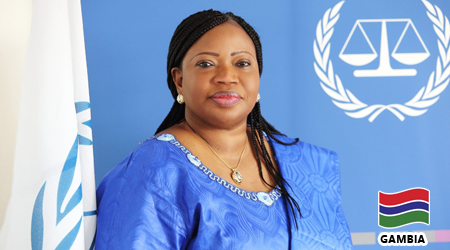
Fatou Bomm Bensouda
World Methodst Peace Award 2025
Fatou Bom Bensouda is a Gambian lawyer known for her prominent role in international justice. She served as the Chief Prosecutor of the International Criminal Court (ICC) from 2012 to 2021, after being the Deputy Prosecutor since 2004.During her tenure at the ICC, she dealt with cases from various regions, including Kenya, Mali, Georgia, and Palestine, and opened investigations into alleged war crimes in Afghanistan. She studied law in Nigeria and international maritime law in Malta.Before her international career, she held high legal positions in The Gambia, including Minister of Justice and Attorney General from 1998 to 2000 under President Yahya Jammeh. Her actions during this period have been a source of public criticism.Since 2022, she has served as the Gambian High Commissioner to the United Kingdom. She has been recognized for her work in advancing the rule of law.
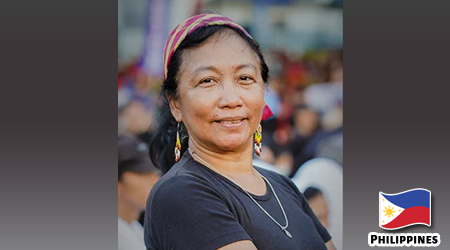
Deaconess Norma Dollaga
World Methodist Peace Award 2024
Deaconess Norma Dollaga is a United Methodist deaconess in the Philippines, who for decades has struggled heroically to forge the justice that makes for peace in her conflict-ridden homeland. When a campaign against the use of illegal drugs became a government-sanctioned war against the poor who used drugs, Dollaga became an outspoken advocate for the right of the poor not to be killed. She and other courageous faith leaders refused to be intimidated by then President Rodrigo Duterte and other government officials who villainized church leaders and others who spoke up for the poor. She organized prayer vigils and memorial services for the dead, people often killed by assassins on motorcycles or unidentified masked men who showed up at night in urban slums with a list of those to be killed.As can be seen in her founding of Rise Up, Dollaga has developed a knack for empowering others to join the struggle for justice and peace. She’s far from a lone leader, instead working in the trenches to help others move forward. A deaconess since her graduation from Harris Memorial College in 1985, since 2000 she has been appointed by the Bishop of the Philippines Central Conference to the Ecumenical Center for Development, also known as Kapatirang Simbahan Para sa Bayan (the Church of the People). As the organization’s General Secretary, she has helped shepherd ecumenical groups and networks focusing on human rights and peace. In addition to Rise Up, these include Dambana, which provides humanitarian assistance to communities affected by disasters and the climate crisis, and One Voice, an alliance of Catholic and Protestant church leaders advocating for human rights and good governance.United Methodist deaconesses in the Philippines are an amazing group of women. Yet the contributions they make to ministries both within and outside the church are often unrecognized by male church leaders. Frustrated with low pay and outright discrimination, it’s not surprising that many have abandoned their official deaconess status for better pay or more effective work unrelated to the church. Deaconesses have left the church to become pastors, social workers, government officials and guerrilla insurgents. Despite the myriad challenges, Dollaga has stayed true to her calling and appointment as a deaconess, and has become an inspiring model for younger deaconesses interested in deepening their Wesleyan witness to personal and social holiness within the Philippines. She frequently teaches classes and leads seminars as a member of the faculty at Harris Memorial College, the regional training ground for deaconess and women leaders in the United Methodist Church and other denominations.While leading street demonstrations and testifying at legislative hearings is part of her public persona, her witness is deep and comprehensive. Just as her work with Rise Up combined public protagonism with behind the scenes pastoral support for the victims of violence, so her work in the campaign to save Mary Jane Velasco. A Filipina migrant worker imprisoned in Indonesia, and her work demanding justice after the 2014 murder of Jennifer Laude, a trans woman, was accompanied by pastoral and other support for the women’s families. While leading demonstrations for indigenous rights in the streets, she has also raised funds to build schools of displaced indigenous children. While publicly demanding the resumption of peace talks between the government and the National Democratic Front, she has offered support for the families of people killed in the war’s all too frequent massacres. Such ministry combines concrete solidarity with a pastoral accompaniment that offers the gift of hope to those left hurting and grieving.Former Manila Area Bishop Ciriaco Q. Francisco characterized Dollaga’s ministry with the marginalized as “heroic work for the Lord.” Dollaga has for decades displayed the courage, creativity, and consistency that mark her as a true disciple of Jesus Christ, proclaiming abundant life to all, especially those victims of injustice in her homeland. Because she has embodied both compassion and resilience as she has witnessed for true peace in the Philippines, it is an honor to nominate her for the World Methodist Peace Award.
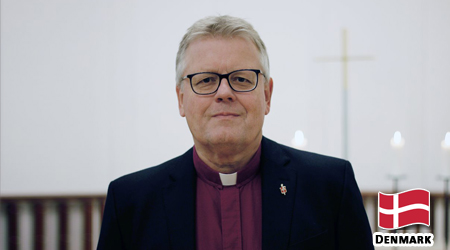
Bishop Christian Alsted
World Methodist Peace Award 2023
Bishop Christian Alsted has visited Ukraine already multiple times, within a year of the Russian war on Ukraine, meeting pastors and lay leaders, connecting with ministries that support the internally displaced people in Ukraine. It is not just about visiting Ukraine. The context and background of the situation is extremely complex.When the war started, it became impossible for the Eurasian Bishop with its seat in Moscow to exercise his episcopal oversight in Ukraine. Ukraine UMC was moved to the Nordic-Baltic episcopal area by the Central Conference’s extraordinary decision in April 2022. Since then Bishop Alsted has been visibly and physically present in Ukraine and in neighbouring countries in different locations, meeting with the IDPs and those in the church ministering to and with these people.During this war Bishop Alsted has actively built connections between Ukraine UMC and UMC worldwide - with the local churches (to create more partnerships), with the Council of Bishops, and with the General Agencies of the UMC. Together with the Ukraine UMC leadership he has been developing the concept of a Methodist Center in Ukraine that supports the IDPs during the war with humanitarian and physical help as well as psychological support of persons with posttraumatic syndrome.
He is already developing a vision of the new approach of the post-war situation by connecting people in Ukraine who have received help through the UMC during the war, and connecting Ukrainian refugees across Europe. Because of the commit- ted support of suffering people in Ukraine, there are many contacts in Kharkiv, Kherson, Nikolaev, Odessa, Kyiv and smaller places. He has started to map the connections in Europe, to connect these groups across Europe.He is looking for people with leadership potential who can be trained to start ministries. His focus is rebuilding the church and society after the war by starting new faith communities and churches, raising new leaders and training new leaders for the post-war UMC in Ukraine.His vision is to see the United Methodist Church in Ukraine being strongly present in rebuilding the post-war Ukraine and strengthening the many connections to the communities whom the church today has helped during the war crisis (individuals, hospitals, NGOs, etc) and society at large.As soon as Central Conference Council decided to change the conference borders and Ukraine UMC came under the episcopal area of Nordic and Baltic region, Bishop Alsted started to connect with the leaders in Ukraine UMC, paying multiple visits to the war-ridden country, communicating the message of connection to the Methodists there, being present with pastoral care, meeting the IDPs and listening to them, supporting with pastoral care. It was not an one- time emotional approach but has been a consistent building up the church, its ministries within the society, as well as clergy and lay leadership.Due to his active presence and even weekly online meetings with the leaders in Ukraine, the church has been empowered and encouraged to continue its ministry of service in Ukraine, helping those who have been hurt physically, materially, and emotionally.
View More
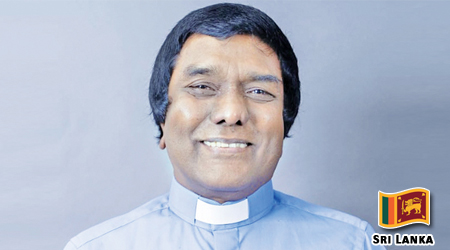
Ebenezer Joseph
World Methodist Peace Award 2022
The Rev. W. P. Ebenezer Joseph of Sri Lanka has at great personal cost called out injustice and been on the side of the oppressed and marginalized in Sri Lanka. He is a fearless advocate for justice and continues to work relentlessly to bring people together for peace. He has worked across religion, race and ethnicity.Known as Ebey to family and friends, his life has consistently been one of courage and creativity. For many years, in a highly complex and fragile political situation, he needed to find imaginative ways to build peace; using his skills as a peacemaker and diplomat, he sought to create unlikely alliances and build relationships across formerly conflicted divides. Often at great personal risk, he sought to a voice for peace and a creative activist drawing fractured communities together.“Life is fragile and trust is broken in so many areas of our world,” said WMC General Secretary Ivan Abrahams in announcing the 2022 recipient. “It is in these places that the voice and leadership of those like Rev. Joseph are so important. It is an honor to announce him as this year’s recipient. Work such as his inspires us all as we struggle to be the voice of the voiceless.”Upon hearing that he had been recognized for his efforts toward a world with peace for all people, Rev. Joseph said, “I am more than humbled to receive this prestigious recognition by the Methodist fraternity. What was possible to be done definitely has its roots in the Wesleyan spirituality in which I was brought up and am rooted in. The award is not mine alone but belongs to the many who were part of my life’s journey, with a great sense of dedication and sacrifice, for whom I thank God.”General Secretary of the National Christian Council of Sri Lanka for 14 years, head of the United Methodist Church in Sri Lanka from 2005-2010, and recognized for his contribution to national unity and religious co-existence by the Anti-War Front in 2006, Rev. Joseph has long been recognized for his outstanding service.1983 saw horrendous race riots in Sri Lanka. Many minority Tamils were mercilessly murdered and their property looted and destroyed. Rev. Joseph had to endure the indignity of being confined in a burning building for two hours followed by living in a refugee camp for nearly three weeks. Rather than taking the opportunity to leave the country as many did, he chose to remain in Sri Lanka and work for peace and reconciliation. He restored the work at Colombo City Mission, which was also burnt down during the riots, and continued to Work for Integration of the Sinhala and Tamil Communities in the slums around Pettah.As tensions between the Muslim and Tamil communities were high, and confrontations between the militants and the military disrupted everyday life, his leadership and voice never wavered but continued to be strong. Rev. Joseph facilitated local religious leaders in forming the Kalmunai Peace Foundation, successfully building trust and understanding among the different communities.
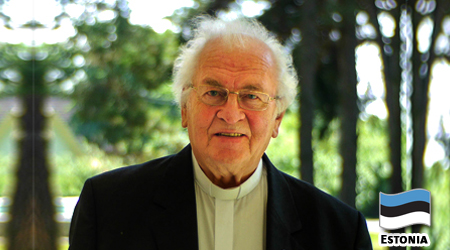
Olav Pärnamets
World Methodist Peace Award 2021
The Rev. Olav Pärnamets of Estonia contributions to world peace began with Europe in the second half of the 20th century. The tiny Baltic country of Estonia enjoyed less than a quarter of a century as a free republic during the first half of the 20th century. Still, during that time, the Methodist Church planted roots and grew. Born in 1937, Rev. Pärnamets spent most of his childhood and adult ministry under the strict and oppressive control of the Soviet Union, his nominees explain. Yet, this man served as a pastor and district superintendent, displaying great courage when the government of Estonia oppressed those who even participated in religious activity. Worship, theological study and evangelical activities were suppressed with the threat of punishment. But he traveled the world to share about the faithfulness of the people called Methodists in this Baltic country.One of Rev. Pärnamets greatest strengths is creativity. With little to no money and Big Brother watching, he led by faith, and his unique ability to bring together people from different cultures, nations and backgrounds is evident in the vital Estonian church.“Whether challenged to abandon God for the state as a child, to give up his Bible while conscripted in the military, or faced with needs and not enough resources, Rev. Pärnamets has always leaned on God’s grace,” said his nomination. His actions as a child, a youth worker, a deacon, pastor, superintendent and ecumenical leader are evidence of his life-long peace efforts. His vision of a Baltic Mission Center became a reality through the generosity and friendship of people he influenced worldwide. There is a Baltic Theological Seminar that equips and sends clergy all over Europe. More than 90 percent of todays’ clergy in Estonia were educated there.
World Methodist Peace Award Laureates (2020 ~ 2011)
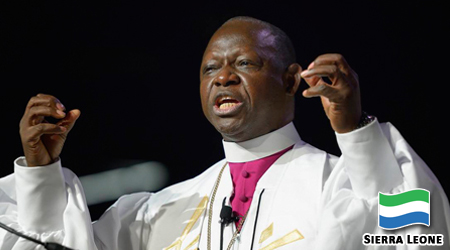
John K. Yambasu
World Methodist Peace Award 2020
The late Bishop John K. Yambasu, the 2020 Peace Award recipient, a courageous peacemaker in his home country of Sierra Leone and across the United Methodist connection for many years, provided critical leadership during the 2014-2016 Ebola outbreak and the 2017 mud landslide, both of which killed thousands of his fellow citizens. He was known for choosing to speak truth, even in difficult situations, while at the same time living peaceably with all people and was a role model to the United Methodists in Africa and across the connection, his nomination stated.Bishop Yambasu grew up in poverty and is quoted as having said, “I know through and through what poverty is. I have slept with it and I have woken to it. Countless times, I went to bed without food. I have not only experienced poverty, but for almost ten years I had to wrestle with it. Today in Sierra Leone, I live side by side with poverty and misery.” He then said, “ I am totally fed up!...We need to embrace each other” Red and yellow, black and white, poor and rich, have and have-nots, gay or straight, bisexual or homosexual, polygamists, we all need to engage each other…We need to torment God with our prayers and give us sleepless nights until we can look at each other in the face and say, ‘We are brothers and we are sisters’.” He was creative in thought and action.And the late Bishop was consistent throughout his life. He served the people around him as the focus of his call to ministry. He was a leader in the “Imagine No Malaria” campaign, the Ebola crisis, and COVID-19 pandemic. He was a teacher to young people, founder of the Child Rescue Center, and shortly before his death in an automobile accident, was elected Chancellor of Africa University.His nominees said that Bishop Yambasu was a man of peace: peace for those living with illness, peace for children struggling in poverty, peace across nations and continents. He exemplified the best in Christian peacemaking.
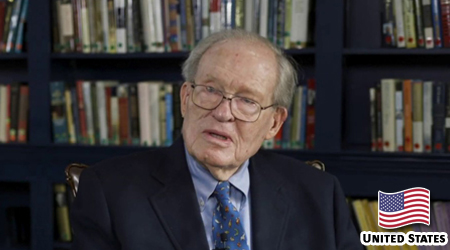
James T. Laney
World Methodist Peace Award 2018
The Rev. Dr. James T. Laney, President Emeritus at Emory, received the Award for his extraordinary and continuing efforts on behalf of the people of Korea. His association with Korea began in 1947 when he served there in the United States Army Counter-Intelligence Corps. Having seen the tragedy of a divided Korea, he dared to return in 1959 as a missionary with his family. He taught at Yonsei University in Seoul from 1959 to 1964. While teaching and guiding Korean students, he found a common human bond with the suffering people in Korea who inspired him to seek for the education of the heart throughout his later career as dean of a seminary and a university president at Emory University. In 1993, he returned to South Korea for the third time as US Ambassador. The first North Korean nuclear crisis started in 1994, and the US was on the edge of war with North Korea. Laney helped diffuse the crisis by tirelessly working with President Clinton and former President Jimmy Carter to avoid an attack on North Korea. He passionately challenged the US Senate not to end up involved in another war. Dr. Laney helped shift American foreign policy from snubbing the North Koreans to working together toward common ground. Korean scholar Stephen W. Linton told the New York Times, “I think history will see him [Laney] as the first ambassador to the whole peninsula.” In an interview with Emory Magazine, Laney said that what he tried to contribute was a new way of looking at the situation on the Korean peninsula. Laney summed up why his work was successful in these words, “Peacemaking begins when we stop demonizing and being so skeptical and distrustful, no matter how bad the past has been. It begins with humility and the attitude of hearts.”
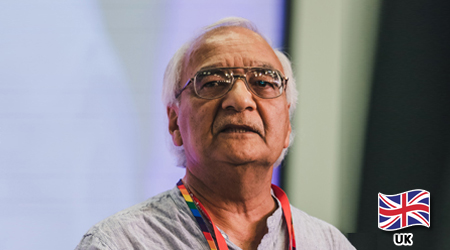
Inderjit Bhogal
World Methodist Peace Award 2018
The Rev. Dr. Inderjit Bhogal first exhibited his will to step forward when needed as a young boy of only eleven. By the age of 20, he was one of the of the initiators of the very first interfaith group in the UK and has been a central figure in interfaith relations in Britain and Ireland since. Often facing criticism and opposition to interfaith work from people of beliefs, including his own congregations and colleagues, he did not hesitate to push for the rights of others. For years, Bhogal has challenged and encouraged the British Methodist Church (BMC) to positively support the struggles of asylum seekers and refugees for justice and mercy. Until the recent Syrian refugee crisis dating to 2015, this was not popular but then became mainstream work. He walked from the steps of the Town Hall in Sheffield to 10 Downing Street, London to hand deliver a letter to the Prime Minister and the British Government asking for a fairer deal for asylum seekers and that they not be detained in conventional prisons. He has consistently challenged his own denomination and other organizations to resist racism, sexism, homophobia and all forms of oppressive behaviour. Many of his colleagues believe that this has been to the detriment of his own career as a clergyperson. Although he has been President of the Conference in the BMC, an honorary position, his refusal to sit on the fence and his outspoken insistence regarding matters of injustice have meant that many doors to positions of greater influence and responsibility have been closed to him, his nominee explained. Beginning with his student days in the mid-1970s, Bhogal has visited Northern Ireland and supported the work of the Corrymeela Community. He was the only person of a minority ethnicity to hold a CEO role in the whole of Ireland. Bhogal is also the only person of a minority background to be appointed President of the BMC [2000-2001]. Always committed to building cultures of welcome, hospitality and safety for asylum seekers, refugees and other vulnerable people, his worl is far reaching. Bhogal’s ministry included arranging pilgrimages to Ireland, Croatia and Punjab, India to promote a deeper understanding of peace and reconciliation.
View More
Methodist Churches in Italy
World Methodist Peace Award 2017
Methodist Churches in Italy (OPCEMI), was chosen for their work with and commitment to migrants and refugees dating back to 1989. This small church (part of the Union of Methodists and Waldensians in Italy) has exhibited great courage when faced with the large crisis of refugees and migrants flooding Europe. When others said the problems were insurmountable, the OPCEMI’s attitude has been that “we could do no other – we could not sit by and let this happen.” A safe and welcoming space called “House of Culture” was created at Scicli in Sicily, which has welcomed refugees and migrants from Syria, Iraq, the Middle East as well as North, Central and West Africa. The church’s work has spanned decades and has welcomed migrants of Protestant, Catholic, and Muslim faiths. Their involvement with Mediterranean Hope has been consistent and has continued despite the increasing wave of arrivals in Italy. The OPCEMI continues its efforts also by financing the humanitarian corridors through the “8 x 1000” office of the Union of the Waldensian and Methodist Churches in Italy.
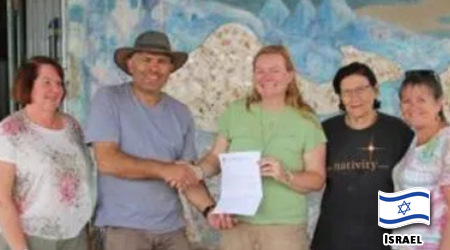
Nassar Family
World Methodist Peace Award 2017
The Nassar Family was chosen for their work with the Tent of Nations which they host on their 100 acre farm located southwest of Bethlehem in a highly disputed area of Palestine controlled by the Israeli Government. The family remains on their land and share their story of peace with guests from around the world. The family is not permitted to develop their farm for agricultural purposes, not having access to power, water, or sewer infrastructure, nor obtain permits for any new buildings. The family has instead come up with creative and sustainable alternatives. Each summer, children from local villages (Christian and Muslim) participate in a summer camp aimed at giving the children freedom and distraction from the surrounding politics, empowering the children with self-confidence so that they can be a part of a better future for Palestine. The family also established the Bent Al-Reef Women’s Centre to empower women with classes in English, computer, art, etc., and encourage them to play a role in shaping society. Each year hundreds of volunteers travel to Palestine and live with the Nassar family and actively engage with working the land, participating and leading programs. On receiving the news of the award, Daoud Nassar stated, “It was a special moment for all of us to hear that the 2017 Peace Award is going to our family. We are honored to receive this Award. We will continue our struggle for justice with faith, love and hope knowing that we are not left alone. We will also continue to cultivate the land and plant more seeds for a better and peaceful future. Together, we can make a difference.”
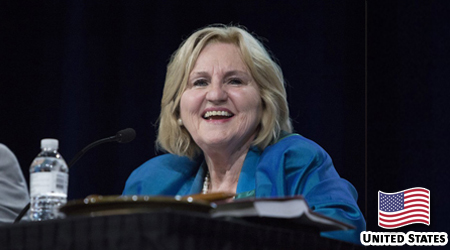
Jo Anne Lyon
World Methodist Peace Award 2015
Rev. Dr. Jo Anne Lyon is the founder and former CEO (1996-2008) of World Hope International, Alexandria,Va., Dr. Lyon began that ministry in her home and, in twelve years, grew the organization to a $17 million global Christian relief and development agency serving in 30 countries and dedicated to alleviate suffering and injustice. In her time with World Hope International, she traveled extensively, often to dangerous and remote areas. Her creative approach and problem-solving with local leadership led to programs which brought both clean water and spiritual nourishment to these communities. She has helped to initiate numerous projects including digging wells, holistic healing programs for post-war amputees, and brought national awareness to human-trafficking. She followed her time at World Hope International by serving for eight years as General Superintendent of The Wesleyan Church.Dr. Lyon states: “In this time, we care about needy and suffering people, about immigrants, about racial reconciliation, about refugees, about human trafficking, and about the equality of God’s image in women. The prophet Amos said: ‘But let justice roll on like a river, righteousness like a never-failing stream!’ (5:24). Seeking justice alone can become all political. But righteousness without seeking justice for others leads to isolation from the world. We find that balance including both justice and righteousness, rooted in the Bible and in our historical identity.”Dr. Lyon has served as the representative of The Wesleyan Church to the President of The United States Advisory Council on Faith-Based and Neighborhood Partnerships, on the board of directors of many organizations including the National Association of Evangelicals Executive Committee, Christian Community Development Association, National Religious Partnership for the Environment, Asbury Theological Seminary, Council on Faith of the World Economic Forum. The recipient of five honorary doctorates, Dr. Lyon wrote the book, The Ultimate Blessing, and has authored articles for various publications. She served over 30 years in pastoral ministry with her husband, and has been Adjunct Professor of Church and Society at Indiana Wesleyan University and Asbury Theological Seminary.
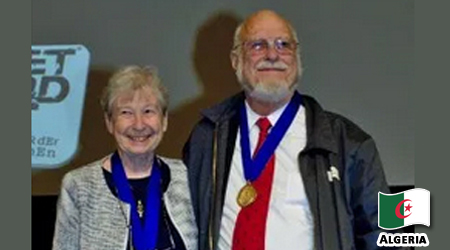
Dr. Hugh & Shirliann Johnson
World Methodist Peace Award 2014
Dr. Hugh G. Johnson, a retired missionary, pastor and former Superintendent of the North African District of the United Methodist Church, and his wife, Shirliann, have been named as co-recipients of the 2014 World Methodist Peace Award.For more than forty years (1962 – 2005), Dr. Hugh and Shirliann Johnson operated under a simple motto: The church has to be where the needs are the greatest, and this philosophy carried their ministry. As missionaries in North Africa, the Johnsons served during times of great unrest. From their beginnings with the General Board of Global Ministries in Algeria, the couple served throughout the nation during the country’s war of independence and the following turbulences.Serving first in Laarba Nath Irathen in the Kabyila Mountains and later in Algiers, the couple’s tirelessness and drive to connect the gospel with the lives of the people of the Maghreb region led them to become fluent in Arabic and in Kabylian (a Berber language) as well as preaching in French, Dr. Johnson wanted there to be no barriers between the Word and the people.In 1972, the Algerian government closed orphanages, hospitals and other diaconal institutions of the church. In response Dr. Johnson helped establish an English-language library, which served as a meeting place for people in the region and an unofficial place for Christian fellowship.Dr. Johnson also regularly appeared on Algerian Radio, often in dialogue with a Muslim representative. He was a mediator who crossed the lines for the cause of reconciliation and mutual understanding.Shirliann Johnson often visited refugee camps in the desert, coordinating humanitarian aid and teaching young women to lead kindergarten classes in the camp in order to help children and families who were affected by the war. As the region dealt with a rising tide of religious extremism, the couple’s home and church were often attacked and targeted by militant groups. Serving a local church (The Protestant Church in Algeria) that was largely comprised of converted Muslims, Dr. Johnson faced restrictions limiting the church’s ability to worship and evangelize. To combat these laws he held meetings in his home between various Christian denominations and worked together in the spirit of ecumenism. His outspokenness and clashes with local authorities over the import of Bibles in Arabic and the Berber languages displayed the courage and willingness to stand up for his faith and church family, often at great risk to himself. Dr. Johnson was stabbed in an attack during this time, but his faith and commitment to his ministry never wavered. Through numerous disputes with the government and even expulsions from the country, Dr. Johnson always returned to Algeria to help the small Christian community that had formed there. His voice was one that served as a calming influence within the small community of believers in the country as well as an open ear and voice to Muslims in the area. Upon retirement Dr. and Mrs. Johnson left the nation, but their hearts and spirits are still with the people in North Africa.
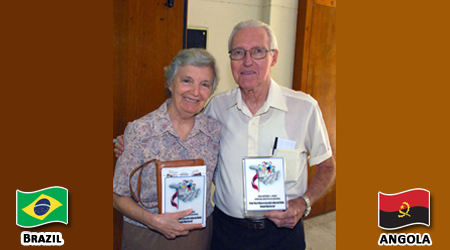
Marion & Anita Way
World Methodist Peace Award 2013
Marion and Anita Way, husband and wife missionaries known for their work in Angola and Brazil are the winners of the 2013 World Methodist Peace Award. The award will be presented on September 12, 2013 at Wesley’s Chapel in London, United Kingdom during the World Methodist Council’s 2013 meeting.As missionaries in Angola and Brazil, Marion and Anita Way used their faith to assist in the fight against political oppression, racism and other obstacles throughout their career.In 1958, Marion and Anita served as missionaries in Angola during a time when Methodist churches were routinely accused of instigating the Angolan people to work towards independence from Portugal. In 1961 Marion was arrested, accused of conspiring and working openly in favor of the cause of the independence of Angola. He was jailed for two weeks in a special prison for political prisoners, to be transferred to Portugal. After three months in jail without formal charges, he was released and expelled from the country.In 1962, the Ways were sent by the General Board of Missions of the Church as missionaries to the First Methodist Conference in Rio de Janeiro, Brazil and there they served as Deacons of the Church to the Central People’s Institute (ICP). Marion developed various programs, including helping the poor of that area to develop job skills, such as typing, sewing, English classes and computer skills. Anita was responsible for Christian education, support services to needy children and served as a music teacher. She also created several junior and adult choirs in the community. Throughout their years of service, the Ways were always attentive to societal changes and constantly updated the needs that arose. In 1995, Anita was appointed to the Regional Team Working with the Children’s Area. Since 1983 Marion participated at the Head Office of Projects of the 1st Methodist Conference.Despite obstacles, challenges and disappointments the Ways never abandoned their ideals in service of God. In those 54 years of continuous work the couple’s work has helped more than 15,000 children and 45,000 families, and more than 100,000 through the outreach that their organizations conduct.Sadly, Marion Way died in May 2013, but his work alongside his wife Anita in Angola and Rio de Janeiro lives on as a testament to the power of mission. For their half-century of work in mission and bringing dignity and economic empowerment to the poor throughout Angola and Brazil, the World Methodist Council is proud to award the 2013 World Methodist Peace Award to Marion and Anita Way.
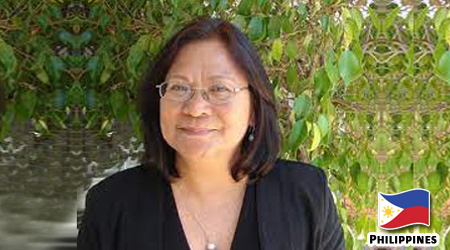
Joy Balazo
World Methodist Peace Award 2012
Joy Balazo was born in the Southern Philippine island of Mindanao as the youngest of nine children. After a short period in a Catholic convent Joy decided that her life’s work was to be in the midst of the world’s pain and left the convent to enter the challenging world of Human Rights and Peacebuilding. Before coming to Australia in the 1980s, Joy worked with ecumenical and Human Rights organizations in the Philippines.Joy emerged as a leader in the Pacific region through her peacebuilding efforts alongside the Uniting Church in Australia. For over twenty years Joy has worked not only with the Uniting Church in Australia but also with UnitingWorld, an organization created by the Uniting Church in Australia as an aid organization for the region. Ten years ago Joy established the Young Ambassadors for Peace, acting as their leader and working with local communities to establish eight peacemaking centers in Asia and the Pacific. Joy has also worked to bring together 32 clans in the Southern Highlands of Papua New Guinea that helped end tribal conflicts in the area. She has also worked in the Solomon Islands, Sri Lanka, along the Thailand-Burma border, Northeastern India, Timor Leste and Bougainville.In 1999 on the island of Ambon, Indonesia sectarian violence erupted. Christians and Muslims battled through the streets and the entire chain of islands in the province of Maluku, where Ambon is the main city, fighting seemingly engulfed the region. Three quarters of a million people were displaced by the outbreak and an estimated 5,000 lives were lost. Tensions were high and help was needed. UnitingWorld responded to the violence with humanitarian aid and a call for peace between both neighbors and faiths. A peacebuilding organization was established called Maluku Ambassadors for Peace, and at the center of this movement was Joy Balazo.Joy recently returned to her home in the Philippines to work in Mindanao amongst the indigenous Subanen people of the Zamboanga Peninsula supporting their efforts for peace and sustainable livelihood. The struggle for peace will not be an easy one, but for Joy Balazo it never has been. Her thirst for peace is one that crosses the lines that are sometimes drawn between tribes, between states and between faiths.
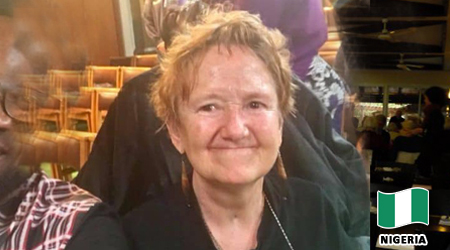
Rosalind Colwill
World Methodist Peace Award 2011
Rosalind Colwill is a trained social worker who in 1980, went to work with the MCN in Uzuakoli, south east Nigeria, at their leprosy center. She worked there for ten years, and during this time became increasinglyconcerned with the number of individuals who were experiencing mental health problems, and as a result destitute and living on the streets. Ros had a vision of a healing community for these people and in 1990, worked to create and develop Amaudo under the auspices of the Methodist Church Nigeria, in collaboration with local communities. Amaudo means ‘Village of Peace’, a name chosen by Ros and it is based in the village of Itumbauzo in South-East Nigeria. Amuado Okepedi: Village of Peace was the original Community Centre for Mentally Ill Destitutes. A community where residents and workers live communally based in a circle around a chapel. It is home for up to 65 destitute and mentally ill people and a base for their rehabilitation and repatriation. Rehabilitation takes place whilst the residents live, work, eat and worship together. Treatment involves counseling, psychiatric medication and workshops in life skills and vocational training. The families of the residents are traced, educated about mental illness and, after a number of home visits, residents resettled into the community. Discharged residents are equipped with the tools to begin their trades at home and their progress is reviewed by psychiatric nurses. There were times at the beginning when Ros was seen as ‘mad’ herself for wanting to live alongside mentally ill people. The creativity with which her vision has brought to mental health care in Nigeria and the inspiration she has provided in attracting others to share in the work with her. The consistency and belief in what they are doing despite difficulties with funding and other problems which has led to hope for people with mental health problems in Nigeria.The organization Amaudo Itumbauzo helps those who find themselves destitute due to mental health, mental illness or learning difficulties. From its humble beginnings 20 years ago picking up mentally ill, destitute people off the streets of Umuahia, Amaudo now has 6 projects, working in various areas of care, support and education.