

World Peace Prize

World Peace Prize
The World Peace Prize adheres to the core spirit of advancing peace, justice and inter-religious collaborations.The award is presented to exceptional individuals who have contributed to the cultivation of peace for humanity regardless of personal cost and sacrifices, and to those who offer exceptional vision and leadership for the development of a better world.The World Peace Prize is not awarded on a periodic basis but only when a deserving occasion arises, when individuals or groups contribute to the causes of world peace by preventing regional conflicts or world war; settling the disputes of political, diplomatic and economic matters; developing new inventions to minimize threats and confusions within mankind.
World Peace Prize Laureates (2010 ~ 2001)
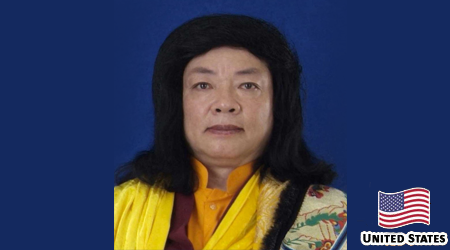
Dorje Chang Buddha III
World Peace Prize 2010
H.H. Dorje Chang Buddha III is a highly recognized Buddhist leader and figure, known for his spiritual and artistic accomplishments. He is considered by practitioners as the third incarnation of the primordial Buddha, Dorje Chang Buddha.He was the recipient of the 2010 World Peace Prize Top-Honor Prize, which he received at a ceremony in the U.S. Capitol in June 2011, for his devotion to humanitarian efforts, including healing and rescue-relief activities worldwide. The award council recognized that his influence embraces all races, cultures, and religions, promoting kindness, peace, and equality.Beyond his spiritual role, he is an internationally renowned artist, having created sixteen unique painting styles and being the first internationally distinguished artist appointed as a Fellow of Britain's Royal Academy of Arts. He has also received other honors, including the United States Presidential Gold Award for his outstanding contributions to arts, ethics, and spiritual leadership.

Benjamin A. Gilman
World Peace Prize 2010
Benjamin Arthur Gilman (1922–2016) was a highly respected American politician and veteran who dedicated his long career to public service and international affairs.Gilman served as a Republican member of the U.S. House of Representatives for 30 years (1973–2003), representing New York. A key highlight of his career was his time as the Chairman of the House Committee on International Relations (now Foreign Affairs), where he played a major role in shaping U.S. foreign policy. He was known for his work on issues like Prisoners of War and Missing in Action (POW/MIA) in Southeast Asia.During World War II, he served in the U.S. Army Air Corps, completing 35 combat missions over Japan and earning the Distinguished Flying Cross and the Air Medal.Although the context does not confirm a specific "World Citizen Award," he is honored by the Benjamin A. Gilman International Scholarship Program, a U.S. State Department grant established in his support to enable students with financial need to study or intern abroad, reflecting his commitment to global engagement and U.S. national security.

Civil Air Patrol
World Peace Prize 2010
The Civil Air Patrol is the official civilian auxiliary of the United States Air Force (USAF), a congressionally chartered, federally supported, non-profit volunteer organization. Founded one week before the attack on Pearl Harbor in 1941, CAP volunteers initially assisted the World War II effort with missions like anti-submarine patrol.Today, CAP operates under three congressionally mandated missions:Emergency Services: This is CAP's most well-known function. CAP performs approximately 90% of all inland search and rescue missions in the U.S., as tasked by the Air Force Rescue Coordination Center. It also provides critical aerial reconnaissance and disaster relief support for agencies like FEMA and state authorities.Aerospace Education: Promoting aerospace, aviation, and STEM-related careers for both CAP members and the general public.Cadet Programs: A youth development program for teenagers focusing on leadership, aerospace, fitness, and character.CAP is an important component of the U.S. "Total Force," utilizing a fleet of single-engine aircraft and a nationwide force of over 60,000 volunteers organized along military lines.
View More
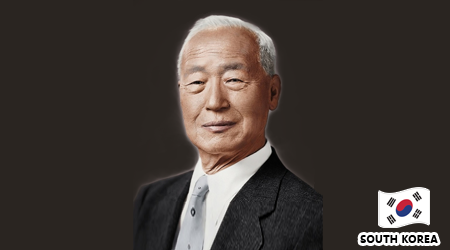
Syngman Rhee
World Peace Prize 2008
Syngman Rhee (1875–1965) was a pivotal and controversial figure who served as the first President of the Republic of Korea (South Korea) from 1948 to 1960. A staunch nationalist, Rhee dedicated his early life to the Korean independence movement against Japanese colonial rule, spending decades in exile in the United States and serving as the first president of the Korean Provisional Government.Rhee's presidency was defined by his hardline anti-communist stance and his leadership during the Korean War (1950–1953). While he is credited with preserving the southern state from northern invasion, his rule became increasingly authoritarian. He utilized police and paramilitary groups to suppress political dissent and pushed through constitutional changes to extend his power.Following a blatant rigged election in 1960, student-led protests known as the April Revolution broke out across the country. Faced with overwhelming public pressure and the loss of U.S. support, Rhee resigned and went into exile in Hawaii, where he died five years later.
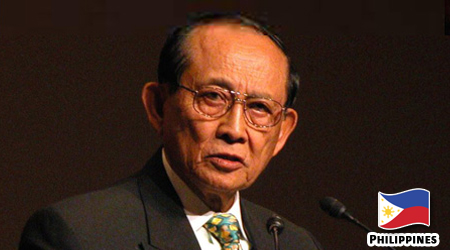
Fidel Valdez Ramos
World Peace Prize 2007
Fidel Valdez Ramos (1928–2022) was a highly decorated Filipino soldier and politician who served as the 12th President of the Philippines from 1992 to 1998. An alumnus of the U.S. Military Academy at West Point, he had a long military career, fighting in the Korean and Vietnam Wars.He played a pivotal role in the 1986 People Power Revolution by breaking away from President Ferdinand Marcos and supporting Corazon Aquino, under whom he served as Chief of Staff of the Armed Forces and later as Secretary of National Defense.As President, he implemented the "Philippines 2000" program, pushing for economic liberalization and deregulation which helped revitalize the country's economy. His administration is also noted for achieving a peace agreement with the Moro National Liberation Front (MNLF) in 1996, an effort for which he won the 1997 UNESCO Peace Award, the first for an Asian national. He is the founder of the Ramos Peace and Development Foundation.
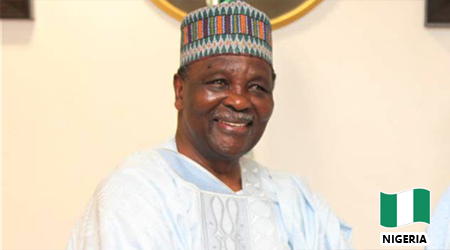
Yakubu Gowon
World Peace Prize 2005
Yakubu Gowon (born 1934) is a Nigerian military officer who served as the country's Head of State from 1966 to 1975. He came to power at age 31 following the July 1966 counter-coup, inheriting a nation fractured by ethnic tensions and preceding military takeovers.His defining period was the Nigerian Civil War (1967–1970), fought after the Eastern Region seceded as the Republic of Biafra. Gowon successfully led the federal government to preserve Nigeria's unity under the rallying cry, "To keep Nigeria one is a task that must be done."After the war, he is credited with a remarkable policy of "no victor, no vanquished" and initiated the 3Rs: Reconciliation, Reconstruction, and Rehabilitation to heal the nation. His regime also benefitted from the oil boom, financing extensive development. He was overthrown in a bloodless coup in 1975 and later earned a PhD in Political Science from the University of Warwick. He remains a respected elder statesman focused on peace advocacy.
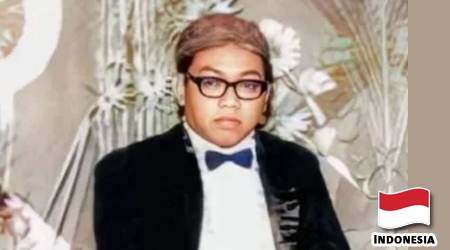
Abdurrahman Wahid
World Peace Prize 2003
Abdurrahman Wahid (1940–2009), popularly known as Gus Dur, served as the fourth President of Indonesia from 1999 to 2001. As the first elected president after the end of the Suharto dictatorship, he was a pivotal figure in Indonesia's democratic transition.A prominent Islamic religious leader and the long-time head of Nahdlatul Ulama (NU), the world's most populous Muslim organization, Wahid championed a vision of liberal, moderate Islam. He is widely recognized as the "Father of Pluralism" for his staunch defense of ethnic and religious minorities and Indonesia's secular tradition.His key actions included establishing Confucianism as the sixth official religion and lifting Suharto-era bans on Chinese language and cultural traditions. Although his presidency was marked by political instability and ended with impeachment in 2001, his legacy remains his unwavering commitment to human rights and interfaith dialogue.
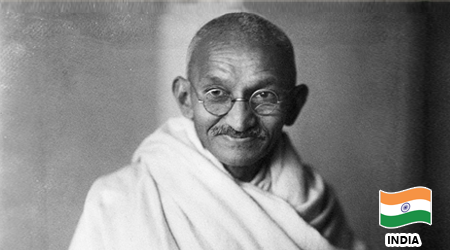
Mahatma Gandhi
World Peace Prize 2003
Mohandas Karamchand Gandhi (1869–1948) was an Indian lawyer, activist, and political ethicist who led the successful non-violent struggle for India's independence from British rule.Trained in law in England, Gandhi first developed his revolutionary doctrine of Satyagraha ("truth-force" or non-violent civil disobedience) while fighting against racial discrimination in South Africa.Returning to India in 1915, he transformed the Indian independence movement into a mass campaign rooted in Ahimsa (non-violence). He spearheaded pivotal movements such as the Non-Cooperation Movement and the iconic Salt March in 1930, uniting millions of Indians through acts of peaceful resistance against British laws.Revered as "Mahatma" (Great Soul), his principles of simplicity, self-reliance (Swadeshi), and moral courage inspired global civil rights leaders, including Martin Luther King Jr. and Nelson Mandela, making him an enduring global symbol of peace and justice.
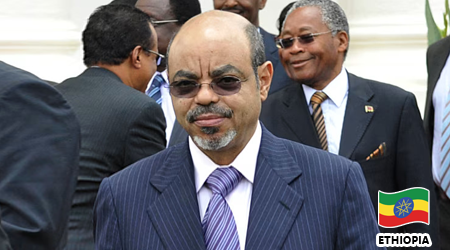
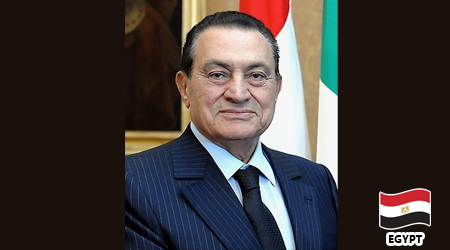
Hosni El Sayed Mubarak
World Peace Prize 2002
Muhammad Hosni El Sayed Mubarak (1928–2020) served as the fourth President of Egypt for nearly 30 years, from 1981 to 2011. A former commander of the Air Force and a hero of the 1973 October War, he ascended to the presidency following the assassination of Anwar Sadat.Mubarak's tenure was defined by a commitment to regional stability. He maintained the historic peace treaty with Israel, served as a key mediator in the Israeli-Palestinian conflict, and was a staunch ally of the United States. His diplomatic efforts earned him various honors, including the 1993 World Peace Prize for his role in fostering Middle Eastern reconciliation.However, his domestic rule was marked by a persistent state of emergency, authoritarianism, and economic stagnation. In 2011, amid the Arab Spring, eighteen days of mass protests in Tahrir Square led to his resignation. He remains a complex figure whose legacy balances regional diplomacy against three decades of rigid internal control.
World Peace Prize Laureates (2000 ~ 1991)
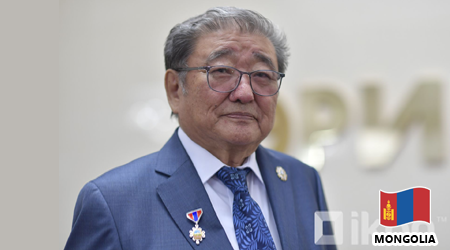
Punsalmaagiin Ochirbat
World Peace Prize 1997
Punsalmaagiin Ochirbat (born 1942) is a historic figure who served as the first President of Mongolia from 1990 to 1997. His leadership was instrumental during Mongolia's peaceful transition from a one-party communist state to a multi-party democracy and a market-oriented economy.An engineer by training, Ochirbat rose through the ranks of the Mongolian People's Revolutionary Party, serving as the Chairman of the Presidium of the People's Great Khural. During the 1990 Democratic Revolution, he played a stabilizing role, facilitating dialogue between the government and pro-democracy protesters.In 1993, he won Mongolia’s first direct presidential election with the support of the opposition coalition. His presidency was marked by the adoption of the 1992 Constitution, the introduction of religious freedom, and the strengthening of international relations. He is often remembered for his "Five Treasures" policy, which focused on livestock as the bedrock of Mongolian culture and economy.
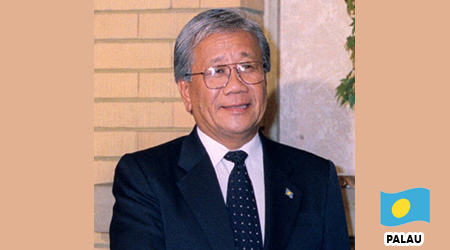
Kuniwo Nakamura
World Peace Prize 1997
Kuniwo Nakamura (1943–2020) was a transformative statesman who served as the 6th President of Palau from 1993 to 2001. Born to a Japanese father and a Palauan mother (the daughter of a chieftain), he was a central figure in Palau’s transition from a United States-administered Trust Territory to a fully sovereign nation.Before his presidency, Nakamura served as Vice President (1989–1993) and held ministerial roles in administration and justice. His leadership was defined by the formalization of the Compact of Free Association with the U.S. in 1994, which secured Palau’s independence. He was also a champion of environmental conservation and political stability.In recognition of his efforts to promote democracy and peace in the Pacific, he was awarded the World Peace Prize Top Honor in 1997. He remained an influential elder statesman until his death in 2020, remembered for modernizing Palau's infrastructure while preserving its cultural identity.
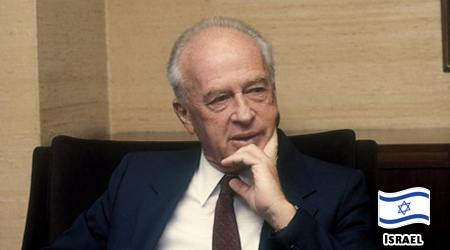
Yitzhak Rabin
World Peace Prize 1995
Yitzhak Rabin (1922–1995) was an Israeli statesman and soldier who served two terms as the Prime Minister of Israel (1974–1977 and 1992–1995). His early career was defined by his military leadership, culminating in his role as Chief of Staff of the Israel Defense Forces (IDF) during the decisive Six-Day War in 1967.Rabin transformed from a celebrated general to a proponent of peace in his second term as Prime Minister. In 1993, he famously signed the Oslo Accords with Palestinian leader Yasser Arafat, laying the groundwork for Palestinian self-rule in parts of the Gaza Strip and West Bank. This historic diplomatic effort led to him, along with Shimon Peres and Yasser Arafat, being awarded the 1994 Nobel Peace Prize.Tragically, his pursuit of peace led to his assassination in November 1995 by an extremist who opposed the terms of the Oslo Accords. Rabin remains a powerful symbol of the effort toward Israeli-Palestinian reconciliation.
View More
World Peace Prize Laureates (1990 ~ 1981)
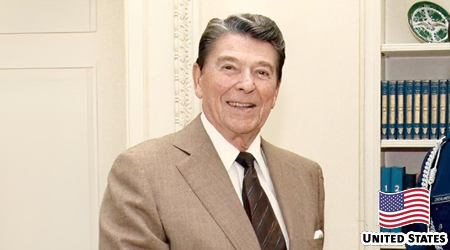
Ronald Wilson Reagan
World Peace Prize 1989
Ronald Wilson Reagan (1911–2004) was the 40th President of the United States (1981–1989), following careers as a Hollywood actor (earning the nickname "The Gipper") and two terms as Governor of California.His presidency ushered in the "Reagan Revolution," defined by conservative domestic and foreign policy shifts. Domestically, he implemented "Reaganomics," which involved major tax cuts, deregulation, and reduced government spending to stimulate economic growth.In foreign affairs, Reagan is most famous for his assertive stance against the Soviet Union, which he dubbed the "evil empire." He initiated a massive military buildup, including the Strategic Defense Initiative (SDI), and engaged in five dramatic summit meetings with Soviet leader Mikhail Gorbachev. His famous challenge to "tear down this wall" at the Berlin Wall is considered a pivotal moment that contributed to the eventual end of the Cold War. He left office with restored national confidence and a legacy as a transformative leader.