

Charlemagne Prize


Charlemagne Prize
The International Charlemagne Prize of Aachen, first awarded in 1950, is the oldest and most prestigious award given to individuals or institutions for work done in the service of European unification.The Prize is named after Charlemagne, the Frankish king, who is considered the first unifier of Europe, who was revered by his contemporaries as the ‘Father of Europe’, and who chose Aachen as his favorite Palatinate at the end of the eighth century; thus, a bridge is built between European past and future.
| Sl | Name | Country | Flag | Year | Awarded For |
|---|---|---|---|---|---|
| 66 | Ursula von der Leyen | German | 2025 | for recognition of the work done in the service of Europian unification | |
| 65 | Pinchas Goldschmidt and the Jewish communities in Europe | Switzerland | 2024 | for recognition of the work done in the service of Europian unification | |
| 64 | Volodymyr Zelenskyy and the Ukrainian people | Ukraine | 2023 | for recognition of the work done in the service of Europian unification | |
| 63 | Sviatlana Tsikhanouskaya, Maria Kalesnikava, Veronika Tsepkalo | Belarus | 2022 | for recognition of the work done in the service of Europian unification | |
| 62 | Klaus Iohannis | Romania | 2020/21 | for recognition of the work done in the service of Europian unification | |
| 61 | António Guterres | Portugal | 2019 | for recognition of the work done in the service of Europian unification | |
| 60 | Emmanuel Macron | France | 2018 | for recognition of the work done in the service of Europian unification | |
| 59 | Timothy Garton Ash | United Kingdom | 2017 | for recognition of the work done in the service of Europian unification | |
| 58 | Pope Francis | Vatican | 2016 | for recognition of the work done in the service of Europian unification | |
| 57 | Martin Schulz | Germany | 2015 | for recognition of the work done in the service of Europian unification | |
| 56 | Herman Van Rompuy | Belgium | 2014 | for recognition of the work done in the service of Europian unification | |
| 55 | Dalia Grybauskaite | Lithuania | 2013 | for recognition of the work done in the service of Europian unification | |
| 54 | Wolfgang Schäuble | Germany | 2012 | for recognition of the work done in the service of Europian unification | |
| 53 | Jean-Claude Trichet | France | 2011 | for recognition of the work done in the service of Europian unification | |
| 52 | Donald Tusk | Poland | 2010 | for recognition of the work done in the service of Europian unification | |
| 51 | Andrea Riccardi | Italy | 2009 | for recognition of the work done in the service of Europian unification | |
| 50 | Germany Angela Merkel | Spain | 2008 | for recognition of the work done in the service of Europian unification | |
| 49 | Spain Javier Solana | Spain | 2007 | for recognition of the work done in the service of Europian unification | |
| 48 | Luxembourg Jean-Claude Juncker | Luxembourg | 2006 | for recognition of the work done in the service of Europian unification | |
| 47 | Italy Carlo Azeglio Ciampi | Italy | 2005 | for recognition of the work done in the service of Europian unification | |
| 46 | Pope John Paul II (extraordinary prize) | Vatican | 2004 | for recognition of the work done in the service of Europian unification | |
| 45 | Pat Cox | Ireland | 2004 | for recognition of the work done in the service of Europian unification | |
| 44 | Valéry Giscard d'Estaing | France | 2003 | for recognition of the work done in the service of Europian unification | |
| 43 | The Euro | European Union | 2002 | for recognition of the work done in the service of Europian unification | |
| 42 | György Konrád | Hungary | 2001 | for recognition of the work done in the service of Europian unification | |
| 41 | Bill Clinton | USA | 2000 | for recognition of the work done in the service of Europian unification | |
| 40 | Tony Blair | United Kingdom | 1999 | for recognition of the work done in the service of Europian unification | |
| 39 | Bronislaw Geremek | Poland | 1998 | for recognition of the work done in the service of Europian unification | |
| 38 | Roman Herzog | Germany | 1997 | for recognition of the work done in the service of Europian unification | |
| 37 | Beatrix of the Netherlands | Netherlands | 1996 | for recognition of the work done in the service of Europian unification | |
| 36 | Franz Vranitzky | Austria | 1995 | for recognition of the work done in the service of Europian unification | |
| 35 | Gro Harlem Brundtland | Norway | 1994 | for recognition of the work done in the service of Europian unification | |
| 34 | Felipe González | Austria | 1993 | for recognition of the work done in the service of Europian unification | |
| 33 | Jacques Delors | France | 1992 | for recognition of the work done in the service of Europian unification | |
| 32 | Václav Havel | Czechoslovakia | 1991 | for recognition of the work done in the service of Europian unification | |
| 31 | Gyula Horn | Hungary | 1990 | for recognition of the work done in the service of Europian unification | |
| 30 | Frère Roger | Switzerland | 1989 | for recognition of the work done in the service of Europian unification | |
| 29 | François Mitterrand & Helmut Kohl | France & West Germany | 1988 | for recognition of the work done in the service of Europian unification | |
| 28 | Henry Kissinger | USA | 1987 | for recognition of the work done in the service of Europian unification | |
| 27 | The People of Luxembourg | Luxembourg | 1986 | for recognition of the work done in the service of Europian unification | |
| 26 | Karl Carstens | West Germany | 1984 | for recognition of the work done in the service of Europian unification | |
| 25 | Juan Carlos of Spain | Spain | 1982 | for recognition of the work done in the service of Europian unification | |
| 24 | Simone Veil | France | 1981 | for recognition of the work done in the service of Europian unification | |
| 23 | Emilio Colombo | Italy | 1979 | for recognition of the work done in the service of Europian unification | |
| 22 | Konstantinos Karamanlis | Greece | 1978 | for recognition of the work done in the service of Europian unification | |
| 21 | Walter Scheel | West Germany | 1977 | for recognition of the work done in the service of Europian unification | |
| 20 | Leo Tindemans | Belgium | 1976 | for recognition of the work done in the service of Europian unification | |
| 19 | Salvador de Madariaga | Spain | 1973 | for recognition of the work done in the service of Europian unification | |
| 18 | Roy Jenkins | United Kingdom | 1972 | for recognition of the work done in the service of Europian unification | |
| 17 | François Seydoux de Clausonne | France | 1970 | for recognition of the work done in the service of Europian unification | |
| 16 | European Commission | European Union | 1969 | for recognition of the work done in the service of Europian unification | |
| 15 | Joseph Luns | Netherlands | 1967 | for recognition of the work done in the service of Europian unification | |
| 14 | Jens Otto Krag | Denmark | 1966 | for recognition of the work done in the service of Europian unification | |
| 13 | Antonio Segni | Italy | 1964 | for recognition of the work done in the service of Europian unification | |
| 12 | Edward Heath | United Kingdom | 1963 | for recognition of the work done in the service of Europian unification | |
| 11 | Walter Hallstein | West Germany | 1961 | for recognition of the work done in the service of Europian unification | |
| 10 | Joseph Bech | Luxembourg | 1960 | for recognition of the work done in the service of Europian unification | |
| 9 | George C. Marshall | USA | 1959 | for recognition of the work done in the service of Europian unification | |
| 8 | Robert Schuman | France | 1958 | for recognition of the work done in the service of Europian unification | |
| 7 | Paul Henri Spaak | Belgium | 1957 | for recognition of the work done in the service of Europian unification | |
| 6 | Winston Churchill | United Kingdom | 1956 | for recognition of the work done in the service of Europian unification | |
| 5 | Konrad Adenauer | West Germany | 1954 | for recognition of the work done in the service of Europian unification | |
| 4 | Jean Monnet | France | 1953 | for recognition of the work done in the service of Europian unification | |
| 3 | Alcide de Gasperi | Italy | 1952 | for recognition of the work done in the service of Europian unification | |
| 2 | Hendrik Brugmans | Netherlands | 1951 | for recognition of the work done in the service of Europian unification | |
| 1 | Richard von Coudenhove-Kalergi | Austria | 1950 | for recognition of the work done in the service of Europian unification |
Charlemagne Prize Award Laureates (2000~ 1991)
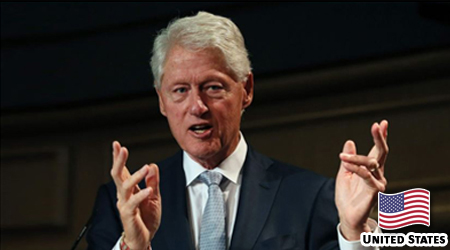
William Jefferson (Bill) Clinton
Charlemagne Prize 2000
Born on 19th August 1946 in Hope/Arkansas (USA).
Studied International Relations at Georgetown University in Washington, D.C. (until 1968), afterwards studied in Oxford (1968–1970) and subsequently Law Studies at the Law School of Yale University (until 1973).
From 1973 to 1976 he lectured at the University of Arkansas School of Law. In 1976 he was elected Attorney General in his home state of Arkansas, where in 1978 he was elected Governor. From 1981 to 1983 he practised in a law firm. In 1983 he was once again elected as Governor of the Federal State of Arkansas; he held this office until 1993.
In 1993 he became American President (until 2001).
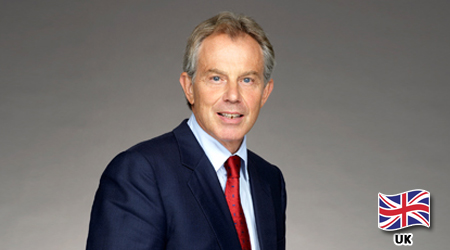
Anthony Charles Lynton Blair
Charlemagne Prize 1999
Born on 6th May 1953 in Edinburgh.
Studied Law at St. John´s College in Oxford (until 1975), afterwards practised as a lawyer at a law office.
In 1983 he was elected for the first time to the House of Commons for the Labour Party; from 1984 to 1987 he acted as Opposition spokesman for finance and economic affairs and later for trade and industry. In 1994 he was elected Party Leader.
From 1997 to 2007 he was British Prime Minister; he campaigned for reforms in economy and society (so-called Third Way). In his Europe policy he pursued the course of rapprochement of his country with the European Union and with his commitment to solving the Northern Ireland conflict he contributed to peace in Europe.
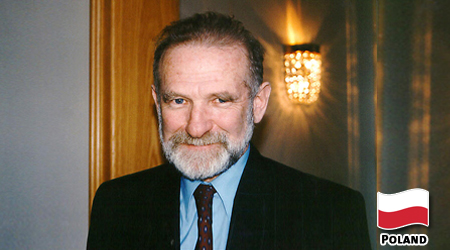
Bronislaw Geremek
Charlemagne Prize 1998
Born on 6th March 1932 in Warsaw.
Studied History at the University of Warsaw and in Paris (until 1954), in 1960 completed his PhD. Afterwards academic career at the History Institute of the Polish Academy of Sciences, where intermittently he headed the Research Department. He was granted a post-doctoral degree in 1972 and was later granted a professorship (1989). At the beginning of the nineties he was Professor at the College of France in Paris. He published several works, amongst others on medieval Polish and European history.
From 1976 he was involved in dissident circles, he belonged from 1980 to the circle of advisors of Lech Wa??sa, the leader of the independent trade union Solidarno??, and developed into one of the leading opposition civil rights activists. At the beginning of the eighties he was arrested on several occasions.
At the elections in 1989 he was elected Member of Parliament for Solidarno??, where, as Chairman of the Commission on Foreign Affairs and Constitutional Issues, he campaigned for an orientation to the West and for the membership of Poland in the European Union. Later he joined the reform-oriented Freedom Union (UW) and was once again voted into Parliament at the elections in 1997. In October 1997 he became Polish Foreign Minister (until 2000). After Poland had become a Member of the EU he became Member of the European Parliament in 2004.
Died on 13th July 2008.
View More
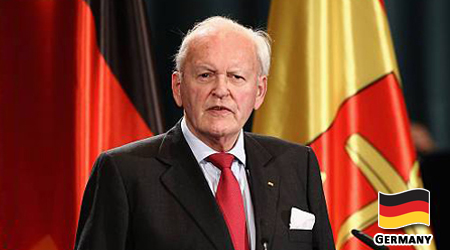
Roman Herzog
Charlemagne Prize 1997
Born on 5th April 1934 in Landshut.
Studied Law in Munich; was conferred a doctorate (LLD) in 1958, afterwards academic assistant, awarded the title of professor in 1964. After teaching as a private lecturer for two years he was given a professorship in 1965 at the Free University of Berlin; in 1969 he moved to the University for Administrative Science in Speyer, where he was Professor for Political Science and Politics, where he also held the office of university principal in 1971/72.
After a period as leading representative of the State (Bundesland) of Rhineland–Palatinate in Bonn (1973–1978) he became Minister for Education and Sport in the Baden–Württemberg State Government. In 1980 he was elected to the State Parliament in Stuttgart and was appointed Minister of the Interior. At the end of 1983 he resigned as minister, in order to become Vice-President of the Federal Constitutional Court of Germany and simultaneously Chairman of the First Senat; in 1987 he took on the office of President of the Federal Constitutional Court of Germany.
From 1994 to 1999 he was President of the Federal Republic of Germany. He considered European integration to be an important political task, for which he campaigned in manifold ways (especially for a Europe of the people and the eastern European expansion of the EU).
Died on 10th January 2017.
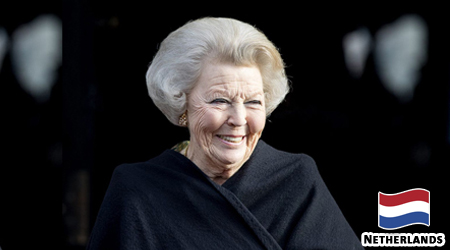
Queen Beatrix
Charlemagne Prize 1996
Born on 31st January 1938 at the Soestdijk Palace near Baarn.
Studied Sociology, Law and History in Leiden; was conferred a doctorate (LLD). She was initiator and President (1961) of the European Working Group, which called upon European youth to concern themselves with current issues and to campaign for a united Europe. As heir apparent she increasingly took on representational duties in the seventies.
She has been Queen of the Netherlands since 1980. She has made a great contribution to the development of good neighbourly relations between the Netherlands and Germany; as a convinced European she has campaigned for a united Europe and the continuation of the European unification process on many occasions.
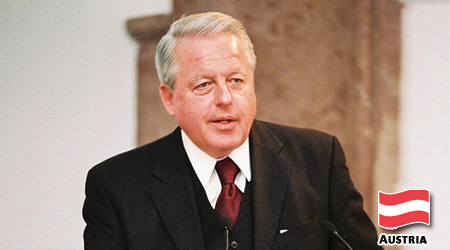
Franz Vranitzky
Charlemagne Prize 1995
Born on 4th October 1937 in Vienna.
Studied Economics at the University for International Trade in Vienna (degree 1960); after a career in industry he changed in 1961 to the Austrian National Bank, where he was concerned with economic issues; in 1969 doctorate in Commercial Science.
In 1970 he became economic and fiscal advisor to the Finance Minister. From 1976 he worked in a managerial position at several banks.
From 1984 to 1986 he held the office of Federal Finance Minister. From 1986 to 1997 he was Austrian Chancellor, from 1988 at the same time also Chairman of the Social Democratic Party of Austria. After the neutrality of Austria had for a long time impeded EU membership on the domestic front, he succeeded in overcoming the Euro-scepticism of the population: a large majority of the voters expressed their wish in 1994 for Austria to join the EU.
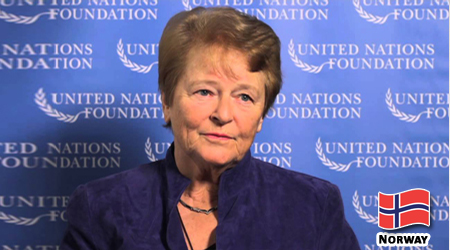
Gro Harlem Brundtland
Charlemagne Prize 1994
Born on 20th April 1939 in Oslo.
Studied Medicine at the University of Oslo; doctorate in 1963; Master of Public Health at Harvard University (1965). Afterwards she worked as an advisor to the Ministry of Health and Social Affairs.
In 1974 she was voted into the directorate of the Worker’s Party, and became its Deputy Chair a year later. From 1974 to 1979 she was Minister for Environmental Affairs. She has been a Member of Parliament since 1977; in 1980 she became Chair of the Commission for Foreign Affairs and at the same time deputy chief whip.
In 1981 she held for a short time (8 months) as the first woman the office of Prime Minister of Norway; she also became at the same time the Chair of the Worker’s Party (until 1992). Afterwards she held again from 1986 to 1989 and 1990 to 1996 the office of Prime Minister. Her commitment to the European Community and her European politics did not find the acceptance she had expected in the population: at the Referendum in November 1994 52% of the population voted against EU membership.
In 1998 she became Director General of the World Health Organisation in Geneva.
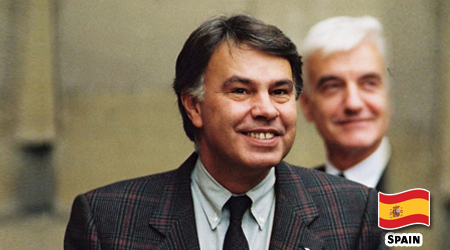
Felipe González Márquez
Charlemagne Prize 1993
Born on 5th March 1942 in Seville.
Studied Law at the University of Seville; further studies in Economics at the University of Louvain (Belgium). In 1966 he opened a lawyer’s office in Seville and was given a teaching assignment in labour law at the University of Seville.
In his student years he was already active in the Socialist movement; in 1964 he joined the Socialist Party,which was still illegal at that time, in 1974 he became Secretary General (until 1997). In 1981 he took on the position of Chairman of the Party.
From 1982 to 1996 he was Spanish Prime Minister; during his time in office he strengthened democracy and his economic reform course policy contributed to stabilizing the economy. He campaigned for his country to remain in NATO and led Spain into the European Community in 1986.

Jacques Delors
Charlemagne Prize 1992
Born on 20th July 1925 in Paris.
Studied Law and Economics in Paris. Afterwards worked in the civil service; lastly he was Deputy Director of the Bank of France (until 1962). He then became Head of Department in the General Commissariat for Economic Planning (1962–1969). In 1973 he became Professor for Economics at the University of Paris; simultaneously he was a Member of the General Council of the Bank of France until 1979.
In 1979 he became a Member of the European Parliament for the Socialists, where he headed the Commission for Currency and Economic Issues. In 1981 he took over the office of French Minister of Economics and Finance and from 1983 he also became the Mayor of Clichy.
From 1985 to 1995 he was President of the European Commission in Brussels. During this time he gave the Community new political objectives and imparted the European integration process new dynamics. His name is closely connected with important European reform projects such as the single market within the Community and the Maastricht Treaty on the European Union (came into force in 1993 amongst other things with a schedule for the introduction of a joint currency). During his term in office the Community was extended to include another five membership states.
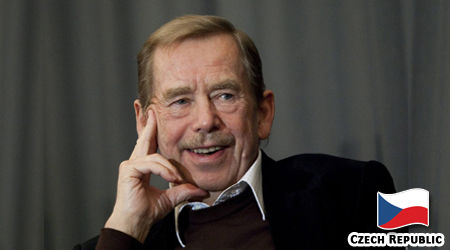
Václav Havel
Charlemagne Prize 1991
Born on 5th October 1936 in Prague.
From 1954 to 1957 he studied Transport Economics at the Technical University of Prague, but was, however, not allowed to complete his studies for political reasons. Afterwards he had various jobs at theatres in Prague, the last one as dramatic advisor.
From 1960 he worked as a playwright at the Theatre on the Balustrade in Prague, where his first three plays (1963, 1965, 1968) were premiered. After the end of the Prague Spring (1968) he was banned from the theatre and from publishing his works, being the most prominent dissident.
In 1977 he was co-founder and spokesman for the civil rights group 77, which called for human rights and civil rights in the CSSR. The civil rights activist was arrested on several occasions and stood at times under house arrest.
In 1989, as Leader of the newly founded Civic Forum, he organized the opposition’s mass protests. As the figurehead for non-violent resistance he played a leading role in the political change in the CSSR. In December 1989 he became the first democratically elected President of the Czech and Slovak Federal Republic through a unanimous parliament vote. After the breakup of the Federation (1992) he resigned. In 1993 he became President of the Czech Republic (until 2003).
Died on 18th December 2011.
Charlemagne Prize Award Laureates (1990 ~ 1981)
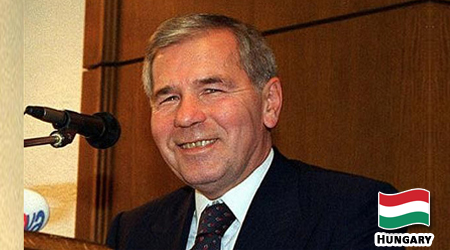
Gyula Horn
Charlemagne Prize 1990
Born on 5th July 1932 in Budapest.
Studied Economics in Rostow am Don, afterwards from 1954 he worked initially in the Hungarian Ministry of Finance, then from 1959 in the Foreign Ministry. In 1971 he changed to the Central Committee of the Socialist Workers‘ Party in the Dept. for Foreign Affairs, becoming its leader in 1983.
In 1985 he entered the Central Committee as a full member and took on the office of Secretary of State in the Foreign Ministry. From 1989 to 1990 in the phase of democratic awakening he held the office of Foreign Minister; he played an historic role as, in September 1989, the border to Austria was opened and thousands of East German citizens in the Embassy of the Federal Republic of Germany in Budapest were able to emigrate.
In 1990 he became Chairman of the Socialist Party and Member of Parliament, where he was elected as Chairman of the Foreign Policy Commission. From 1994 to 1998 he was Hungarian Prime Minister; with his politics and his reforms he contributed to Hungary becoming one of the first Central and Eastern European countries to gain membership of the EU.
Died on 19th June 2013.
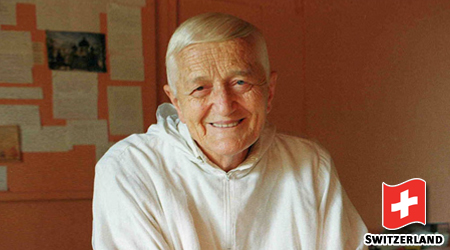
Frère Roger
Charlemagne Prize 1989
Born on 12th May 1915 near Neuchatel (Switzerland).
From 1935 to 1939 he studied Theology at the universities of Lausanne and Strasbourg.
Settlement in Taizé (1940; southern Burgundy/France), Founder (1949) and Prior of the Protestant monastic community Communauté Taizé. Brotherliness and reconciliation between nations and denominations form the core of the community’s objective.
After beginning an intensive exchange of opinions and ideas with the Vatican (1958) he received an invitation to attend the Second Vatican Council (1962). His order became increasingly popular amongst young people from all parts of Europe; more than 40,000 young people attended the Youth Council which took place in Taizé in 1974. Since then tens of thousands of young people from all over the world meet every year in the context of a European Pilgrimage in changing European cities (1993 in Munich). Brothers from different denominations and from many different countries belong to the ecumenical monastic community.
Died on 16th August 2005.
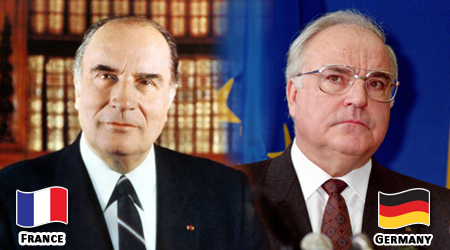
François Mitterrand & Helmut Kohl
Charlemagne Prize 1988
François Mitterrand:
Born on 26th October 1916 in Jarnac (Département Charrante).
Studied Sociology and French Literature in Paris.
In 1939 he was conscripted for military service, became a prisoner of war in 1940 in Germany, but was able to flee from the prisoner of war camp in 1941 and later joined the resistance movement.
In 1946 he became a Member of the National Assembly. From 1947 to 1958 he held various ministerial positions (amongst others 1954 Interior Minister, 1956 Minister of Justice). In 1959 he was elected Mayor of Château–Chinon. He was elected first Socialist President in 1981.
Died on 8th January 1996.
Helmut Kohl:
Born on 3th April 1930 in Ludwigshafen.
From 1950 he studied History, Law and Political Science at the universities of Frankfurt am Main and Heidelberg; doctorate in History (1958).
1959–1979 elected into the Landtag of Rhineland–Palatinate for the CDU. In 1963 chairman of his party group, in 1966 leader of the CDU party, in 1969 Minister President of his Bundesland. In 1973 elected as leader of the CDU party (till 1998). 1982–1998 German Chancellor.
Kohl was named Honorary Citizen of Europe by the European Union on 11th December 1998, previously only bestowed to Jean Monnet.
Died on 16th June 2017.
View More
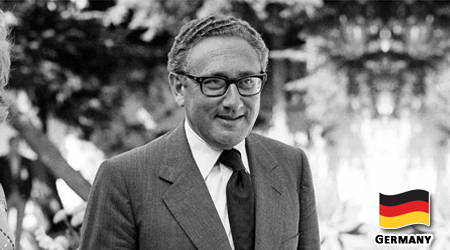
Henry A. Kissinger
Charlemagne Prize 1987
Born on 27th May 1923 in Fürth; 1938 emigration to the USA with his family. In 1943 he became an American citizen.
From 1943 to 1946 he served as a soldier. Afterwards he studied at Harvard University (1952 Master of Arts) and was conferred a doctorate (1954).
From 1954 to 1971 he was a member of the faculty at Harvard University; in 1962 he was appointed as professor. At Harvard he earned himself the reputation of an expert for foreign affairs and for European politics; he became advisor to various US governments.
In 1968 he was appointed by President Nixon as National Security Advisor. He played a leading role in the negotiation process for the treaty to end the war in Vietnam and restore peace; for his work as a mediator he was awarded the Nobel Peace Prize in 1973. During his time as Americal Secretary of State (1973–1977) he campaigned for the consolidation of the European–American partnership.
In 1977 he took on a teaching assignment for international diplomacy at Georgetown University in Washington, acted as a management consultant for banks and companies and in 1982 established his own consulting firm.
Numerous publications.
The people of Luxembourg
Charlemagne Prize 1986
Jean Grand Duke of Luxembourg was awarded the Karlspreis as the representative of his people. With this award the people of the smallest country in the European Community were honoured for the fact that they were convinced Europeans from the outset and their politicians have made important contributions to the European Union.
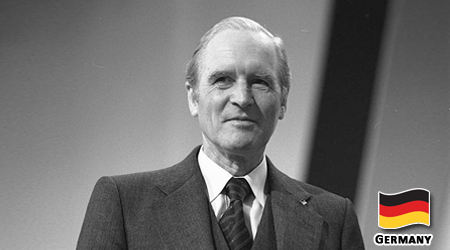
Karl Carstens
Charlemagne Prize 1984
Born on 14th December 1914 in Bremen.
Studied Law and Political Science at the Universities of Frankfurt, Munich, Königsberg and Hamburg, doctorate (LLD) in 1937.
After military service (1939–1945) he practised as a lawyer in Bremen. From 1949 to 1954 he was legal advisor for Bremen, representing Bremen at the central government in Bonn. In 1952 he qualified as a professor at Cologne University; where in 1960 he became Director of the Institute of Law of the European Communities.
From 1954 to 1955 he represented the Federal Republic of Germany as Delegate in the Council of Europe. Afterwards he worked in the Ministry of Foreign Affairs and was amongst other things responsible for preparing the negotiations on the Treaties of Rome. In 1960 he became initially Secretary of State at the Ministry of Foreign Affairs (1960–1966), then in the Ministry of Defence (1967) and later Director at the Chancellor’s Office (1968–1969). From 1970 to 1972 he headed the Research Institute of the German Council on Foreign Relations.
He was elected in 1972 as Member of Parliament for the CDU; in 1973 he became chairman of the CDU/CSU parliamentary group. From 1976 to 1979 he was President of the Bundestag.
From 1979 to 1984 he held the office of President of the Federal Republic of Germany.
Died on 30th May 1992.
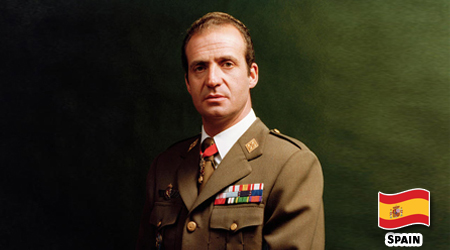
King Juan Carlos I. of Spain
Charlemagne Prize 1982
Born on 5th January 1938 in exile in Rome, where he remained until 1947. He was educated by private teachers and from 1948 on Franco’s orders in Spanish schools.
From 1955 to 1960 he attended various Spanish military academies. Tutored by university professors he then studied Political Sciences, Economics, Philosophy and the History of Literature at his residence near Madrid.
In July 1969 he was sworn in as Prince of Spain; later he was promoted to the ranks of General and Admiral and assigned representational duties.
Two days after Franco’s death he was crowned King of Spain (1975); he supported the development of political parties as well as the modernization of the country and played a decisive role in its democratization. After the first free elections in 1976 he appointed Adolfo Suarez as Prime Minister, whose government advanced democratic reforms (in 1978 a modern constitution was adopted). At the attempted coup by officers of the Guardia Civil (1981) he aligned himself with the democratization process leading to the failure of the coup.
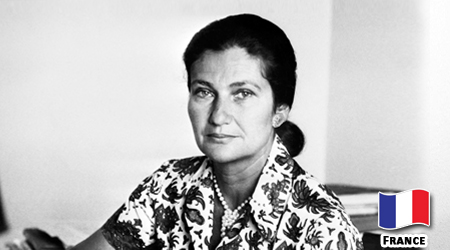
Simone Veil
Charlemagne Prize 1981
Born on 13th Juli 1927 in Nice.
In March 1944 she was deported to Auschwitz and Bergen–Belsen, where she lost her parents and her brother. After the War she studied Law and was conferred a degree at the Paris Institute of Political Studies.
She began her career in 1957 in the Ministry of Justice (until 1968); in 1969 she became Advisor to the Cabinet of Prime Minister Pleven. In 1970 she took on the position of Secretary General of the Supreme Board of Magistrates, the highest administrative authority of French judges. From 1974 to 1979 she held various ministerial positions (1974 to 1978 Health Minister, from 1977 simultaneously Minister for Social Affairs; 1978 bis 1979 Minister for Health and Family Affairs).
From 1979 to 1993 she was a Member of the European Parliament; in 1979 she was for two and a half years the first woman to become President of the European Parliament and the first elected Parliament. She campaigned emphatically for a strengthening of the role and the competences of the European Parliament. In 1993 she returned to the French Government as Minister for Social Affairs, Health (until 1995).
Died on 30th June 2017.
Charlemagne Prize Award Laureates (1980 ~ 1971)
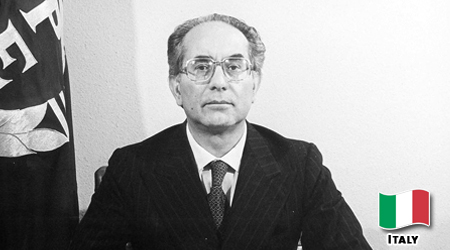
Emilio Colombo
Charlemagne Prize 1979
Born on 14th April 1920 in Potenza.
Studied Law and was afterwards conferred a doctorate (LLD). After working in the Catholic Action he became Vice President of the Italian Catholic Youth Association. In 1946 at the age of 26 he was elected for the Constituent Assembly.
From 1948 to 1992 he was a Member of the Italian Parliament without interruption. From 1948 to 1951 he was State Secretary in the Ministry of Public Works, afterwards he held several cabinet posts, amongst others Minister of Agriculture (1955–1958), Minister of Foreign Commerce (1958–1959), Minister of Industry and Trade (1959–1963), Finance Minister (1963–1970 and 1974–1977), Foreign Minister (1980–1982 and 1992–1993).
From 1970 to 1972 he was Italian Prime Minister, later he became the Italian delegate at the United Nations in the position of a Minister without Portfolio. From 1977 to 1980 he was Member and at the same time President of the European Parliament; from 1989 to 1992 he was again a Member of the European Parliament. As a convinced European and in various functions he was actively involved over a period of almost 40 years in the development of the European integration process.
Died on 24th June 2013.
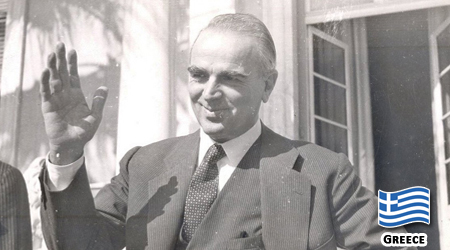
Konstantin Karamanlis
Charlemagne Prize 1978
Born on 8th March 1907 in Proti (formerly Turkish East Macedonia).
Studied Law at the University of Athens; after his final degree (1932) practised as a lawyer in Athens.
From 1935 to 1936 and 1946 to 1950 he was a Member of the Greek Parliament for the People’s Party. From 1946 he held various positions as a Minister (1946 Minister of Employment; 1947 Minister of Transport; 1948 first of all Minister of Transport and later also Minister for Social Affairs; 1950 Minister of Defence for 2 months; 1952–1954 Minister of Public Works and afterwards Minister of Transport).
From 1955 to 1963 he was Greek Prime Minister after having joined the conservative National Radical Union in 1951; after his resignation he went into exile in Paris, from where he fought against the military government which had been ruling since the military coup in 1967.
In 1974 he returned to Athens and formed the conservative party ‘New Democracy’, became its leader and was elected Prime Minister of a civil government; he held this office until 1980. He played a decisive role in the democratization of Greece and pursued with great personal commitment—against domestic opposition—the membership of Greece in the European Community which was effected in 1981. From 1980 to 1985 and from 1990 to 1995 he was Greek State President.
Died on 23th April 1998.
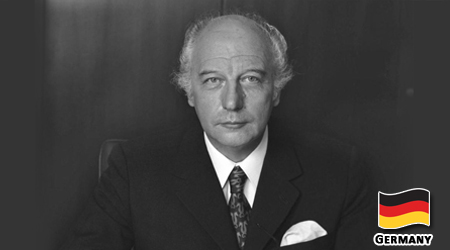
Walter Scheel
Charlemagne Prize 1977
Born on 8th July 1919 in Solingen.
Apprenticeship as a banker; from 1939 to 1945 military service.
From 1945 to 1953 he was manager at several companies, afterwards worked as an independent management consultant.
From 1950 to 1953 he was a Member of the North Rhine Westphalia Regional Parliament for the FDP. From 1953 to 1974 he was a Member of the German Federal Parliament and also its Vice President from 1967 to 1969; in addition from 1955 to 1957 he was a Member of the Joint Assembly of the European Coal and Steel Community and from 1958 to 1961 Member of the European Parliament.
In 1961 he was appointed Minister for Economic Cooperation, an office which he held until 1966. In 1968 he was elected Chairman of the FDP; from 1969 to 1974 he held the office of Foreign Minister and Vice Chancellor. Afterwards he was elected Federal President of West Germany for 5 years (until 1979). During his political work of many years he campaigned for the consolidation of the European integration process.
Died on 24th August 2016.
View More
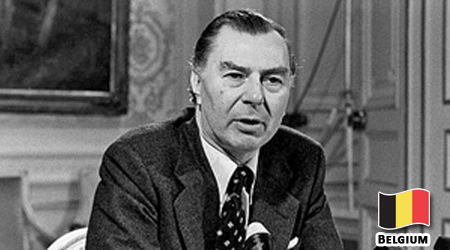
Leo Tindemans
Charlemagne Prize 1976
Born on 16th April 1922 in Zwijndrecht (near Antwerpen).
Studied Economics and Social Studies at the University of Gent.
From 1958 to 1966 he was Secretary General of the Flemish branch of the Christian Peoples’ Party, from 1961 Member of the Belgian Parliament. He held various ministerial posts (amongst others 1972–1973 Minister for Agriculture; 1973–1974 Minister of Finance and at the same time Deputy Prime Minister; 1981–1989 Foreign Minister). From 1974 to 1978 he was Belgian Prime Minister; the report presented by him on behalf of the Heads of Government at the end of 1975 with proposals for reform for the further development of the Community for Political Union was much discussed, but had at that time no definite consequences.
As Foreign Minister (1981–1989) and as a Member of the European Parliament (1989–1994) he campaigned actively for further progress in the integration process in Europe.
Died on 26th December 2014.

Don Salvador de Madariaga
Charlemagne Prize 1973
Born on 23rd July 1886 in La Coruna (north–west Spain)
Studied Engineering in Paris.
From 1911 he worked as an Engineer with the Northern Spanish Railway Company and afterwards from 1916 as a columnist for the Times in London. He abandoned this profession and worked in the Press Office at the Secretariat of the League of Nations in Geneva (1921), where he became Head of the Disarmament Section from 1922 to 1928. In 1928 he became Professor for Spanish literature at Oxford.
In 1931—after the proclamation of the Spanish Republic—he returned to Spain and was for a short time a Member of the National Assembly; in 1931 the Spanish Republic appointed him as Ambassador in Washington and Paris (1932–1934); during this time and until 1936 he was Spain’s Chief Delegate to the League of Nations.
After the outbreak of the Spanish Civil War (1936) he returned to Oxford, where for 40 years he lectured and also followed a career as a writer and publisher; during the Franco era he fought against this regime whilst in exile. After World War II he lived in Switzerland as an author (published numerous books and amongst others leading articles in the Züricher Zeitung); his life’s work made him into an institution of the European idea.
Died on 14th December 1978.
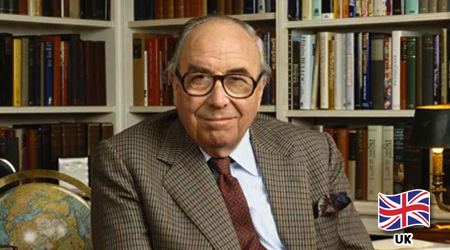
Roy Jenkins
Charlemagne Prize 1972
Born on 11th November 1920 in Abersychan (Wales).
Studied Politics and Economics at Balliol College in Oxford; afterwards from 1942 to 1946 military service.
From 1948 to 1977 he was a Member of the House of Commons for the Labour Party; from 1955 to 1957 he was a member of the Consultative Assembly of the Council of Europe and the Assembly of the West European Union. As Chairman of the European Committee of his party and President of the British Council of the European Movement he campaigned for the membership of Great Britain in the European Community.
He held various ministerial offices in the British Government (1964–1965 Minister of Aviation; 1965–1967 Home Secretary, afterwards Chancellor of the Exchequer until 1970; 1974–1976 again Home Secretary). From 1970 to 1972 he was Deputy Leader of the Labour Party.
From 1977 to 1980 he was President of the Commission of the European Communities.
Died on 5th January 2003.