


Freedom Award


Freedom Award
Our annual Freedom Award recognizes outstanding leaders in the cause of freedom and democracy.For more than 80 years, Freedom House has worked to defend human rights and promote democratic change by challenging unjust governments, defending civil liberties at home and abroad, and providing support for frontline activists who bravely strive for fundamental freedoms. We act as a catalyst for freedom through a unique combination of analysis, advocacy, and action. Our yearly awards honor courageous individuals and innovative groups that have made significant contributions to the cause of human rights and democracy.
| Sl | Name | Country | Flag | Year | Awarded For |
|---|---|---|---|---|---|
| 30 | María Corina Machado | Venezuela | 2025 | for her sustained & non-violent struggle for democratic reform, human rights, and the peaceful resolution of Venezuela's profound political crisis. | |
| 62 | Dr. Wang Bingzhang | China | 2024 | for outstanding leadership in the cause of freedom and democracy | |
| 61 | The Women of Iran | Iran | 2023 | for outstanding leadership in the cause of freedom and democracy | |
| 60 | Vladimir Kara-Murza | Russia | 2023 | for outstanding leadership in the cause of freedom and democracy | |
| 59 | Maykel Castillo Pérez | Cuba | 2022 | for outstanding leadership in the cause of freedom and democracy | |
| 58 | Luis Manuel Otero Alcántara | Cuba | 2022 | for outstanding leadership in the cause of freedom and democracy | |
| 57 | Hong Kong's Pro-Democracy Movement | China | 2020 | for outstanding leadership in the cause of freedom and democracy | |
| 56 | Sudanese Professionals Association | Sudan | 2020 | for outstanding leadership in the cause of freedom and democracy | |
| 55 | The Organization of the December Revolution Martyrs' Families in Sudan | Sudan | 2020 | for outstanding leadership in the cause of freedom and democracy | |
| 54 | Ilham Tohti | China | 2019 | for outstanding leadership in the cause of freedom and democracy | |
| 53 | Elena Milashina | Russia | 2018 | for outstanding leadership in the cause of freedom and democracy | |
| 52 | Igor Kochetkov | Estonia | 2018 | for outstanding leadership in the cause of freedom and democracy | |
| 51 | Luis Almagro | Uruguay | 2017 | for outstanding leadership in the cause of freedom and democracy | |
| 50 | Hala Aldosari | Soudi Arabia | 2016 | for outstanding leadership in the cause of freedom and democracy | |
| 49 | Vian Dakhil | Iraq | for outstanding leadership in the cause of freedom and democracy | ||
| 48 | Maina Kiai | Kenya | 2014 | for outstanding leadership in the cause of freedom and democracy | |
| 47 | Chen Guancheng | China | 2013 | for outstanding leadership in the cause of freedom and democracy | |
| 46 | Abdulhadi Al-Khawaja | Bahrain | 2012 | for outstanding leadership in the cause of freedom and democracy | |
| 45 | Zainab Al-Khawaja | Bahrain | 2012 | for outstanding leadership in the cause of freedom and democracy | |
| 44 | Maryam Al-Khawaja | Bahrain | 2012 | for outstanding leadership in the cause of freedom and democracy | |
| 43 | Leonid Kuchma | Ukrine | 1996 | for outstanding leadership in the cause of freedom and democracy | |
| 42 | Sergei Kovalyov | Ukrine | 1995 | for outstanding leadership in the cause of freedom and democracy | |
| 41 | Lane Kirkland | United States | 1993 | for outstanding leadership in the cause of freedom and democracy | |
| 40 | Max M. Kampelman | United States | 1993 | for outstanding leadership in the cause of freedom and democracy | |
| 39 | Malcolm S. Forbes | United States | 1993 | for outstanding leadership in the cause of freedom and democracy | |
| 38 | Vaclav Havel | Czech Republic | 1991 | for outstanding leadership in the cause of freedom and democracy | |
| 37 | The 14th Dalai Lama | China | 1991 | for outstanding leadership in the cause of freedom and democracy | |
| 36 | Cushrow R. Irani | India | 1977 | for outstanding leadership in the cause of freedom and democracy | |
| 35 | Dong-A Ilbo | South Korea | 1975 | for outstanding leadership in the cause of freedom and democracy | |
| 34 | Responsible Journalists of Vietnam | Vietnam | 1975 | for outstanding leadership in the cause of freedom and democracy | |
| 33 | 15 Soviet dissenters | Russia | 1973 | for outstanding leadership in the cause of freedom and democracy | |
| 32 | Earl Warren | United States | 1969 | for outstanding leadership in the cause of freedom and democracy | |
| 31 | Milovan Djilas | Serbia | 1969 | for outstanding leadership in the cause of freedom and democracy | |
| 30 | Pablo Casals | Spain | 1968 | for outstanding leadership in the cause of freedom and democracy | |
| 29 | Roy Wilkins | United States | 1967 | for outstanding leadership in the cause of freedom and democracy | |
| 28 | Lyndon B. Johnson | United States | 1966 | for outstanding leadership in the cause of freedom and democracy | |
| 27 | Harry S. Truman | United States | 1965 | for outstanding leadership in the cause of freedom and democracy | |
| 26 | Medgar W. Evers | United States | 1963 | for outstanding leadership in the cause of freedom and democracy | |
| 25 | Martin Luther King, Jr. | United States | 1963 | for outstanding leadership in the cause of freedom and democracy | |
| 24 | Jean Monnet | France | 1962 | for outstanding leadership in the cause of freedom and democracy | |
| 23 | Willy Brandt | Germany | 1961 | for outstanding leadership in the cause of freedom and democracy | |
| 22 | Alan Paton | South Africa | 1960 | for outstanding leadership in the cause of freedom and democracy | |
| 21 | Paul-Henri Spaak | Belgium | 1959 | for outstanding leadership in the cause of freedom and democracy | |
| 20 | The Arkansas Gazette newspaper | United States | 1958 | for outstanding leadership in the cause of freedom and democracy | |
| 19 | Hungarian Freedom Fighters | Hungary | 1957 | for outstanding leadership in the cause of freedom and democracy | |
| 18 | Luis Munoz Marin | Puerto Rico | 1956 | for outstanding leadership in the cause of freedom and democracy | |
| 17 | Ramon Magsaysay | Philippines | 1956 | for outstanding leadership in the cause of freedom and democracy | |
| 16 | Winston Churchill | United Kingdom | 1955 | for outstanding leadership in the cause of freedom and democracy | |
| 15 | Edward R. Murrow | United States | 1954 | for outstanding leadership in the cause of freedom and democracy | |
| 14 | UN soldiers in Korea | United Nations | 1953 | for outstanding leadership in the cause of freedom and democracy | |
| 13 | Matthew B. Ridgway | United States | 1952 | for outstanding leadership in the cause of freedom and democracy | |
| 12 | James B. Conant | United States | 1952 | for outstanding leadership in the cause of freedom and democracy | |
| 11 | Alberto Gainza Paz | Argentina | 1951 | for outstanding leadership in the cause of freedom and democracy | |
| 10 | Paul G. Hoffman | United States | 1951 | for outstanding leadership in the cause of freedom and democracy | |
| 9 | Dean Acheson | United States | 1950 | for outstanding leadership in the cause of freedom and democracy | |
| 8 | David E. Lilienthal | United States | 1949 | for outstanding leadership in the cause of freedom and democracy | |
| 7 | Lucius D. Clay | United States | 1949 | for outstanding leadership in the cause of freedom and democracy | |
| 6 | Arthur H. Vandenberg | United States | 1948 | for outstanding leadership in the cause of freedom and democracy | |
| 5 | George C. Marshall | United States | 1947 | for outstanding leadership in the cause of freedom and democracy | |
| 4 | Bernard M. Baruch | United States | 1946 | for outstanding leadership in the cause of freedom and democracy | |
| 3 | Dwight D. Eisenhower | United States | 1945 | for outstanding leadership in the cause of freedom and democracy | |
| 2 | Sumner Welles | United States | 1944 | for outstanding leadership in the cause of freedom and democracy | |
| 1 | Walter Lippmann | United States | 1943 | for outstanding leadership in the cause of freedom and democracy |
Freedom Award Laureates (1990 ~ 1971)

Cushrow R. Irani
Freedom Award 1977
Cushrow R. Irani, the legendary managing director of The Statesman in India, was honored with the Freedom Award by Freedom House in 1977. This recognition celebrated his fierce defense of the "Freedom of Speech" during the "Emergency" declared by Prime Minister Indira Gandhi between 1975 and 1977. When the Indian government imposed draconian press censorship and cut off electricity to printing presses, Irani famously refused to submit. He challenged the government's attempts to seize control of his newspaper's board and fought numerous legal battles to maintain editorial independence, becoming a global symbol of journalistic integrity under fire.The award underscored the vital role of a free press in securing a "Freedom from Fear" within a constitutional democracy. By turning The Statesman into a "fortress of liberty," Irani proved that the rule of law could be used to shield the truth from authoritarian overreach. His laureateship highlighted the belief that "the press is the watchdog of the people," and his refusal to "bend" when the government asked him to "vouch" remains a defining moment in Indian history. By honoring Irani, Freedom House recognized that the survival of democracy in the developing world depends on the courage of individuals who prioritize the public’s right to know over their own personal or corporate safety.

Dong-A Ilbo
Freedom Award 1975
Gemini said
In 1975, the South Korean newspaper Dong-A Ilbo was honored with the Freedom Award for its heroic defense of the "Freedom of Speech" during the repressive regime of President Park Chung-hee. As the most prominent voice of the opposition, the paper faced severe government intimidation, including the arrest of its reporters and a state-orchestrated advertising boycott designed to bankrupt the publication. In a historic display of solidarity, ordinary citizens and small business owners purchased "encouragement ads" to fill the blank spaces left by withdrawn corporate sponsors, transforming the newspaper into a living symbol of the "Freedom from Fear."The award recognized the Dong-A Ilbo as a pillar of the pro-democracy movement in South Korea. By refusing to succumb to the "Press Guidelines" dictated by the Korean Central Intelligence Agency, the paper’s journalists demonstrated that an independent press is the most effective shield against authoritarianism. Their laureateship underscored that the struggle for liberty is often fought through the persistent distribution of truth in the face of censorship. By honoring this institution, Freedom House signaled to the international community that the desire for democratic self-determination was a potent, unquenchable force within the Korean peninsula, cementing the paper’s legacy as a vanguard of human rights and the rule of law during a dark era of political suppression.

Responsible Journalists of Vietnam
Freedom Award 1973
In 1975, Freedom House honored the Responsible Journalists of Vietnam with the Freedom Award, a poignant recognition during the final, chaotic months of the Vietnam War. This collective award celebrated a group of South Vietnamese reporters and editors who risked their lives to maintain the "Freedom of Speech" amidst the double threat of government censorship and the encroaching North Vietnamese forces. By prioritizing factual reporting over state propaganda, these journalists sought to provide a "Freedom from Fear" through information, believing that an informed citizenry was the only hope for a lasting, democratic resolution to the conflict.The award underscored the critical role of an independent press as a check on both authoritarianism and the "fog of war." By honoring these journalists, Freedom House highlighted the immense moral courage required to report the truth when the very survival of one’s nation is at stake. Their laureateship served as a global reminder that the "Freedom of the Press" is not a luxury for peaceful times but a fundamental necessity for any society striving for self-determination. Despite the eventual fall of Saigon, the legacy of the Responsible Journalists of Vietnam remains a testament to the idea that the pursuit of truth is a sacred duty that transcends political boundaries and military outcomes.
View More

15 Soviet Dissenters
Freedom Award 1973
In 1973, the Freedom Award was uniquely presented to a group designated as the 15 Soviet Dissenters. This collective honor recognized a diverse assembly of scientists, writers, and activists who had become the "conscience of the Soviet Union." By honoring these individuals, Freedom House highlighted the burgeoning human rights movement within the Eastern Bloc, where the "Freedom of Speech" was being reclaimed through samizdat (self-published) literature. The award celebrated their courage in documenting state abuses and demanding that the Soviet government adhere to its own constitution and international human rights standards, despite the constant threat of imprisonment or forced psychiatric confinement.The laureates represented a broad spectrum of the resistance, including the physicist Andrei Sakharov, who became the most prominent face of the movement. Their struggle underscored the "Freedom from Fear" by demonstrating that intellectual and moral independence could survive even under a pervasive surveillance state. This award was a watershed moment in Western recognition of the internal ideological cracks within the Soviet system, proving that the demand for transparency and civil liberties was not a Western imposition but a universal human drive. By collectively honoring these 15 voices, Freedom House signaled that the individual quest for truth remained the most potent weapon against the monolith of totalitarianism, inspiring a generation of activists worldwide.
Freedom Award Laureates (1970 ~ 1961)

Earl Warren
Freedom Award 1969
Earl Warren, the 14th Chief Justice of the United States and former Governor of California, was honored with the Freedom Award by Freedom House in 1970. This recognition celebrated his transformative leadership of the Warren Court, which oversaw a "constitutional revolution" that profoundly expanded the scope of American liberty. His tenure was defined by a commitment to the "Freedom of Speech" and the protection of individual rights against government overreach. Most notably, Warren authored the unanimous opinion in Brown v. Board of Education (1954), which declared state-sanctioned racial segregation in public schools unconstitutional, fundamentally altering the moral and legal landscape of the nation.The award also acknowledged Warren’s role in securing the "Freedom from Fear" by ensuring that the rule of law applied equally to the marginalized and the accused. Under his guidance, the Court established landmark precedents such as Miranda v. Arizona, which protected the rights of criminal suspects, and Reynolds v. Sims, which enforced the principle of "one man, one vote." By honoring Warren, Freedom House highlighted a jurist who believed that the judiciary must be a living instrument of justice rather than a static relic of the past. His legacy remains a cornerstone of modern American democracy, proving that the strength of a free society is measured by its willingness to protect the fundamental dignity and political voice of every citizen.

Milovan Djilas
Freedom Award 1969
Milovan Djilas, the former Vice President of Yugoslavia and once a high-ranking communist revolutionary, was honored with the Freedom Award by Freedom House in 1969. This recognition celebrated his extraordinary transformation from a powerful architect of a totalitarian state to one of the world’s most influential dissidents. Djilas became a global symbol of the "Freedom of Speech" after he sacrificed his political career and spent years in prison for writing The New Class, a landmark critique that exposed the hypocrisy and corruption of the communist elite. His laureateship underscored the "Freedom from Fear" by highlighting his courage to speak the truth against a regime he helped create.The award also acknowledged Djilas’s role in piercing the ideological veil of the Iron Curtain, providing the West with a profound intellectual understanding of the internal failures of Marxist-Leninist systems. By honoring him, Freedom House emphasized that the most potent threat to tyranny is often the internal defector who chooses conscience over power. Djilas famously asserted that "the path to freedom is a difficult one," and his life’s work proved that even within the most rigid structures of oppression, the human spirit can reclaim its autonomy. His legacy remains a testament to the idea that true liberty begins with the individual's refusal to live in a lie, cementing his status as a foundational figure in the global struggle for human rights.

Pablo Casals
Freedom Award 1968
Pablo Casals, the legendary Catalan cellist and conductor, was honored with the Freedom Award by Freedom House in 1968. This recognition celebrated his lifelong commitment to using music as a universal language for peace and his uncompromising defiance against totalitarianism. Following the Spanish Civil War, Casals famously vowed never to perform in countries that recognized the Franco dictatorship, choosing a self-imposed exile that transformed him into a global symbol of conscience. His laureateship underscored the "Freedom of Speech" through artistic protest, highlighting his belief that an artist's first responsibility is to the dignity of humanity rather than the patronage of power.The award also acknowledged Casals' profound influence on international diplomacy, particularly through his repeated performances at the United Nations. By premiering his "Hymn to the United Nations" and advocating for nuclear disarmament, he championed a vision of "Freedom from Fear" rooted in global brotherhood. Casals famously declared, "I am a man first, and an artist second," asserting that silence in the face of injustice is a betrayal of the creative spirit. By honoring him, Freedom House recognized that the defense of liberty is not solely the province of politicians and soldiers, but also of those who use their art to stir the moral imagination of the world and demand a more just, harmonious civilization.
View More

Roy Wilkins
Freedom Award 1967
Roy Wilkins, the longtime executive director of the NAACP, was honored with the Freedom Award by Freedom House in 1967. Known as the "Mr. Civil Rights" of his era, Wilkins was recognized for his strategic and constitutional approach to dismantling racial segregation in America. Unlike more radical contemporaries, Wilkins believed that the "Freedom of Speech" and the American judicial system were the most effective tools for permanent social change. His laureateship celebrated a career dedicated to the "Freedom from Fear," particularly his role in orchestrating the legal challenges that led to Brown v. Board of Education and his pivotal leadership during the 1963 March on Washington.The award also acknowledged Wilkins’ role as a unifying force within the Civil Rights Movement, consistently advocating for nonviolence and integration over separatism. By honoring him, Freedom House highlighted his belief that the struggle for Black equality was inextricably linked to the broader health of American democracy. Wilkins famously argued that "the black man’s fate is the American fate," asserting that the nation could only be truly free when the rule of law applied equally to every citizen. His legacy remains a testament to the power of persistent, institutional advocacy in expanding the boundaries of liberty, proving that the steady application of democratic principles can eventually topple the most entrenched systems of injustice.

Lyndon B. Johnson
Freedom Award 1966
Lyndon B. Johnson, the 36th President of the United States, was honored with the Freedom Award by Freedom House in 1966. This recognition celebrated his monumental domestic achievements in expanding the "Freedom from Want" and ensuring the "Freedom of Speech" for all citizens through the most significant civil rights legislation since Reconstruction. By signing the Civil Rights Act of 1964 and the Voting Rights Act of 1965, Johnson dismantled the legal framework of Jim Crow and codified the promise of equality. His "Great Society" programs further aimed to liberate millions from the cycle of poverty, proving his belief that a truly free nation must also be a just one.The award also acknowledged Johnson’s role as a leader of the free world during the height of the Cold War. While his legacy remains inextricably linked to the complexities of the Vietnam War, the Freedom Award specifically highlighted his commitment to the defense of democratic institutions against totalitarian pressure. By honoring Johnson, Freedom House recognized a president who wielded the power of the federal government to protect the constitutional rights of the marginalized, asserting that the strength of American democracy lies in its ability to evolve. His laureateship remains a testament to a leader who understood that the preservation of liberty requires both the courage to face external threats and the moral resolve to cure internal injustices.

Harry S. Truman
Freedom Award 1965
Harry S. Truman, the 33rd President of the United States, was honored with the Freedom Award by Freedom House in 1964. This recognition celebrated his monumental role in defining the postwar international order and his decisive actions to protect "Freedom from Fear" globally. As the architect of the Truman Doctrine, he established the principle that the United States would support free peoples resisting attempted subjugation by armed minorities or outside pressures. His leadership in launching the Marshall Plan was equally transformative, providing the economic foundation for the "Freedom from Want" across a devastated Europe and proving that prosperity is the most effective bulwark against totalitarianism.The award also acknowledged Truman’s profound domestic contributions to civil rights. In 1948, he took a historic moral stand by issuing Executive Order 9981, which abolished racial discrimination in the United States Armed Forces. By integrating the military and establishing the first President's Committee on Civil Rights, Truman signaled that a nation cannot lead the free world while denying basic liberties to its own citizens. His laureateship underscored his belief that the "Freedom of Speech" and the rule of law are not passive inheritances but values that must be defended with "plain speaking" and courageous action. Truman’s legacy remains a testament to the idea that a single leader’s resolve can forge a global architecture of collective security and human dignity.

Medgar W. Evers
Freedom Award 1963
Medgar W. Evers, the indomitable field secretary for the NAACP in Mississippi, was posthumously honored with the Freedom Award by Freedom House in 1963. This recognition followed his tragic assassination in June of that year, an event that galvanized the American Civil Rights Movement and shocked the conscience of the nation. Evers was celebrated for his fearless grassroots organizing in one of the most racially hostile environments in the United States. His laureateship underscored the "Freedom from Fear," as he consistently risked his life to investigate lynchings, lead economic boycotts against segregated businesses, and spearhead voter registration drives for disenfranchised Black citizens.The award also acknowledged Evers’ role as a bridge between his military service in World War II and the domestic struggle for liberty. Having fought for democracy abroad at the Battle of Normandy, he returned home to demand that same democracy for his fellow citizens in Mississippi. By honoring Evers, Freedom House highlighted that the "Freedom of Speech" and the right to vote are the fundamental pillars of a free society, regardless of geography. His sacrifice became a catalyst for the passage of the Civil Rights Act of 1964, proving that the quiet, persistent courage of a single individual can ultimately dismantle the structural machinery of oppression and move a nation toward its founding ideals of equality.
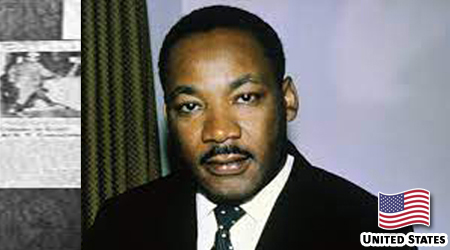
Martin Luther King, Jr.
Freedom Award 1963
Dr. Martin Luther King, Jr., the moral compass of the American Civil Rights Movement, was honored with the Freedom Award by Freedom House in 1963. This recognition followed the historic March on Washington, where his "I Have a Dream" speech redefined the American promise of liberty. King was celebrated for his unwavering commitment to nonviolent resistance as a transformative force for justice. His laureateship underscored that the "Freedom from Fear" could only be achieved by dismantling systemic racism and ensuring that the "Freedom of Speech" was exercised to demand legal and social equality for all citizens, regardless of race.The award also acknowledged King’s role in bridging the gap between American democratic ideals and the lived reality of African Americans. By highlighting the moral necessity of the Civil Rights Act, he proved that a free society must constantly labor to perfect itself. King’s leadership emphasized that "injustice anywhere is a threat to justice everywhere," aligning the domestic struggle for civil rights with the global fight for human dignity. By honoring him, Freedom House recognized a leader who moved the conscience of a nation, proving that the most powerful weapon against oppression is a disciplined, soul-driven demand for brotherhood and the universal application of the rule of law.

Jean Monnet
Freedom Award 1962
Jean Monnet, the French political economist and diplomat widely revered as the "Father of Europe," was honored with the Freedom Award by Freedom House in 1962. This recognition celebrated his revolutionary vision for a unified Europe, which moved beyond traditional power politics toward a supranational community built on shared interests. Monnet was the primary architect of the Schuman Declaration, which proposed the pooling of coal and steel production to make war between historic rivals France and Germany not only "unthinkable but materially impossible." His laureateship underscored the "Freedom from Want" by demonstrating that economic integration could provide the stability necessary for democratic institutions to flourish after the devastation of total war.The award also acknowledged Monnet’s unique role as a "man of influence" who worked behind the scenes to build the foundations of the European Economic Community. He believed that the defense of liberty required more than just military alliances; it required the creation of common institutions that could manage human affairs through the rule of law. By honoring Monnet, Freedom House highlighted a leader who understood that "men pass away, but institutions remain." His legacy is defined by his commitment to a "Freedom from Fear" rooted in interdependence and cooperation, proving that the sovereign nations of Europe could secure their future by forging a collective, democratic identity.
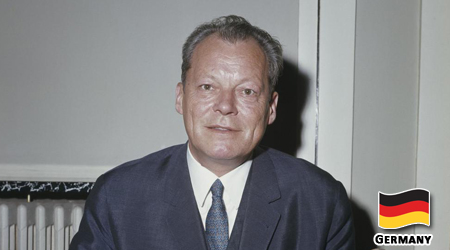
Willy Brandt
Freedom Award 1961
Willy Brandt, the Governing Mayor of West Berlin and later the Chancellor of West Germany, was honored with the Freedom Award by Freedom House in 1961. This recognition celebrated his steadfast leadership at the literal front line of the Cold War, particularly during the harrowing months following the construction of the Berlin Wall in August 1961. Brandt became a global symbol of democratic defiance, famously hosting President John F. Kennedy and embodying the "Freedom from Fear" for a city physically encircled by totalitarianism. His laureateship underscored the "Freedom of Speech" and the right of a people to choose their own destiny, even when faced with the overwhelming pressure of Soviet encirclement.The award also acknowledged Brandt's vision for a broader, more integrated Europe. While he was a fierce defender of West Berlin’s autonomy, he also pioneered the early concepts of Ostpolitik, a policy of engagement aimed at reducing tensions between the East and West through "change through rapprochement." By honoring Brandt, Freedom House highlighted a leader who understood that the defense of liberty required both military resolve and a compassionate, forward-looking diplomacy. His legacy as a Nobel Peace Prize laureate and a champion of human rights remains a cornerstone of German democracy, proving that even in the shadow of a wall, the spirit of a free society can remain unbowed and vibrant.
Freedom Award Laureates (1960 ~ 1951)

Alan Paton
Freedom Award 1960
Alan Paton, the renowned South African author and activist, was honored with the Freedom Award by Freedom House in 1960. This recognition celebrated his profound moral leadership as the founder and president of the Liberal Party of South Africa. Best known internationally for his 1948 masterpiece, Cry, the Beloved Country, Paton utilized his literary brilliance to expose the systemic injustice and human suffering caused by apartheid. His laureateship underscored the "Freedom of Speech" as a primary weapon against racial oppression, highlighting his belief that "to give up the task of reforming society is to give up one's responsibility as a free man."The award also recognized Paton’s immense personal courage in advocating for a non-racial, democratic South Africa during a period of intense government repression. By the time he received the honor, the South African government had confiscated his passport, effectively confining him to his country for a decade. Despite this, he remained a steadfast voice for "Freedom from Fear," warning that the "fear of the white man for the black man" would ultimately destroy the nation if not replaced by justice. By honoring Paton, Freedom House signaled to the global community that the struggle for human dignity in Africa was a central frontier in the universal fight for liberty, cementing his legacy as a "conscience of the nation."
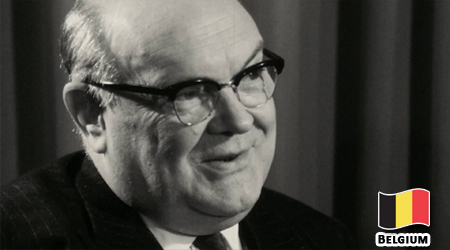
Paul-Henri Spaak
Freedom Award 1959
Paul-Henri Spaak, a distinguished Belgian statesman and one of the primary architects of European unity, was honored with the Freedom Award by Freedom House in 1959. This recognition celebrated his tireless leadership as the Secretary General of NATO, a role in which he worked to transform the military alliance into a broader political community. Known affectionately as "Mr. Europe," Spaak was a driving force behind the Treaty of Rome and the creation of the Common Market, believing that economic integration was the only definitive cure for the nationalistic conflicts that had twice devastated the continent.The award underscored Spaak's commitment to the "Freedom from Fear" through collective security and diplomatic cooperation. He famously advocated for a "situation of strength" not merely as a military strategy, but as a moral necessity to protect Western democratic values against the pressures of the Cold War. By honoring Spaak, Freedom House highlighted a leader who understood that true liberty is best preserved when sovereign nations voluntarily surrender portions of their autonomy for the sake of a greater, unified peace. His legacy remains a cornerstone of the modern European project, proving that a shared commitment to the rule of law and human rights is the most effective shield against totalitarianism.

The Arkansas Gazette
Freedom Award 1958
In 1958, the Freedom Award was bestowed upon The Arkansas Gazette, with executive editor Harry Ashmore accepting the honor on behalf of the publication. This recognition marked a pivotal moment in the American Civil Rights Movement, celebrating the newspaper's courageous editorial stance during the 1957 Little Rock integration crisis. While facing immense local hostility, a devastating advertising boycott, and threats of violence, the Gazette remained a steadfast voice for the rule of law. Ashmore’s editorials argued that the "Freedom of Speech" must be used to uphold federal court orders and the moral necessity of desegregating Central High School, directly challenging the segregationist defiance of Governor Orval Faubus.The award underscored the critical role of a free press in defending the "Freedom from Fear" within a domestic context. By refusing to succumb to the "massive resistance" movement, the Gazette proved that journalistic integrity is a prerequisite for a functioning democracy. Their reporting provided a factual counter-narrative to racial demagoguery, earning them two Pulitzer Prizes alongside the Freedom Award. This laureateship served as a powerful reminder that the struggle for human liberty is not only fought on international battlefields but also in the newsrooms and classrooms of the American South, where the pen must often defend the constitutional rights of the marginalized against the passions of the mob.
View More

Hungarian Freedom Fighters
Freedom Award 1957
In 1957, the Freedom Award was bestowed collectively upon the Hungarian Freedom Fighters, a poignant tribute to the students, workers, and soldiers who rose against Soviet-imposed totalitarianism during the 1956 Hungarian Revolution. This award marked a departure from honoring established statesmen, instead recognizing the raw courage of ordinary citizens who used improvised weapons and sheer will to challenge the Red Army. By honoring these "knights of liberty," Freedom House underscored the universal yearning for "Freedom from Fear" and the right of all nations to self-determination.The recognition highlighted the tragic but heroic nature of the uprising, which was brutally suppressed by Soviet tanks. Despite the military defeat, the Freedom Fighters were celebrated for piercing the myth of monolithic communist stability and exposing the fragility of rule by force. The award served as a moral victory, signaling to the world that the "Freedom of Speech" and political independence remained unquenchable human desires even behind the Iron Curtain. By memorializing their sacrifice, Freedom House ensured that the legacy of the Hungarian Revolution would serve as a permanent inspiration for future democratic movements, proving that the spirit of a free people is ultimately more durable than the machinery of oppression.

Luis Munoz Marin
Freedom Award 1956
Luis Muñoz Marín, the first democratically elected Governor of Puerto Rico, was honored with the Freedom Award by Freedom House in 1956. This recognition celebrated his visionary leadership in transforming Puerto Rico from "the poorhouse of the Caribbean" into a model of democratic development. Through his ambitious industrialization program, Operation Bootstrap, Muñoz Marín championed the "Freedom from Want" by drastically reducing poverty and improving literacy and healthcare. His approach proved that economic progress could be achieved through democratic planning and social justice rather than authoritarian decree.The award also highlighted his masterful navigation of Puerto Rico's political status, leading to the creation of the Commonwealth (Estado Libre Asociado) in 1952. By fostering a unique relationship with the United States that emphasized self-governance and cultural identity, he provided a stable alternative to both colonial rule and radical nationalism. His laureateship underscored his belief that "the spirit of a people is the only foundation for a free society." Muñoz Marín’s legacy remains a cornerstone of modern Puerto Rican history, representing a life dedicated to proving that democracy is the most effective tool for uplifting the human condition.

Ramon Magaysay
Freedom Award 1956
Ramon Magsaysay, the seventh President of the Philippines, was posthumously honored with the Freedom Award by Freedom House in 1956, a recognition he shared with Luis Muñoz Marín. Celebrated as the "Idol of the Masses," Magsaysay was recognized for his transformative leadership in restoring public faith in democracy during a period of intense Cold War volatility. He famously defeated the communist Hukbalahap insurgency not through force alone, but by addressing the root causes of unrest—poverty and landlessness—through robust agrarian reforms and a government that was literally "open to the people."His laureateship underscored his commitment to "Freedom from Want" and "Freedom from Fear," particularly his success in transforming the Philippine military into a protector of civil rights. Tragically, Magsaysay died in a plane crash in 1957, less than a year after receiving the award. His legacy was so profound that it inspired the creation of the Ramon Magsaysay Award, often called "Asia’s Nobel Prize," which continues to honor individuals who embody his "greatness of spirit" and integrity. By honoring him, Freedom House highlighted a leader who proved that democratic governance could be both more effective and more compassionate than authoritarian alternatives in the developing world.

Winston Churchill
Freedom Award 1955
Sir Winston Churchill, the iconic British Prime Minister who steered the United Kingdom through the Second World War, was honored with the Freedom Award by Freedom House in 1955. This recognition coincided with his retirement from the premiership and served as a tribute to his life's work as a "guardian of liberty." Churchill was celebrated for his indomitable resolve and his unparalleled oratory, which galvanized the free world against the existential threat of Nazi totalitarianism. His leadership emphasized that the preservation of democracy required not only military strength but an unyielding moral courage to defend the "Freedom of Speech" and the rule of law.The award also highlighted Churchill’s role as an early and prophetic voice against the post-war expansion of Soviet influence. By coining the term "Iron Curtain" in 1946, he alerted Western democracies to the new challenges facing global security, advocating for a "situation of strength" to ensure a lasting "Freedom from Fear." Beyond his political and military achievements, Churchill’s status as a 1953 Nobel Laureate in Literature underscored his mastery of historical narrative, which he used to frame the struggle for freedom as the defining mission of the English-speaking peoples. His legacy remains a cornerstone of the transatlantic alliance, embodying the principle that the defense of human dignity is a task that requires both "blood, toil, tears, and sweat" and a visionary commitment to a united, democratic future.

Edward R. Murrow
Freedom Award 1954
Edward R. Murrow, the preeminent figure of American broadcast journalism, was honored with the Freedom Award by Freedom House in 1954. This recognition celebrated his unparalleled moral courage in utilizing the nascent medium of television to challenge the demagoguery of Senator Joseph McCarthy. Through his landmark See It Now broadcast in March 1954, Murrow meticulously dismantled McCarthy’s tactics of fear and character assassination, famously declaring that "we will not be driven by fear into an age of unreason." His laureateship underscored the "Freedom of Speech" as a vital defense against domestic political repression and the erosion of due process.The award also acknowledged Murrow’s legacy as a wartime correspondent whose "This is London" broadcasts brought the reality of the Blitz and the horrors of Buchenwald into American living rooms, fostering a deep sense of shared humanity. By honoring Murrow, Freedom House highlighted the essential role of a free and ethical press in sustaining a healthy democracy. Murrow’s career, which later included leading the U.S. Information Agency, remains the gold standard for journalistic integrity, proving that "accusation is not proof" and that the truth is the most powerful weapon against those who seek to "terrorize a whole nation."

UN Soldiers in Korea
Freedom Award 1953
In 1953, the Freedom Award was uniquely bestowed upon the UN Soldiers in Korea, a collective honor that recognized the multinational forces serving under the United Nations Command. This award broke from the tradition of honoring individual statesmen to pay tribute to the hundreds of thousands of soldiers from 22 nations who fought to repel the communist invasion of South Korea. The recognition was accepted on their behalf by UN Secretary-General Dag Hammarskjöld, symbolizing the international community's gratitude for their role in upholding the principle of collective security.The honor underscored the movement toward "Freedom from Fear" by validating the first major military action taken by the United Nations to defend a sovereign state against aggression. By honoring these soldiers, Freedom House emphasized that the preservation of liberty often requires a shared, global sacrifice. This collective award served as a powerful testament to the idea that the defense of democracy was not merely a national interest but a universal obligation, cementing the Korean War's legacy as a pivotal moment in the global struggle for human rights.

Matthew B. Ridgway
Freedom Award 1952
General Matthew B. Ridgway, one of the most respected military commanders of the 20th century, was honored with the Freedom Award by Freedom House in 1952. This recognition followed his extraordinary leadership during the Korean War, where he took command of the Eighth Army at its lowest point in December 1950. Ridgway is credited with a historic military turnaround, restoring the morale and combat effectiveness of UN forces and successfully halting the Chinese and North Korean advance. His strategic brilliance preserved the "Freedom from Fear" for the people of South Korea and prevented the collapse of the democratic frontline in Asia.The award also highlighted Ridgway’s role as the Supreme Allied Commander Europe (SACEUR), a position he assumed in 1952. In this capacity, he was instrumental in strengthening the nascent NATO alliance, ensuring that the collective defense of Western Europe remained a credible deterrent against totalitarian expansion. Known as a "soldier’s soldier" who frequently visited the front lines, Ridgway’s leadership emphasized that military power must always serve the higher purpose of defending human liberty and the rule of law. His legacy is defined by his unwavering resolve to protect sovereign nations from aggression, cementing his status as a foundational guardian of the postwar international order.

Jamea B. Conant
Freedom Award 1952
James B. Conant, a distinguished chemist, educator, and diplomat, was honored with the Freedom Award by Freedom House in 1952. As the 23rd president of Harvard University, Conant was a transformative figure who championed a more egalitarian and meritocratic approach to American education. He was instrumental in broadening the social and geographic diversity of the student body, believing that "status equality" and the removal of class barriers were essential to a thriving democratic society. During World War II, he pivoted to national service as the chairman of the National Defense Research Committee (NDRC), where he played a central role in organizing the scientific efforts that led to the development of the atomic bomb, a contribution he viewed as a necessary defense of freedom against totalitarianism.The award specifically recognized Conant’s emerging leadership in the reconstruction of postwar Europe. Shortly after receiving the honor, he transitioned from academia to diplomacy, serving as the U.S. High Commissioner for Germany and later as the first U.S. Ambassador to the Federal Republic of Germany. In these roles, he was a staunch defender of the democratic spirit, overseeing the restoration of German sovereignty and the integration of a new, free Germany into the Western alliance. His laureateship underscored his lifelong commitment to the "Freedom of Speech" and his conviction that both scientific inquiry and robust public education are the primary pillars that sustain a free world.

Alberto Gainza Paz
Freedom Award 1951
Alberto Gainza Paz, the editor and publisher of the influential Argentine newspaper La Prensa, was honored with the Freedom Award by Freedom House in 1951. This recognition celebrated his steadfast defense of independent journalism and "Freedom of Speech" in the face of intense state pressure. Under his leadership, La Prensa became a global symbol of resistance against the authoritarian regime of Juan Perón, which had subjected the paper to censorship, temporary suspensions, and the imprisonment of its staff before eventually expropriating the publication in April 1951.The award ceremony, held during Freedom House’s tenth anniversary, highlighted Gainza Paz’s resilience during his subsequent exile. He utilized his international platform to warn that it is far easier to fight to preserve existing freedoms than to regain those that have been lost. His commitment to inter-American friendship and unbiased reporting earned him worldwide prestige, proving that while a government can "expropriate the machinery of a newspaper," it cannot suppress its spirit. Gainza Paz eventually returned to lead La Prensa in 1956, cementing his legacy as a tireless advocate for the democratic necessity of a free and courageous press.

Paul G. Hoffman
Freedom Award 1951
Paul G. Hoffman, an American business executive and statesman, was honored with the Freedom Award by Freedom House in 1951. This recognition celebrated his transformative leadership as the first administrator of the Economic Cooperation Administration (ECA), the agency responsible for implementing the Marshall Plan. A former president of the Studebaker Corporation, Hoffman leveraged his industrial expertise to manage the massive distribution of U.S. aid to war-torn Europe. He famously argued that "only the Europeans can save Europe," emphasizing a partnership that prioritized European-led initiatives to restore agricultural and industrial production.The award underscored Hoffman's role in advancing the "Freedom from Want" by fostering economic stability and trade liberalization. Under his guidance, the Marshall Plan provided the "critical margin" that prevented economic collapse and hindered the spread of totalitarianism in Western Europe. Hoffman was a forceful advocate for European integration, believing that a unified market was essential for long-term peace. His subsequent career as the first administrator of the United Nations Development Programme (UNDP) further solidified his legacy as a "businessman for peace," dedicated to utilizing global resources to promote democratic resilience and human dignity worldwide.
Freedom Award Laureates (1950 ~ 1943)

Dean Acheson
Freedom Award 1950
Dean Acheson, the 52nd U.S. Secretary of State, was honored with the Freedom Award by Freedom House in 1950. This recognition celebrated his monumental role in constructing the "containment" policy and the institutional architecture of the postwar Western world. As a primary architect of the Truman Doctrine and the Marshall Plan, Acheson was instrumental in ensuring that democratic nations possessed the economic and military strength to resist totalitarian expansion. His laureateship underscored his belief that global stability required a "situation of strength" to protect the "Freedom from Fear" during the early, volatile years of the Cold War.The award specifically highlighted Acheson’s leadership in the creation of the North Atlantic Treaty Organization (NATO) in 1949, marking a historic shift in American foreign policy toward permanent collective defense. By securing a bipartisan consensus for the treaty, he helped forge a transatlantic alliance that remains a cornerstone of democratic security. Despite facing intense domestic political criticism during the "Red Scare," Acheson remained a steadfast advocate for internationalism and the rule of law. His legacy as a "founding father" of the modern international order defines the era, proving that clear-eyed diplomacy and organized collective action are essential to the preservation of human liberty.

David E. Lilienthal
Freedom Award 1949
David E. Lilienthal, a visionary public administrator and lawyer, was honored with the Freedom Award by Freedom House in 1949, sharing the recognition with General Lucius D. Clay. This award celebrated his immense contributions to democratic governance and the peaceful application of scientific power. As the former head of the Tennessee Valley Authority (TVA), Lilienthal pioneered the concept of "grassroots democracy," proving that large-scale government projects could succeed through local participation and transparency rather than top-down authoritarianism. His leadership transformed a poverty-stricken region by providing affordable electricity and modernizing agriculture, embodying the "Freedom from Want."The award also recognized his pivotal role as the inaugural chairman of the U.S. Atomic Energy Commission (AEC). Lilienthal was a primary architect of the Acheson-Lilienthal Report, which proposed international control of nuclear energy to prevent an apocalyptic arms race. By advocating for "Atoms for Peace" long before it became an official doctrine, he sought to ensure that nuclear technology served humanity rather than destroying it. His laureateship underscored his lifelong belief that a free society must master its own technical and industrial power through moral leadership and civil oversight, securing a future defined by "Freedom from Fear" in the atomic age.

Lucius D. Clay
Freedom Award 1949
General Lucius D. Clay, the Military Governor of the U.S. Occupation Zone in Germany, was honored with the Freedom Award by Freedom House in 1949. This recognition celebrated his decisive leadership during the Berlin Blockade, one of the first major confrontations of the Cold War. When the Soviet Union severed all land and water routes to West Berlin in 1948, Clay famously refused to retreat, asserting that "the future of democracy" required the United States to stay. He became the primary architect of the Berlin Airlift, an unprecedented humanitarian and logistical feat that supplied two million citizens with food and fuel for nearly a year.The award underscored Clay’s commitment to the "Freedom from Fear" and his role in transforming Germany from a defeated enemy into a democratic ally. By successfully bypassing the blockade without igniting a hot war, Clay proved that non-violent, persistent resistance could defeat authoritarian intimidation. His tenure was defined by a shift toward German self-governance and the restoration of civil liberties, earning him the nickname "Father of Berlin" from a grateful populace. His legacy remains a cornerstone of the transatlantic alliance, embodying the principle that democratic resolve is the strongest defense against the erosion of freedom.
View More

Arthur H. Vandenberg
Freedom Award 1948
Arthur H. Vandenberg, a pivotal Republican Senator from Michigan and Chairman of the Senate Foreign Relations Committee, was honored with the Freedom Award by Freedom House in 1948. His recognition celebrated his extraordinary transformation from a staunch isolationist to the leading legislative architect of American internationalism. Vandenberg is perhaps most famous for his 1945 "speech heard round the world," in which he publicly renounced his previous isolationist views, arguing that the United States must take an active role in world leadership to secure a lasting peace.The award highlighted Vandenberg’s commitment to "Freedom from Fear" through his tireless work in forging a bipartisan consensus for the Truman Doctrine, the Marshall Plan, and the creation of NATO. By insisting that "partisan politics stops at the water’s edge," he ensured that American foreign policy remained stable across changing administrations. His legacy as a consensus builder and his role in drafting the United Nations Charter solidified his reputation as a statesman who understood that true security is found in collective democratic strength rather than inward-looking solitude.
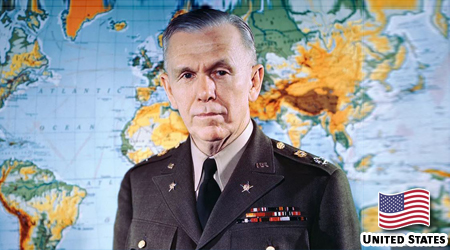
George C. Marshall
Freedom Award 1947
George C. Marshall, the U.S. Army Chief of Staff during World War II and later Secretary of State, was honored with the Freedom Award by Freedom House in 1947. This recognition celebrated his monumental transition from a "master of war" to a "master of peace." Marshall was the primary architect of the Allied victory, earning the respect of Winston Churchill, who called him the "organizer of victory." However, his award specifically highlighted his vision for a stable, democratic postwar world through the European Recovery Program, famously known as the Marshall Plan.The award recognized Marshall’s commitment to the "Freedom from Want" as a prerequisite for global stability. By advocating for massive economic aid to rebuild war-torn Europe, he aimed to prevent the hunger and poverty that often lead to the rise of totalitarianism. His leadership emphasized that American security was inextricably linked to the prosperity of other nations. Beyond the Freedom Award, Marshall’s humanitarian impact was solidified in 1953 when he became the only career soldier to receive the Nobel Peace Prize, cementing his legacy as a statesman who understood that true freedom is built on the foundations of economic and political cooperation.

Bernard M. Baruch
Freedom Award 1946
Bernard M. Baruch, a financier and statesman known as the "Elder Statesman" of American politics, was honored with the Freedom Award by Freedom House in 1946. This recognition came at a critical juncture in world history, following his immense contributions to the Allied victory in World War II as an advisor on industrial mobilization. Baruch was celebrated for his ability to bridge the gap between private enterprise and government necessity, ensuring that the "Freedom from Want" was supported by a robust and efficient "Arsenal of Democracy."His laureateship also coincided with his work as the U.S. representative to the United Nations Atomic Energy Commission. There, he proposed the Baruch Plan, an ambitious and controversial effort to establish international control over nuclear weapons to prevent a global arms race. By advocating for a system of inspections and the elimination of veto power on nuclear matters, Baruch sought to secure a "Freedom from Fear" for future generations. Although the plan was ultimately rejected by the Soviet Union, his award underscored his status as a foundational architect of the postwar international order and a tireless advocate for utilizing economic and scientific power to preserve democratic stability.
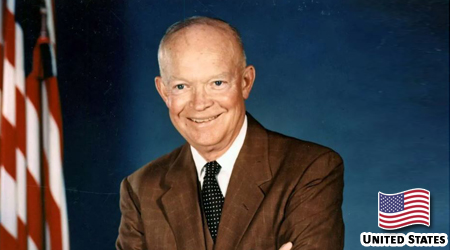
Dwight D. Eisenhower
Freedom Award 1945
Dwight D. Eisenhower, the 34th President of the United States and Supreme Allied Commander during World War II, was honored with the Freedom Award by Freedom House in 1945. This recognition followed his monumental leadership in the liberation of Europe from Nazi tyranny. Eisenhower was celebrated not only for his military genius in coordinating the D-Day invasion but also for his ability to maintain a unified coalition of diverse nations under the common banner of "Freedom from Fear." His strategic successes were viewed by the international community as the definitive triumph of democratic cooperation over totalitarian aggression.Throughout his subsequent political career, Eisenhower continued to champion the institutional safeguards of liberty. During his presidency, he articulated the "Domino Theory" and oversaw the expansion of the interstate highway system, which he viewed as essential to national security and economic "Freedom of Movement." His 1953 "Atoms for Peace" speech before the United Nations further demonstrated his commitment to steering global technology toward civilian benefit rather than nuclear destruction. By the time of his farewell address, where he famously warned against the "military-industrial complex," Eisenhower had cemented his legacy as a leader who understood that true freedom requires a delicate balance between national strength and democratic restraint.

Sumner Welles
Freedom Award 1944
Sumner Welles, an influential American diplomat and foreign policy advisor to President Franklin D. Roosevelt, was honored with the Freedom Award by Freedom House in 1944. As the Under Secretary of State from 1937 to 1943, Welles played a critical role in shaping the "Good Neighbor" policy toward Latin America and was a primary architect of the Atlantic Charter. His recognition by Freedom House underscored his commitment to a new world order based on the "Four Freedoms"—freedom of speech, freedom of worship, freedom from want, and freedom from fear—which he believed should be extended to all nations, including those under colonial rule.Welles was a visionary advocate for postwar planning, leading efforts to design the structure of what would eventually become the United Nations. He famously argued that the United States could not effectively fight fascism abroad while ignoring the struggle for civil rights at home, making him one of the few high-ranking officials of his era to explicitly link international human rights with domestic racial equality. Although his government career ended abruptly in 1943 due to political rivalries and personal controversy, his Freedom Award highlighted his enduring intellectual contribution to the global defense of democracy and his belief that a lasting peace required a principled commitment to universal human dignity.

Walter Lippmann
Freedom Award 1943
Walter Lippmann, one of the most influential American journalists and public philosophers of the 20th century, was honored with the Freedom Award by Freedom House in 1943. This recognition occurred during the award's inaugural year, marking Lippmann as a foundational figure in the global defense of democratic principles. Throughout a career spanning six decades, Lippmann helped define modern political commentary, co-founding The New Republic and authoring the syndicated column "Today and Tomorrow." He is perhaps best remembered for his seminal work, Public Opinion, and for coining or popularizing enduring terms such as "the Cold War" and "stereotype."Lippmann’s advocacy focused on the "Freedom of Speech" and the necessity of an informed citizenry, though he famously grappled with the tensions between mass democracy and the complexities of modern governance. His work often sought to reconcile the role of expert knowledge with democratic accountability. Beyond his Freedom House recognition, Lippmann was awarded two Pulitzer Prizes and received the Presidential Medal of Freedom in 1964. His legacy remains a cornerstone of American journalism, embodying the belief that the "power of measured reason" is essential to preserving the humane spirit of Western civilization against the tide of authoritarianism.