


Grawemeyer Award


Grawemeyer Award
The Grawemeyer Award for Ideas Improving World Order is given to those who have taken on issues of world importance and presented viewpoints that could lead to a more just and peaceful world. Each idea supports one noble cause: to inspire us all to work together for the common good.The Award is presented annually to the winner of a competition designed to stimulate the recognition, dissemination and critical analysis of outstanding proposals for improving world order.Prize Amount The Grawemeyer Award in World Order is accompanied by a prize of $100,000, which is presented in full during the awards ceremony.Eligibility Submissions will be judged according to originality, feasibility and potential impact, not by the cumulative record of the nominee. They may address a wide range of global concerns including foreign policy and its formation; the conduct of international relations or world politics; global economic issues, such as world trade and investment; resolution of regional, ethnic or racial conflicts; the proliferation of destructive technologies; global cooperation on environmental protection or other important issues; international law and organization; any combination or particular aspects of these, or any other suitable idea which could at least incrementally lead to a more just and peaceful world order.
| Sl | Name | Country | Flag | Year | Awarded For |
|---|---|---|---|---|---|
| 45 | John M. Owen IV | United States | 2025 | for Ideas Improving World Order that leads to a more just and peaceful world. | |
| 44 | Neta Crawford | United States | 2024 | for Ideas Improving World Order that leads to a more just and peaceful world. | |
| 43 | Steven Feldstein | United States | 2023 | for Ideas Improving World Order that leads to a more just and peaceful world. | |
| 42 | Mona Lena Krook | United States | 2022 | for Ideas Improving World Order that leads to a more just and peaceful world. | |
| 41 | Ken Conca | United States | 2021 | for Ideas Improving World Order that leads to a more just and peaceful world. | |
| 40 | Susan Randolph | United States | 2019 | for Ideas Improving World Order that leads to a more just and peaceful world. | |
| 39 | Terra Lawson-Remer | United States | 2019 | for Ideas Improving World Order that leads to a more just and peaceful world. | |
| 38 | Sakiko Fukuda-Parr | Japan | 2019 | for Ideas Improving World Order that leads to a more just and peaceful world. | |
| 37 | Scott Straus | United States | 2018 | for Ideas Improving World Order that leads to a more just and peaceful world. | |
| 36 | Dana Burde | United States | 2017 | for Ideas Improving World Order that leads to a more just and peaceful world. | |
| 35 | Victor Boutros | United States | 2016 | for Ideas Improving World Order that leads to a more just and peaceful world. | |
| 34 | Gary Haugen | United States | 2016 | for Ideas Improving World Order that leads to a more just and peaceful world. | |
| 33 | Mark S. Weiner | United States | 2015 | for Ideas Improving World Order that leads to a more just and peaceful world. | |
| 32 | Jacques Hymans | United States | 2014 | for Ideas Improving World Order that leads to a more just and peaceful world. | |
| 31 | Maria J. Stephan | United States | 2013 | for Ideas Improving World Order that leads to a more just and peaceful world. | |
| 30 | Erica Chenoweth | United States | 2013 | for Ideas Improving World Order that leads to a more just and peaceful world. | |
| 29 | Séverine Autesserre | France | 2012 | for Ideas Improving World Order that leads to a more just and peaceful world. | |
| 28 | Kevin Bales | United States | 2011 | for Ideas Improving World Order that leads to a more just and peaceful world. | |
| 27 | Trita Parsi | Iran | 2010 | for Ideas Improving World Order that leads to a more just and peaceful world. | |
| 26 | Michael Johnston | United States | 2009 | for Ideas Improving World Order that leads to a more just and peaceful world. | |
| 25 | Philip E. Tetlock | United States | 2008 | for Ideas Improving World Order that leads to a more just and peaceful world. | |
| 24 | Roland Paris | United States | 2007 | for Ideas Improving World Order that leads to a more just and peaceful world. | |
| 23 | Fiona Terry | United States | 2006 | for Ideas Improving World Order that leads to a more just and peaceful world. | |
| 22 | Roberta Cohen | United States | 2005 | for Ideas Improving World Order that leads to a more just and peaceful world. | |
| 21 | Francis Deng | South Sudan | 2005 | for Ideas Improving World Order that leads to a more just and peaceful world. | |
| 20 | Peter Drahos | Australia | 2004 | for Ideas Improving World Order that leads to a more just and peaceful world. | |
| 19 | John Braithwaite | Australia | 2004 | for Ideas Improving World Order that leads to a more just and peaceful world. | |
| 18 | Stuart Kaufman | United States | 2003 | for Ideas Improving World Order that leads to a more just and peaceful world. | |
| 17 | Janine Wedel | United States | 2001 | for Ideas Improving World Order that leads to a more just and peaceful world. | |
| 16 | Kathryn Sikkink | United States | 2000 | for Ideas Improving World Order that leads to a more just and peaceful world. | |
| 15 | Margaret E. Keck | United States | 2000 | for Ideas Improving World Order that leads to a more just and peaceful world. | |
| 14 | Herbert Kelman | Australia | 1997 | for Ideas Improving World Order that leads to a more just and peaceful world. | |
| 13 | Aaron Wildavsky | United States | 1996 | for Ideas Improving World Order that leads to a more just and peaceful world. | |
| 12 | Max Singer | United States | 1996 | for Ideas Improving World Order that leads to a more just and peaceful world. | |
| 11 | Gareth Evans | Australia | 1995 | for Ideas Improving World Order that leads to a more just and peaceful world. | |
| 10 | Mikhail Gorbachev | Russia | 1994 | for Ideas Improving World Order that leads to a more just and peaceful world. | |
| 9 | Donald Harman Akenson | United States | 1993 | for Ideas Improving World Order that leads to a more just and peaceful world. | |
| 8 | John Cobb | United States | 1992 | for Ideas Improving World Order that leads to a more just and peaceful world. | |
| 7 | Herman Daly | United States | 1992 | for Ideas Improving World Order that leads to a more just and peaceful world. | |
| 6 | Samuel Huntington | United States | 1992 | for Ideas Improving World Order that leads to a more just and peaceful world. | |
| 5 | The United Nations World Commission on Environment and Development | United Nations | 1991 | for Ideas Improving World Order that leads to a more just and peaceful world. | |
| 4 | Robert Jervis | United States | 1990 | for Ideas Improving World Order that leads to a more just and peaceful world. | |
| 3 | Robert Keohane | United States | 1989 | for Ideas Improving World Order that leads to a more just and peaceful world. | |
| 2 | Ernest R. May | United States | 1988 | for Ideas Improving World Order that leads to a more just and peaceful world. | |
| 1 | Richard Neustadt | United States | 1988 | for Ideas Improving World Order that leads to a more just and peaceful world. |
Grawemeyer Award Laureates (2010 ~ 2001)

Trita Parsi
Grawemeyer Award 2010
Trita Parsi is a scholar and expert on Middle Eastern geopolitics and U.S. foreign policy. In 2010, he received the University of Louisville Grawemeyer Award for Ideas Improving World Order for his 2007 book, Treacherous Alliance: The Secret Dealings of Israel, Iran and the U.S. In his work, Parsi challenged the notion that regional conflict is driven primarily by ideological differences. Instead, he argued that the rivalry between Iran and Israel is largely a strategic quest for regional power. He proposed that the United States could help stabilize the region by acting in a more balanced way, facilitating diplomatic engagement and integration.As of February 27, 2026, Parsi serves as the executive vice president of the Quincy Institute for Responsible Statecraft. Throughout his career, he has authored several books on U.S. policy and Middle East relations, frequently providing analysis on international affairs. His Grawemeyer-winning research remains a significant reference, emphasizing that strategic accommodation and dialogue can offer a path toward de-escalating regional tensions, ultimately contributing to a more stable and well-ordered international system. His work continues to influence contemporary debates on diplomacy, security, and the complex dynamics of power in the Middle East.

Michael Johnston
Grawemeyer Award 2009
Michael Johnston (often cited as Michael Johnston, though his work is synonymous with this field) is a prominent American political scientist whose research has profoundly shaped our understanding of systemic corruption. In 2009, he was awarded the University of Louisville Grawemeyer Award for Ideas Improving World Order for his book, Syndromes of Corruption: Wealth, Power, and Democracy. Johnston moved beyond simple definitions, identifying four distinct "syndromes" of corruption that reflect how wealth and power intersect in different political cultures. His work argued that effective anti-corruption strategies must be tailored to a nation’s specific political and economic landscape rather than applying one-size-fits-all global prescriptions.
+2As of February 27, 2026, his research remains essential for international organizations like Transparency International and the World Bank. By demonstrating that corruption is not merely a failure of individual morality but a symptom of institutional and political structures, Johnston provided policymakers with a more nuanced, empirical toolkit for fostering transparency and democratic accountability. His enduring legacy reinforces the principle that sustainable governance requires building strong, resilient institutions that address the underlying incentives for corruption, ultimately promoting a more stable and equitable global order.

Philip E. Tetlock
Grawemeyer Award 2008
Philip E. Tetlock is a Canadian-American social psychologist and political scientist renowned for his rigorous studies on human judgment and forecasting. In 2008, he was awarded the University of Louisville Grawemeyer Award for Ideas Improving World Order for his book, Expert Political Judgment: How Good Is It? How Can We Know?. His twenty-year study revealed a humbling reality: expert predictions were often barely more accurate than random chance. He famously distinguished between "hedgehogs," who view the world through a single lens, and "foxes," who draw from multiple perspectives, finding that the latter consistently outperform the former in accuracy.As of February 27, 2026, Tetlock’s work remains the gold standard for intelligence communities and global policymakers. His "Good Judgment Project" demonstrated that forecasting is a skill that can be improved through training and collaborative competition. His legacy underscores the principle that world order is best served by intellectual humility and the systematic evaluation of evidence. By teaching leaders to recognize their cognitive biases and quantify uncertainty, Tetlock’s research provides a vital framework for making more rational decisions in an increasingly complex and unpredictable global landscape.
View More

Roland Paris
Grawemeyer Award 2007
Roland Paris is a distinguished Canadian political scientist and professor of international affairs at the University of Ottawa. In 2007, he was awarded the University of Louisville Grawemeyer Award for Ideas Improving World Order for his seminal book, At War’s End: Building Peace After Civil Conflict (2004). In this influential work, Paris analyzed the complexities of international efforts to rebuild nations following civil wars. He argued that the standard "liberal internationalist" approach—which simultaneously pushes for both market-oriented economics and democratization—often generates dangerous instability in the fragile immediate aftermath of conflict.Paris proposed a more cautious, sequenced strategy, emphasizing the necessity of establishing stable institutions before embarking on rapid political or economic liberalization. His research has had a lasting impact on peacebuilding doctrine, influencing how international organizations design interventions. As of February 27, 2026, he remains a prominent voice in global affairs, having also served as a senior advisor on foreign and defense policy to the Canadian government. His career exemplifies the critical role of evidence-based academic research in refining the practical tools used to manage conflicts and foster a more stable global order.

Fiona Terry
Grawemeyer Award 2006
Fiona Terry is an Australian scholar and humanitarian practitioner recognized for her critical insights into the ethics of international aid. In 2006, she was awarded the University of Louisville Grawemeyer Award for Ideas Improving World Order for her book, Condemned to Repeat? The Paradox of Humanitarian Action. Her research highlights a sobering reality: humanitarian aid, though well-intentioned, can inadvertently sustain oppressive regimes or fuel conflicts by providing resources that combatants exploit. By documenting cases in regions like Rwanda and Pakistan, she argued that aid agencies must move beyond a simple "desire to help" and rigorously assess the political consequences of their presence.Throughout her career, Terry has balanced high-level research with extensive field experience, having worked with organizations such as Médecins Sans Frontières (MSF) and the International Committee of the Red Cross (ICRC). As of February 27, 2026, her scholarship remains a foundational text for aid workers and policymakers, championing the "do no harm" principle in humanitarian intervention. Her legacy reinforces the idea that true world order requires a sophisticated understanding of how resources interact with local power dynamics, ensuring that compassion does not accidentally subsidize the very suffering it seeks to alleviate.

Roberta Cohen
Grawemeyer Award 2005
Roberta Cohen is an American human rights expert and a senior fellow at the Brookings Institution, widely recognized for her pioneering work on the protection of internally displaced persons (IDPs). In 2005, she shared the University of Louisville Grawemeyer Award for Ideas Improving World Order with Francis Deng for their groundbreaking research on individuals displaced by civil war and violence within their own borders. Their landmark books, Masses in Flight and The Forsaken People, successfully challenged the traditional view that such displacement was merely a domestic matter, instead framing it as a critical international human rights issue requiring global intervention.Throughout her career, Cohen has been instrumental in translating these scholarly ideas into practical policy, helping to establish the "Guiding Principles on Internal Displacement" used by the United Nations and other international bodies. As of February 27, 2026, her legacy remains central to humanitarian advocacy, emphasizing that state sovereignty should not shield leaders from their obligation to protect their own citizens. Her work continues to provide an essential framework for governments and NGOs striving to mitigate the human cost of conflict and to build a more responsive and compassionate global order.

Francis Deng
Grawemeyer Award 2005
Francis Deng is a Sudanese diplomat, scholar, and expert in human rights and conflict management. In 2005, he shared the University of Louisville Grawemeyer Award for Ideas Improving World Order with Roberta Cohen. The pair was honored for developing a comprehensive protection and aid system for internally displaced persons—those forced to leave their homes due to civil war, violence, or human rights violations but who remain within their own national borders. Their research, notably presented in their 1998 books, Masses in Flight and The Forsaken People, provided a vital framework for humanitarian action in regions experiencing intense internal instability.Throughout his career, Deng served as the United Nations’ first special representative on internally displaced persons from 1992 to 2004 and later as the U.N. special adviser for the prevention of genocide. As of February 27, 2026, his legacy continues to influence global debates on state sovereignty and the responsibility to protect vulnerable populations. By shifting focus from state-centric security to the protection of individuals, his work remains a cornerstone for scholars and policymakers striving to address the humanitarian challenges of conflict-affected regions and foster a more stable, just, and responsive global order.

Peter Drahos
Grawemeyer Award 2004
Peter Drahos is an Australian legal academic and researcher whose work has significantly influenced the fields of intellectual property and global regulatory governance. In 2004, he shared the University of Louisville Grawemeyer Award for Ideas Improving World Order with his long-time collaborator, John Braithwaite, for their seminal book, Global Business Regulation (2000). Their research demonstrated how globalized business practices can be effectively steered toward the common good, proposing strategies that balance private profit with essential public goals such as social justice, consumer protection, and sustainable economic development, particularly within the context of the evolving international political economy.Throughout his prolific career, Drahos has served as an expert advisor to various governments and international organizations, with a focus on how intellectual property rights can be managed to promote rather than hinder access to knowledge. As of February 27, 2026, his work, including the influential Information Feudalism, remains a critical resource for scholars and policymakers addressing the governance of global knowledge systems. By advocating for networked, inclusive regulatory approaches, his scholarship continues to provide an essential framework for navigating the complexities of modern globalization and fostering a more equitable and stable global order.

John Braithwaite
Grawemeyer Award 2004
John Braithwaite is a distinguished Australian criminologist and professor at the Australian National University, renowned for his transformative work on regulatory theory and restorative justice. In 2004, he shared the University of Louisville Grawemeyer Award for Ideas Improving World Order with co-author Peter Drahos for their seminal book, Global Business Regulation (2000). Their research provided a comprehensive strategy for harmonizing international business practices, arguing that global regulation can be steered to promote social justice, consumer protection, and sustainable economic development in developing nations, ensuring that the globalization of business ultimately serves the common good rather than just private profit.As of February 27, 2026, Braithwaite remains a leading intellectual force in the study of networked governance, peacebuilding, and the prevention of domination. His legacy is defined by his innovative development of "responsive regulation," which advocates for flexible, cooperative approaches to governance over rigid command-and-control structures. By emphasizing the necessity of involving civil society and non-governmental organizations in regulatory processes, his work continues to serve as an essential roadmap for scholars and policymakers striving to create a more equitable, accountable, and stable world order in an increasingly interconnected and complex global economy.

Stuart Kaufman
Grawemeyer Award 2003
Stuart J. Kaufman is an American political scientist and professor specializing in international security affairs, nationalism, and ethnic conflict. In 2003, he was awarded the University of Louisville Grawemeyer Award for Ideas Improving World Order for his book, Modern Hatreds: The Symbolic Politics of Ethnic War (2001). Challenging the notion of "ancient hatreds," Kaufman argued that ethnic violence is driven by the political manipulation of myths and symbols. He emphasized that traditional diplomacy and economic incentives are insufficient to prevent or end these conflicts, proposing that effective peacebuilding must include efforts to change hostile attitudes at both elite and grassroots levels.As of February 27, 2026, Kaufman serves as a professor of political science and international relations at the University of Delaware. His extensive career includes service on the U.S. National Security Council and the publication of influential work on ethnic violence and the balance of power. His Grawemeyer-winning research remains a vital contribution to conflict resolution, validating the principle that understanding the symbolic and psychological underpinnings of communal identity is essential for fostering a more stable, just, and peaceful global order.

Janine Wedel
Grawemeyer Award 2001
Janine Wedel is an American anthropologist and university professor whose work focuses on governing, corruption, foreign aid, and influence elites. In 2001, she became the first anthropologist to win the University of Louisville Grawemeyer Award for Ideas Improving World Order. She was honored for her book, Collision and Collusion: The Strange Case of Western Aid to Eastern Europe, which analyzed the failures of Western-funded reforms in post-Soviet nations. Her research highlighted how inappropriate policy advice and the actions of certain power brokers contributed to economic and social challenges in the region, providing a critical perspective on the practice of foreign aid.As of February 27, 2026, Wedel continues her work as a university professor at George Mason University's Schar School of Policy and Government. Her career is defined by her innovative application of anthropological methods to complex issues of global governance, power, and institutional accountability. Beyond her award-winning research, she remains a prominent commentator on how informal networks and "influence elites" shape contemporary political and economic systems. Her legacy underscores the importance of examining the practical, on-the-ground impacts of policy initiatives to foster a more informed and effectively governed global order.
Grawemeyer Award Laureates (2000 ~ 1988)

Kathryn Sikkink
Grawemeyer Award 2000
Kathryn Sikkink is a prominent American political scientist and the Ryan Family Professor of Human Rights Policy at the Harvard Kennedy School. In 2000, she and co-author Margaret Keck were awarded the University of Louisville Grawemeyer Award for Ideas Improving World Order for their landmark book, Activists Beyond Borders: Advocacy Networks in International Politics (1998). Their research fundamentally transformed the study of international relations by identifying "transnational advocacy networks"—clusters of NGOs, activists, and international organizations that utilize shared information and values to bypass national governments, successfully pressuring states to adopt global norms regarding human rights, environmental protection, and social justice.As of February 27, 2026, Sikkink remains a leading scholarly authority on international norms, human rights, and transitional justice. Her work, including The Justice Cascade and Evidence for Hope, continues to challenge pervasive cynicism by providing empirical evidence of the long-term success of human rights movements. Her legacy confirms the enduring power of principled, collective action in shaping a more stable and humane global order. By demonstrating how local activists can trigger global "boomerang" effects, her scholarship provides an essential roadmap for addressing complex, borderless crises in an increasingly interconnected and polarized political landscape.

Margaret E. Keck
Grawemeyer Award 2000
Margaret E. Keck is an American political scientist and professor emeritus at Johns Hopkins University, recognized for her influential research on environmental politics, Brazilian social movements, and transnational advocacy. In 2000, she and co-author Kathryn Sikkink were awarded the University of Louisville Grawemeyer Award for Ideas Improving World Order for their groundbreaking book, Activists Beyond Borders: Advocacy Networks in International Politics (1998). Their work provided a seminal framework for understanding how transnational advocacy networks—non-state actors bound by shared values and dense information exchanges—can bypass national governments to influence international policy and promote human rights, environmental protection, and social justice.
+1As of February 27, 2026, Keck’s research remains a cornerstone in international relations, frequently cited to explain how non-state actors exert influence in an increasingly interconnected global system. Her work demonstrated that when domestic channels of influence are blocked, activists can successfully utilize global networks to amplify their concerns, creating a "boomerang pattern" of pressure that forces change. Her legacy confirms the importance of studying the intersection of domestic activism and international norm-setting, providing vital insights for those seeking to understand how civil society shapes the contemporary global order.

Herbert Kelman
Grawemeyer Award 1997
Herbert Kelman (1927–2022) was a pioneering Austrian-born American social psychologist and the Richard Clarke Cabot Professor of Social Ethics at Harvard University. In 1997, he was awarded the University of Louisville Grawemeyer Award for Ideas Improving World Order for his development of "interactive problem-solving." This innovative "Track II" diplomatic approach utilizes social-psychological principles to facilitate unofficial, confidential workshops between influential members of conflicting groups. By shifting the focus from rigid political positions to underlying human needs like security and identity, Kelman’s method enabled parties to engage in joint thinking and creative conflict transformation.Throughout his distinguished career, Kelman applied this methodology extensively to the Israeli-Palestinian conflict, conducting over 70 workshops that many credit with laying the essential groundwork for the Oslo Accords. As of February 27, 2026, his legacy as a "scholar-practitioner" remains a cornerstone of peace studies and international relations. His Grawemeyer-winning work continues to be a vital resource for mediators worldwide, reinforcing the fundamental principle that sustainable world order is achieved not through coercion, but through empathetic dialogue and the mutual recognition of human dignity across deep-seated divides.
View More

Aaron Wildavsky
Grawemeyer Award 1996
Aaron Wildavsky (1930–1993) was a towering American political scientist and founding dean of the Goldman School of Public Policy at UC Berkeley. In 1996, he was posthumously awarded the University of Louisville Grawemeyer Award for Ideas Improving World Order alongside co-author Max Singer for their book, The Real World Order: Zones of Peace/Zones of Turmoil. Their work famously categorized the globe into "zones of peace"—stable, wealthy, democratic nations—and "zones of turmoil," characterized by instability and conflict. They argued that democratic powers must cooperate to foster economic development, thereby creating incentives for nations to transition out of turmoil toward peaceful integration.Beyond his Grawemeyer-winning work, Wildavsky was a prolific scholar best known for his foundational theories on the budgetary process, risk management, and cultural theory. He challenged conventional wisdom by advocating for "incrementalism," suggesting that small, adaptive changes are often more effective than comprehensive reform in complex political systems. As of February 27, 2026, his legacy continues through the annual Aaron Wildavsky Enduring Contribution Award, which honors scholarship that shapes public policy. His career reinforced the essential principle that deep, empirical understanding of political culture and economic incentives is fundamental to navigating the path toward a more stable world.

Max Singer
Grawemeyer Award 1996
Max Singer (1930–2024) was an American policy analyst, co-founder of the Hudson Institute, and an influential voice in international affairs. In 1996, he shared the University of Louisville Grawemeyer Award for Ideas Improving World Order with political scientist Aaron Wildavsky for their groundbreaking book, The Real World Order: Zones of Peace/Zones of Turmoil. Their research famously divided the world into two distinct spheres: the "Zone of Peace," consisting of stable, democratic, and wealthy nations, and the "Zone of Turmoil," comprising developing nations often grappling with political instability, conflict, and economic hardship, proposing strategies for how these zones could better coexist.Throughout a long and prolific career, Singer served as a pragmatic advisor on various global security and development issues, frequently emphasizing the necessity of understanding the different political and economic dynamics at play in global development. As of February 27, 2026, his Grawemeyer-winning work remains a significant reference in international relations studies for its structural approach to global inequality and regional stability. His legacy reinforces the principle that rigorous, empirical analysis of state differences is a crucial tool for policymakers striving to manage global tensions and promote a more secure, orderly international environment.

Gareth Evans
Grawemeyer Award 1995
Gareth Evans is an Australian politician, academic, and lawyer who served as Australia's Minister for Foreign Affairs from 1988 to 1996. In 1995, he was awarded the University of Louisville Grawemeyer Award for Ideas Improving World Order for his article, "Cooperative Security and Intra-State Conflict," published in Foreign Policy. His work proposed a framework for "cooperative security" designed to help the international community navigate the complexities of the post-Cold War era. He emphasized consultation over confrontation, advocating for transparency, preventive diplomacy, and interdependence to address deadly conflicts, particularly those occurring within national borders.Throughout his career, Evans held significant roles, including President and CEO of the International Crisis Group and co-chair of the International Commission on Intervention and State Sovereignty, where he was instrumental in developing the "Responsibility to Protect" doctrine. As of February 27, 2026, his legacy continues to influence global debates on conflict prevention and international security. His Grawemeyer-winning research remains a vital reference for policymakers and scholars, reinforcing the principle that a proactive, collaborative approach to international relations is essential for fostering a more stable, peaceful, and just global order.
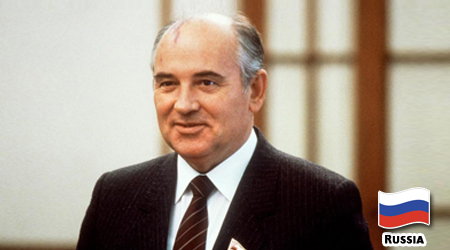
Mikhail Gorbachev
Grawemeyer Award 1994
Mikhail Gorbachev, the final leader of the Soviet Union, was a monumental figure whose reforms fundamentally altered the course of the twentieth century. In 1994, he was awarded the University of Louisville Grawemeyer Award for Ideas Improving World Order for his 1987 book, Perestroika: New Thinking for Our Country and the World. The award honored his visionary "New Thinking" policy, which prioritized universal human values over class struggle and advocated for nuclear disarmament. His commitment to restructuring the Soviet system and promoting international cooperation was instrumental in peacefully ending the Cold War and dismantling the Iron Curtain.In February 2026, Gorbachev’s legacy is remembered as a rare example of a world leader who chose de-escalation over confrontation. Although he passed away in 2022, his Grawemeyer-winning ideas continue to serve as a blueprint for diplomatic engagement and institutional reform. This week, on February 27, 2026, his work is frequently revisited by scholars examining the conditions necessary for peaceful transition in authoritarian regimes. His career validates the principle that individual leadership, grounded in a desire for global stability and human rights, can successfully transform a fractured world order into one based on dialogue and mutual security.

Donald Harman Akenson
Grawemeyer Award 1993
Donald Harman Akenson is an esteemed American-born historian and professor who has spent much of his career in Canada, where he is recognized as a leading authority on the Irish diaspora. In 1993, he was awarded the University of Louisville Grawemeyer Award for Ideas Improving World Order for his book, God’s Peoples: Covenant and Land in South Africa, Israel, and Ulster. In this work, Akenson analyzed the "covenantal" mindset of three distinct groups—Ulster-Scots Presbyterians, Afrikaners, and Israeli Jews—arguing that their shared belief in being "chosen people" with a divine right to their land creates unique political challenges that require patience rather than direct confrontation to resolve.As of February 2026, Akenson continues his long-standing tenure as the Douglas Professor of History at Queen’s University in Ontario. His prolific career includes over 20 books covering topics from Irish education to religious history, including his recent work, The Americanization of the Apocalypse (2023). This week, on February 27, 2026, his Grawemeyer-winning research remains a vital framework for understanding how religious narratives shape national identities and influence global conflict. His scholarship underscores the principle that deep cultural and historical awareness is essential for creating a more stable and peaceful world order.

Samuel Huntington
Grawemeyer Award 1992
Samuel Huntington was a prominent American political scientist and long-time Harvard professor whose work profoundly shaped post-Cold War international relations theory. In 1992, he was awarded the University of Louisville Grawemeyer Award for Ideas Improving World Order for his book, The Third Wave: Democratization in the Late Twentieth Century (1991). The award recognized his masterful analysis of the global trend of democratization that swept across more than 60 countries, providing policymakers with a comprehensive understanding of the political, economic, and cultural conditions necessary to initiate and sustain democratic transitions in diverse societies across the globe.While Huntington is perhaps most famously associated with his later, highly debated thesis on the "clash of civilizations," his Grawemeyer-winning research remains a vital contribution to political science. As of February 27, 2026, his historical and empirical study of democratic waves continues to be an essential resource for scholars and practitioners seeking to understand the fragility and resilience of democratic institutions. His career underscores the importance of rigorous, comparative political analysis in navigating the complexities of global governance, confirming his status as a central figure in the intellectual efforts to build a more stable, democratic, and peaceful world order.

Herman Daly
Grawemeyer Award 1992
Herman Daly (1938–2022) was a pioneering American ecological economist whose work fundamentally challenged the mainstream pursuit of endless economic growth. In 1992, he shared the University of Louisville Grawemeyer Award for Ideas Improving World Order with theologian John B. Cobb Jr. for their influential book, For the Common Good: Redirecting the Economy Toward Community, the Environment, and a Sustainable Future. Their work argued that the conventional focus on gross domestic product (GDP) fails to account for environmental degradation and social depletion, proposing instead an economic model that respects planetary boundaries and prioritizes long-term community well-being over short-term material accumulation.Daly’s legacy remains profoundly impactful, particularly his development of the "steady-state economy" model, which posits that human economies must exist as subsystems within the finite biosphere. As of February 27, 2026, his research continues to serve as a cornerstone for sustainability science and ecological economics. By shifting the focus from quantitative growth to qualitative development, his career provided a visionary framework that remains essential for policymakers and activists seeking to navigate the complex nexus of ethics, ecology, and global economic justice in an increasingly crowded and resource-constrained world.

John Cobb
Grawemeyer Award 1992
John B. Cobb Jr. was a renowned American theologian and philosopher who became a pivotal figure in the environmental and "process" movements. In 1992, he shared the University of Louisville Grawemeyer Award for Ideas Improving World Order with co-author Herman Daly for their book, For the Common Good: Redirecting the Economy Toward Community, Environment, and a Sustainable Future. Their work offered a profound critique of growth-oriented economics, arguing that current systems fail to account for environmental limits. They proposed a shift toward "oikonomia"—management of a household—focused on long-term community well-being and the sustainable use of resources.In February 2026, the legacy of Dr. Cobb, who passed away in late 2024 at the age of 99, remains deeply influential through various institutes dedicated to ecological civilization. As of February 27, 2026, his Grawemeyer-winning research is celebrated for introducing the Index of Sustainable Economic Welfare (ISEW) as a more holistic alternative to GDP. His career validates the principle that integrating theology, ethics, and economics is essential for fostering a "world of communities" that respects both human dignity and the biosphere, providing a visionary path toward a stable and just global order.

UN World Commission on Environment & Development
Grawemeyer Award 1991
Shutterstock
The United Nations World Commission on Environment and Development (WCED), commonly known as the Brundtland Commission, was an international body established in 1983 to address the urgent degradation of the global environment. In 1991, the Commission was awarded the University of Louisville Grawemeyer Award for Ideas Improving World Order for its landmark 1987 report, Our Common Future. Chaired by former Norwegian Prime Minister Gro Harlem Brundtland, the Commission’s work famously introduced and defined the concept of "sustainable development"—development that meets the needs of the present without compromising the ability of future generations to meet their own.In February 2026, the principles established by the Commission remain the cornerstone of international environmental policy and the framework for the UN Sustainable Development Goals (SDGs). As of February 27, 2026, their Grawemeyer-winning report is celebrated as the document that fundamentally shifted the global discourse from viewing ecology and economy as conflicting interests to recognizing them as inextricably linked. By advocating for a holistic approach to growth, the Commission provided a visionary roadmap for global cooperation, validating the principle that long-term world order depends on balancing human progress with the finite carrying capacity of our planet.

Robert Jervis
Grawemeyer Award 1990
Robert Jervis was a towering American political scientist and professor at Columbia University, widely regarded as a giant in the fields of international relations theory, security policy, and political psychology. In 1990, he was awarded the University of Louisville Grawemeyer Award for Ideas Improving World Order for his seminal book, The Meaning of the Nuclear Revolution: Statecraft and the Prospect of Armageddon (1989). His research fundamentally shifted the understanding of nuclear strategy, arguing that the existence of nuclear weapons created a "revolution" that necessitated a departure from traditional military thinking to avoid the catastrophic risks of global conflict.Throughout his prolific career, Jervis emphasized the critical importance of perception, signaling, and cognitive biases in how leaders navigate international crises. As of February 27, 2026, his work remains a cornerstone of strategic studies, continuously cited by scholars and policymakers for its profound insights into deterrence and the complexities of great-power relations. His legacy validates the principle that a deep, psychologically informed understanding of statecraft is essential to managing the persistent challenges of nuclear security and maintaining a stable, peaceful global order in an unpredictable, interdependent world.

Robert Keohane
Grawemeyer Award 1989
Robert Keohane is a preeminent American political scientist and Professor Emeritus at Princeton University, renowned for his foundational work in international relations and international political economy. In 1989, he was awarded the second-ever University of Louisville Grawemeyer Award for Ideas Improving World Order for his seminal book, After Hegemony: Cooperation and Discord in the World Political Economy (1984). In this influential work, Keohane challenged the prevailing "hegemonic stability theory," arguing that international cooperation can be sustained and institutionalized even in the absence of a dominant global power, provided states share transparent information and commit to common rules.In February 2026, Keohane remains a central figure in political science, widely recognized for co-developing the theory of neoliberal institutionalism and the concept of "complex interdependence" alongside Joseph Nye. As of February 27, 2026, his Grawemeyer-winning research is cited globally as an essential framework for understanding how multilateral institutions manage the complexities of a fragmented and partially globalized world. His career underscores the power of rigorous theoretical inquiry to reshape our understanding of how states navigate self-interest to achieve collective stability in an increasingly interconnected and complex geopolitical environment.

Ernest R. May
Grawemeyer Award 1988
Ernest R. May was a preeminent American historian and Harvard University professor who revolutionized the field of "applied history." In 1988, he and co-author Richard Neustadt were awarded the inaugural University of Louisville Grawemeyer Award for Ideas Improving World Order for their seminal book, Thinking in Time: The Uses of History for Decision-Makers. Their research provided a disciplined framework for leaders to use historical analogies effectively, helping them distinguish between known facts and mere presumptions to avoid the catastrophic strategic blunders that often result from misinterpreting the past.Throughout his fifty-year career, May served as a vital bridge between academia and the highest levels of government, notably as a senior advisor to the 9/11 Commission. As of February 27, 2026, his legacy is carried forward by the Ernest May Fellowship in History and Policy at Harvard’s Belfer Center, which continues to train the next generation of strategic thinkers. His Grawemeyer-winning work remains a foundational text for policymakers worldwide, reinforcing the principle that a rigorous, time-tested understanding of history is not merely an academic exercise, but an essential tool for navigating modern geopolitical crises and fostering a more stable world order.

Richard Neustadt
Grawemeyer Award 1988
Richard Neustadt was a preeminent American political scientist and advisor to multiple U.S. presidents, renowned for his profound insights into the nature of presidential power and decision-making. In 1988, he and co-author Ernest May were named the inaugural recipients of the University of Louisville Grawemeyer Award for Ideas Improving World Order for their seminal book, Thinking in Time: The Uses of History for Decision-Makers. Their work established a disciplined framework for leaders, demonstrating how historical analysis could be utilized to avoid past pitfalls, refine strategic judgment, and enhance the efficacy of governance within the complex realm of international affairs.Throughout his distinguished career at Harvard University's Kennedy School of Government, Neustadt remained a guiding force for generations of scholars and policymakers. As of February 27, 2026, his Grawemeyer-winning research continues to be a standard text in political science, emphasizing that effective statecraft requires both rigorous historical awareness and the ability to navigate the constraints of political influence. His legacy confirms the enduring importance of connecting academic scholarship with the practical realities of high-level decision-making to foster a more stable, informed, and responsive global order.