


Pfeffer Peace Prize

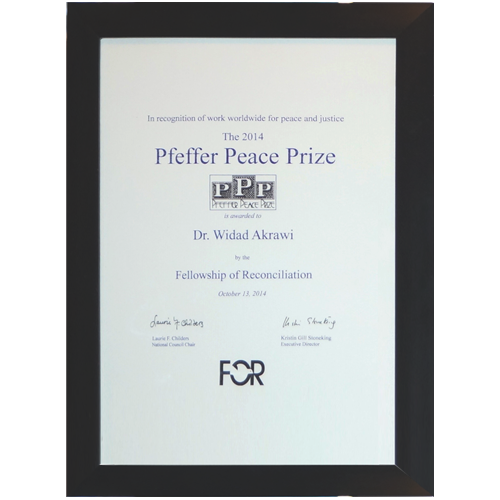
Pfeffer Peace Prize
The International Pfeffer Peace Award is one of three peace awards administered by the United States Fellowship of Reconciliation (FOR), alongside the Martin Luther King Jr. Award. Established in 1989 by the constitutional scholar Leo Pfeffer (1910–1993) and his wife Freda Pfeffer (1911–2013), the award annually recognizes "individuals or organizations whose commitment to peace, justice, and reconciliation is recognized as extraordinary."Leo Pfeffer was a leading theoretician on religious liberty and the separation of church and state in the U.S. By founding this award, he and Freda aimed to acknowledge and honor leaders and activists working globally for peace and justice. After Leo's death in 1993, their son Alan Pfeffer continued to manage the endowment, ensuring the continued recognition of powerful, non-violent contributions to global peace.
| Sl | Name | Country | Flag | Year | Awarded For |
|---|---|---|---|---|---|
| 25 | Mães de Maio of São Paulo | Bazil | 2016 | Peace and justice | |
| 24 | Combatants for Peace | Israel-Palestine | 2015 | Peace and justice | |
| 23 | Widad Akrawi | Iraq | 2014 | Peace and justice | |
| 22 | International Council of Thirteen Indigenous Grandmothers | Mexico | 2013 | Peace and justice | |
| 21 | Dr. Hakim (Afghan Peace Volunteers) | Singapore | 2012 | Peace and justice | |
| 20 | Sonal Ambani | India | 2011 | Peace and justice | |
| 19 | Scott Kennedy (Resource Center For Nonviolence) | United States | 2010 | Peace and justice | |
| 18 | La’Onf network of Iraqi nonviolence communities | Iraq | 2009 | Peace and justice | |
| 17 | Ricardo Esquivia | Colombia | 2008 | Peace and justice | |
| 16 | Mel Duncan and the Nonviolent Peaceforce | United States | 2007 | Peace and justice | |
| 15 | Caribbean Project for Peace and Justice | United Nations | 2006 | Peace and justice | |
| 14 | George Houser | United States | 2005 | Peace and justice | |
| 13 | Wanida Tantiwittayappitak | Thailand | 2002 | Peace and justice | |
| 12 | Pierre Marchand (Foundation For Children) | France | 2000 | Peace and justice | |
| 11 | Kathy Kelly | United States | 1999 | Peace and justice | |
| 10 | The Peace Community of San José de Apartadó | Colombia | 1998 | Peace and justice | |
| 9 | Dorothy Granada | United States | 1997 | Peace and justice | |
| 8 | Peace Brigades International | India | 1996 | Peace and justice | |
| 7 | Palestinian Center for Rapprochement between Peoples | Isreal | 1995 | Peace and justice | |
| 6 | Muhammad Yunus | Bangladesh | 1994 | Peace and justice | |
| 5 | José Gómez Izquierdo | Mexico | 1993 | Peace and justice | |
| 4 | Interns for Peace | Israel | 1992 | Peace and justice | |
| 3 | Anita Kromberg and Richard Steele | South Africa | 1991 | Peace and justice | |
| 2 | Hildegard Goss-Mayr and Diana Francis | Austria | 1990 | Peace and justice | |
| 1 | Donald Mosley | United States | 1989 | Peace and justice |
Pfeffer Peace Prize Laureates (2016 ~ 2001)

Mães de Maio
Pfeffer Peace Prize 2016
The Mães de Maio (Mothers of May) movement was born from tragedy and pain in São Paulo in 2006, when hundreds of people, predominantly poor, young, and Black individuals from the outskirts, were victims of summary executions by state agents. Transforming grief into a tireless struggle, these mothers, led by figures like Débora Maria da Silva, rose up as central defenders of humanity and peace.Their humanitarian contribution lies in the incessant search for truth, memory, and justice, fighting impunity and institutional violence. The Mothers of May represent a fundamental non-violent resistance movement, denouncing the genocide of Black Brazilian youth and demanding policing that respects the right to life. They promote peace by demanding accountability from the State and reaffirming, through activism, that human dignity and social justice are the only foundations for a truly peaceful society. Their persistence is a powerful appeal to the national conscience.

Combatants for Peace
Pfeffer Peace Prize 2015
Combatants for Peace (CfP) is a unique, egalitarian, bi-national movement co-founded by former Israeli and Palestinian combatants who put down their weapons to pursue non-violent resistance. Their mission is deeply humanitarian, recognizing the shared pain and humanity on both sides of the conflict.The movement’s peace work centers on "co-resistance" against the occupation and all forms of violence, aiming for collective liberation rooted in justice and equality. CfP organizes joint activities, including bi-national Memorial Day ceremonies where Israelis and Palestinians mourn together, and ground humanitarian work like laying water pipelines in marginalized villages. They challenge the narrative of inevitable conflict by fostering dialogue, empathy, and personal transformation, actively creating a social infrastructure for a just and equitable peace in the region.

Widad Akrawi
Pfeffer Peace Prize 2014
Widad Akrawi is a formidable Kurdish-Danish peace activist, author, and human rights defender, whose work focuses on bridging cultural gaps and advancing global justice. A champion of international law, her humanitarian efforts are dedicated to protecting women, children, and minorities in conflict zones, particularly in the Middle East.She co-founded the non-profit human rights organization Defend International, where she advocates against honor killings, political oppression, and the use of weapons of mass destruction. Akrawi’s peace-building philosophy centers on the transformative power of non-violence and the crucial role of documentation in holding perpetrators accountable. Her rigorous efforts to secure international recognition and protection for vulnerable groups highlight her unwavering commitment to making human rights a reality for all, earning her global recognition, including the Pacem in Terris Peace and Freedom Award.
View More

Indigenous Grandmothers
Pfeffer Peace Prize 2013
The Indigenous Grandmothers' movements in Mexico, often referred to as “Guardianas” or “Defensoras,” represent an enduring force for peace and human rights. Their humanitarian work is rooted in the defense of ancestral territories, traditional knowledge, and the collective well-being of their communities against extractive industries and state violence. They act as vital cultural reservoirs, preserving indigenous languages, medicinal practices, and ecological wisdom—all crucial elements of community health and resilience.As peace-builders, the Grandmothers model non-violent resistance and mediate conflicts, ensuring harmony within and between communities. Their spiritual authority and moral courage are instrumental in challenging systemic marginalization and violence, offering a vision of peace that is deeply connected to territorial autonomy and justice, securing a sustainable future for the next generations.

Wee Teck Young (Dr. Hakim)
Pfeffer Peace Prize 2012
Dr. Hakim, a Singaporean physician, is a dedicated humanitarian and peace activist renowned for co-founding the Singapore Kindness Movement and, more recently, the Afghan Peace Volunteers (APVs). His humanitarian mission has been to provide practical assistance and foster empathy in conflict zones, particularly Afghanistan, where he has lived and worked for many years. He emphasizes service, kindness, and non-violence as pathways to peace.His peace-building efforts are centered on the radical idea of non-violence and bridging the gap between nations. The APVs, under his guidance, run initiatives like the Borderfree Nonviolence Community Centre and the ‘Street Kids School’, promoting education and livelihood opportunities for vulnerable youth. Dr. Hakim’s life exemplifies grassroots commitment, demonstrating that personal dedication to kindness and compassion is the most powerful foundation for global peace and human dignity.

Sonal Ambani
Pfeffer Peace Prize 2011
Sonal Ambani is an acclaimed Indian sculptor, author, and peace advocate who masterfully blends art with humanitarian purpose. Her commitment to human rights is evident through her roles as a member of the United Nations Development Fund for Women (UNIFEM) and the founder of the Cancer Screening and Research Trust (CSRT).Her work promotes peace by championing equality and dignity. Ambani was recognized with the prestigious Pfeffer Peace Award in 2011 for her dedication to non-violence and social change. Her art, often created from unyielding materials like steel, explores themes of resilience, gender equality, and collective human experience, turning her sculptures into powerful statements against oppression. Through her books and art proceeds, she actively funds cancer awareness and supports underprivileged children, demonstrating a holistic approach where creativity directly serves society and fosters a culture of compassion and peace.

Scott Kennedy
Pfeffer Peace Prize 2010
Scott Kennedy (1948–2011) was a highly influential American peace activist, educator, and non-violence practitioner, fundamentally dedicated to human rights and justice. As a conscientious objector during the Vietnam War, he co-founded the Resource Center for Nonviolence in Santa Cruz in 1976, which served as a major hub for peace education and activism.Kennedy was a tireless advocate for peace in the Israeli-Palestinian conflict, leading dozens of educational delegations—including through the Interfaith Peace-Builders—to the region to foster dialogue and amplify the voices of Israelis and Palestinians committed to non-violent change. His work extended globally to human rights struggles in Central America and locally, serving as Mayor of Santa Cruz to advance causes like affordable housing and nuclear-free zones. His profound commitment to practical non-violence earned him the El-Hibri Peace Education Prize.

La’Onf (Non Violance)
Pfeffer Peace Prize 2009
La’Onf, which translates from Arabic to "non-violence," represents a fundamental philosophical and practical approach to peace-building and humanitarian action, often applied in the context of the Middle East and North Africa. This concept transcends passive resistance, embodying an active strategy for social change that rejects the use of physical force, coercion, or destructive language.In the humanitarian sphere, La’Onf promotes dignity, protects vulnerable civilians, and advocates for justice through dialogue, civil disobedience, and peaceful protest. It is the ethical bedrock for movements seeking to end military occupation, challenge authoritarianism, and secure human rights without escalating conflict. Embracing La’Onf requires moral courage and strategic discipline, ultimately offering a sustainable path toward reconciliation and genuine, lasting peace in deeply divided societies.

Ricardo Esquivia
Pfeffer Peace Prize 2008
Ricardo Esquivia Ballestas is a renowned Colombian human rights lawyer and peace builder who has tirelessly dedicated over 40 years to transforming conflict through non-violent means. Working primarily through the Mennonite Church, he co-founded pivotal organizations like Justapaz (Christian Center for Justice, Peace, and Non-violent Action) and Sembrandopaz (Planting Peace).Esquivia’s humanitarian vision defines peace not merely as the absence of war, but as "life in abundance"—the fruition of justice, reconciliation, and community well-being. He has championed the cause of marginalized communities, helping displaced farmers return to their lands and promoting economic development to address the root causes of conflict and corruption in regions like Montes de María. His steadfast commitment to grassroots diplomacy and justice earned him the International Pfeffer Peace Prize.

Mel Duncan
Pfeffer Peace Prize 2007
Mel Duncan is a leading pioneer in the field of unarmed civilian protection (UCP) and the co-founder of Nonviolent Peaceforce (NP), a global organization that deploys trained, unarmed civilians to conflict zones. Inspired by Gandhi’s concept of a "peace army," Duncan's work provides direct protection to civilians under threat in countries like South Sudan, Iraq, and the Philippines.UCP operates on principles of non-violence, non-partisanship, and the primacy of local actors, creating a safe space for dialogue and peace processes where armed peacekeepers cannot go. Duncan has been instrumental in advocating for the effectiveness of UCP at the United Nations, successfully positioning it as a recognized and scalable alternative to traditional military intervention, protecting human rights, and building sustainable peace from the ground up.

C P J P
Pfeffer Peace Prize 2006
The Caribbean Project for Justice and Peace (CPJP) is a vital humanitarian initiative dedicated to addressing the deep-seated issues of violence, economic inequality, and human rights violations across the Caribbean region. Recognizing that sustainable peace is inseparable from justice, the CPJP works at the grassroots level to empower marginalized communities, advocate for legal and social reform, and foster regional cooperation.The project's activities focus on non-violence education, restorative justice programs for youth and former offenders, and monitoring state compliance with international human rights standards. By promoting dialogue and collective action, the CPJP helps build local capacity to transform conflicts peacefully and tackle structural violence, ensuring that humanitarian needs are met through community resilience rather than external aid dependency. This holistic approach lays the foundation for enduring stability and human dignity.

George Houser
Pfeffer Peace Prize 2005
George Houser (1916–2015) was a foundational American peace activist whose work spanned the U.S. Civil Rights Movement and the African liberation struggles. A committed pacifist and Methodist minister, he co-founded the Congress of Racial Equality (CORE) in 1942, pioneering the use of nonviolent direct action. This included initiatives like the 1947 Journey of Reconciliation, which challenged segregation in interstate travel and served as a crucial precursor to the later Freedom Rides.Extending his humanitarian vision internationally, Houser established the American Committee on Africa (ACOA) in 1953. For decades, he served as a crucial ally to African leaders like Nelson Mandela, leading the charge against colonialism and the brutality of apartheid. ACOA organized protests, massive public awareness, and divestment campaigns across the United States, providing vital political and material support to anti-apartheid movements. Houser’s lifelong dedication exemplified the global reach of non-violent resistance in the struggle for human dignity and universal justice on two continents.

Wanida Tantiwittayappitak
Pfeffer Peace Prize 2002
Wanida Tantiwittayappitak is a prominent human rights and peace activist from Thailand, renowned for her decades-long commitment to grassroots democracy and justice. A former leader in the student movement against military dictatorship, she transitioned her focus to the critical issues facing rural and marginalized communities, particularly those affected by economic policies and environmental degradation.Her humanitarian work centers on empowering villagers to advocate for their land rights and challenge corporate encroachment, often utilizing non-violent resistance and community organizing to prevent conflict. Tantiwittayappitak has played a key role in mediating disputes between local populations and state actors, providing a vital voice for those facing displacement and environmental injustice. Her enduring dedication to peaceful activism has made her a respected figure in the struggle for dignity and equitable development in Southeast Asia.
Pfeffer Peace Prize Laureates (2000 ~ 1989)

Pierre Marchand
Pfeffer Peace Prize 2000
Pierre Marchand is known for his dedication to long-term humanitarian relief and peacebuilding through grassroots community development. His work has focused primarily on supporting marginalized populations, including refugees and displaced persons, in South Asia. Marchand’s approach emphasizes empowering local communities to become agents of their own change, rather than relying solely on external intervention.He has been involved in developing sustainable projects, particularly those related to education and healthcare, within refugee camps in regions like Tripura, India. By addressing the fundamental needs and structural vulnerabilities of these communities, Marchand’s efforts contribute to reducing tensions and preventing conflict. His commitment is to the quiet, persistent work that transforms humanitarian aid into lasting peace and self-sufficiency for those affected by political strife and displacement.
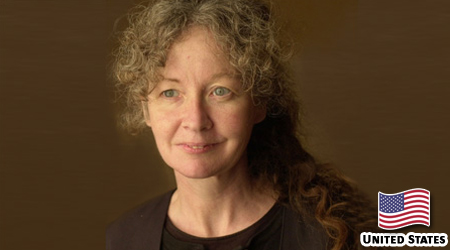
Kathy Kelly
Pfeffer Peace Prize 1999
Kathy Kelly is a profoundly dedicated American peace activist, author, and co-founder of organizations like Voices in the Wilderness and Voices for Creative Nonviolence. Her humanitarian commitment is marked by a radical insistence on “where you stand determines what you see,” leading her to witness the human cost of war firsthand.Kelly is globally recognized for her non-violent direct action, including traveling to Iraq 26 times to deliver medicine and humanitarian aid in open defiance of U.S./UN sanctions. She has also lived alongside citizens in active war zones, including Afghanistan and Gaza, documenting the effects of drone warfare and displacement. For decades, Kelly has faced legal penalties and prison time for her acts of conscience, making her an enduring symbol of resistance to militarism and a relentless advocate for a just and sustainable global peace.

The Peace Community
Pfeffer Peace Prize 1998
The Peace Community of San José de Apartadó in Colombia is a powerful humanitarian experiment in non-violent resistance. Established in 1997 amidst intense conflict between paramilitaries, guerrillas, and the national army, this community declared itself neutral, refusing to align with any armed actor.Their mission is rooted in the preservation of life, human rights, and the right to remain on their land, providing refuge and humanitarian protection through collective action and international visibility. Despite facing severe violence, including massacres, they cultivate their fields and maintain an independent social structure. Their enduring commitment to peace serves as a moral beacon and a tangible model for conflict resolution and survival, demonstrating that active neutrality can create a vital space for civilian life amidst war.
View More

Dorothy Granada
Pfeffer Peace Prize 1997
Dorothy Granada (b. 1930) is an American nurse and peace activist celebrated for her nearly four decades of humanitarian work in Nicaragua. In the early 1990s, she co-founded the Maria Luisa Ortiz Women's Clinic in the remote community of Mulukukú, providing essential and often life-saving healthcare, including prenatal and gynecological services, to thousands of poor and underserved residents.Her peace work is integrated with her health efforts, rooted in documenting the effects of the US-funded Contra war and empowering communities affected by conflict. By focusing on public health and training local midwives through the "Skills to Save Lives" program, Granada built a resilient, non-violent infrastructure for survival. Her steadfast commitment to justice, even in the face of government harassment and deportation attempts, solidified her reputation as a devoted champion of human dignity.

Peace Brigades International
Pfeffer Peace Prize 1996
Peace Brigades International (PBI) is a non-governmental organization dedicated to protecting human rights defenders and promoting non-violent conflict resolution across the globe. Founded in 1981, PBI operates by sending unarmed, international volunteers to conflict zones where they provide protective accompaniment to individuals and communities facing threats.This presence acts as a deterrent against violence, opening space for local activists, lawyers, and community leaders to carry out their work without fear of repression. PBI’s humanitarian approach is rooted in the principles of non-interference and political impartiality, ensuring that their protection is driven purely by a commitment to human rights. By providing this life-saving international presence, PBI supports local peace movements and strengthens the rule of law in fragile environments.

P C R
Pfeffer Peace Prize 1995
The Palestinian Center for Rapprochement between People (PCRP), based in Beit Sahour, is a non-violent organization dedicated to building peace and promoting human rights through joint action. Its humanitarian mission involves providing aid and support to Palestinians affected by the occupation while consistently advocating for non-violent resistance.PCRP's core peace work centers on fostering dialogue and cooperative projects between Palestinians and Israelis committed to a just and equitable solution. They organize international accompaniment for farmers and communities facing land confiscation, and host educational programs to challenge stereotypes and promote mutual respect. By focusing on grassroots connection, PCRP strives to create a framework for shared human existence rooted in justice, equality, and dignity, moving beyond the current conflict narrative.
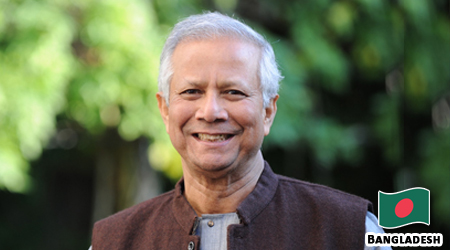
Muhammad Yunus
Pfeffer Peace Prize 1994
Muhammad Yunus is a Bangladeshi social entrepreneur, economist, and Nobel Peace Prize laureate (2006), recognized for pioneering the concept of microcredit and founding the Grameen Bank. His humanitarian work is based on the radical idea that poverty can be alleviated not through charity, but by extending small loans to the impoverished—especially women—who lack traditional collateral.The Grameen Bank model empowers millions to become entrepreneurs, lifting entire families out of the cycle of destitution. Yunus argues that peace is inherently linked to economic justice; by addressing the root cause of desperation and conflict (poverty), he fosters human dignity and stable communities. His global advocacy for "social business" continues to inspire models that place human and environmental needs above profit maximization, offering a powerful, non-violent path to prosperity and peace.

José Gómez Izquierdo
Pfeffer Peace Prize 1993
Father José Gómez Izquierdo, known widely as Padre Pepe, was a Mexican priest and social justice advocate recognized for his profound commitment to community welfare and the marginalized. For decades, particularly while serving the Cristo Liberador parish, his humanitarian work was dedicated to uplifting impoverished groups and fostering integrity within his congregation.He actively embodied the belief that justice is the new name of peace, preaching social equality and peace-building through deep, sustained engagement with the poor. He was internationally honored for his dedication to these principles by receiving the prestigious Pfeffer Peace Prize in 1993. His legacy is one of unwavering pastoral and community leadership, establishing a model of peace that prioritizes the dignity and spiritual well-being of the most vulnerable in Mexican society.

Interns for Peace
Pfeffer Peace Prize 1992
Interns for Peace (IFP) is an organization dedicated to fostering mutual understanding and coexistence between Jewish and Arab citizens of Israel. Founded in 1978, its humanitarian work centers on integrating the two communities through practical, grassroots projects that improve shared living conditions in neighboring towns and villages.The core of IFP's peace work involves recruiting, training, and placing teams of Jewish and Arab Israeli young adults to work as community organizers for two years. These "Interns" run projects like joint sports leagues, environmental cleanups, and educational programs, building trust and cross-cultural relationships at the local level. This dedication to non-violent, everyday cooperation was recognized with the Pfeffer Peace Prize in 1992, honoring their success in translating the abstract goal of peace into concrete, sustained social action.

Anita Kromberg & Richard Steele
Pfeffer Peace Prize 1991
Anita Kromberg and Richard Steele are recognized peace activists honored with the Pfeffer Peace Prize in 1991 for their profound commitment to non-violent action, particularly in conflict zones. Their humanitarian work focused on providing crucial support and accompaniment to those resisting violence and oppression, often serving as international witnesses to human rights abuses.Their approach emphasized active non-violence and grassroots mobilization, striving to protect vulnerable civilians and open space for democratic change. Steele, in particular, was known for his work with the Fellowship of Reconciliation, engaging in efforts related to the Israeli-Palestinian conflict, while Kromberg’s advocacy spanned various fronts of social and economic justice. Their joint commitment underscored the belief that sustained, courageous, and non-partisan presence is essential for fostering lasting peace and protecting human dignity.
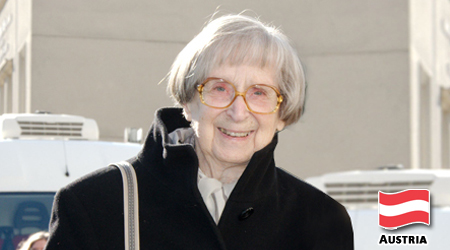
Hildegard Goss-Mayr
Pfeffer Peace Prize 1990
Hildegard Goss-Mayr is a pioneering Austrian peace activist renowned for her work in non-violent resistance and training. For over sixty years, her humanitarian mission has focused on teaching active non-violence as a practical and spiritual method for social change across numerous global conflicts.As a leader in the International Fellowship of Reconciliation (IFOR), she and her late husband, Jean Goss, traveled extensively, training activists in preparation for campaigns—most notably in Latin America, where they influenced movements against military dictatorships, and in the Philippines, contributing to the peaceful 1986 People Power Revolution. This life-long dedication to non-violent mobilization and training was recognized in 1990 when she was awarded the Pfeffer Peace Prize, honoring her commitment to transforming conflict through ethical and non-coercive means.

Donald Mosley
Pfeffer Peace Prize 1989
Donald Mosley is an American peace activist and community organizer recognized for his commitment to non-violent change and economic justice. He was honored with the Pfeffer Peace Prize in 1990, sharing the award with Hildegard Goss-Mayr, for his dedication to empowering marginalized communities.Mosley's humanitarian efforts focused on grassroots development and addressing structural poverty, primarily through his work in high-poverty areas within the United States. He championed non-violent direct action and community organizing to combat inequality and systemic oppression. His peace philosophy posits that true peace is inseparable from justice and economic equity, necessitating active resistance to poverty as a form of violence. His life's work demonstrates a practical commitment to empowering the voiceless and building sustainable, non-violent local economies.