

Elisabeth B. Weintz Humanitarian Award

Elisabeth B. Weintz Humanitarian Award
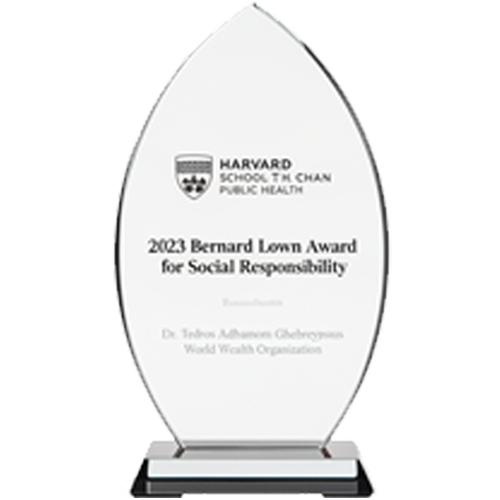
The Elisabeth B. Weintz Humanitarian Award was established at HHI in 2015 to honor a visionary public figure who has demonstrated superior leadership in a time of humanitarian crisis. The Award celebrates the memory of Elisabeth "Betsy" Weintz by recognizing her outstanding contributions to humanitarian leadership at Harvard University. In addition, this Award provides a $10,000 grant to a postdoctoral fellow or faculty at Harvard University whose work aligns with that of the awardee and HHI’s mission.
| Sl | Name | Country | Flag | Year | Awarded For |
|---|---|---|---|---|---|
| 6 | Tedros Adhanom Ghebreyesus | Ethiopia | 2024 | For demonstrated superior leadership in a time of humanitarian crisis | |
| 5 | Heba Aly | Canada | 2023 | For demonstrated superior leadership in a time of humanitarian crisis | |
| 4 | Bryan Stevenson | United States | 2019 | For demonstrated superior leadership in a time of humanitarian crisis | |
| 3 | Nadia Murad | Iraq | 2018 | For demonstrated superior leadership in a time of humanitarian crisis | |
| 2 | Nancy Lindborg | United States | 2017 | For demonstrated superior leadership in a time of humanitarian crisis | |
| 1 | Peter Maurer | Switzerland | 2016 | For demonstrated superior leadership in a time of humanitarian crisis |
Elisabeth B. Weintz Humanitarian Award Laureates (2025 ~ 2011)
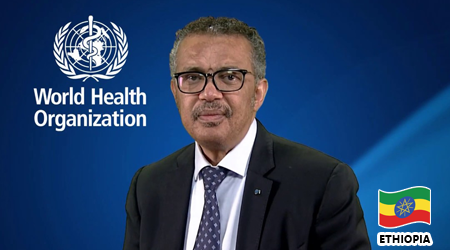
Tedros Adhanom Ghebreyesus
Elisabeth B. Weintz Humanitarian Award 2024
Dr. Tedros Adhanom Ghebreyesus, the Director-General of the World Health Organization (WHO), operates under the core belief that "There can be no health without peace, and no peace without health," making the intersection of humanitarian action and peacemaking central to his mission. He views conflict and inequality as the primary drivers of health crises and has championed the concept of "Health as a Bridge to Peace," where the equitable delivery of health services can build trust and common ground between warring factions. This approach is manifest in his tireless humanitarian advocacy, where he repeatedly condemns the weaponization of healthcare—the attacks on hospitals, staff, and medical supplies—which he denounces as a violation of international law. By prioritizing health equity and demanding safe access for aid, Dr. Tedros aims to use the universal need for well-being not just to alleviate suffering, but as a proactive tool for global stability and sustainable peacebuilding.
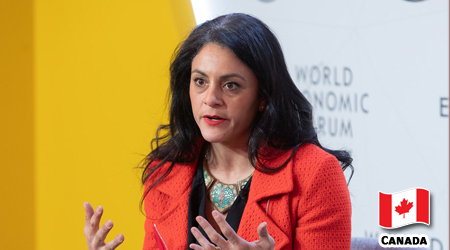
Heba Aly
Elisabeth B. Weintz Humanitarian Award 2023
Heba Aly is a highly influential Egyptian-Canadian journalist and media executive known for her decades-long dedication to humanitarian journalism. Her most prominent role was serving as the Chief Executive Officer of The New Humanitarian (TNH), a globally respected, independent, non-profit news organization that provides original, field-based reporting on global crises and aid policy. She led the critical transition of the organization—formerly known as IRIN News, a UN project—into a thriving, financially independent media outlet, ensuring its continued focus on amplifying the voices of those affected by conflicts and natural disasters to drive more effective and accountable international responses.Before moving into executive leadership, Aly spent a decade as a multimedia journalist, reporting directly from numerous conflict zones across the Middle East, Africa, and Central Asia, including Syria, Sudan, Iraq, and Libya. This field experience solidified her perspective that quality, independent journalism is not merely a watchdog, but a critical mechanism for humanitarian accountability and reform. She has become a leading voice advocating for systemic changes in the aid sector and in how crises are covered, urging reporters to avoid "junk news" and embrace deeper, more responsible narratives, a message she has shared as a World Economic Forum Young Global Leader and a frequent commentator at international forums.

Bryan Stevenson
Elisabeth B. Weintz Humanitarian Award 2019
Bryan Stevenson is an American public interest lawyer, human rights activist, and author renowned for his tireless work challenging racial and economic injustice within the U.S. criminal justice system. He is the founder and executive director of the Equal Justice Initiative (EJI), a non-profit organization based in Montgomery, Alabama, that provides legal defense to the poor, the wrongly condemned, and those facing excessive sentencing, particularly on death row. His advocacy has directly resulted in the exoneration, reversal, or release of over 140 wrongly condemned prisoners, and he has argued and won landmark cases before the Supreme Court, including the ruling that banned mandatory life-without-parole sentences for children under 18.Stevenson's work extends beyond the courtroom to cultural and historical reckoning. He is the author of the critically acclaimed New York Times bestseller, Just Mercy: A Story of Justice and Redemption, a memoir that uses his experience with his client, Walter McMillian, to illustrate the systemic brokenness of the justice system and the power of mercy. Furthermore, he spearheaded the creation of two major national institutions in Montgomery: the National Memorial for Peace and Justice, the country’s first memorial dedicated to the victims of racial terror lynchings, and The Legacy Museum: From Enslavement to Mass Incarceration, which explicitly connects America’s history of slavery and racial violence to the current crisis of mass incarceration. His career is driven by the central philosophy that "each person in our society is more than the worst thing they've ever done."
View More
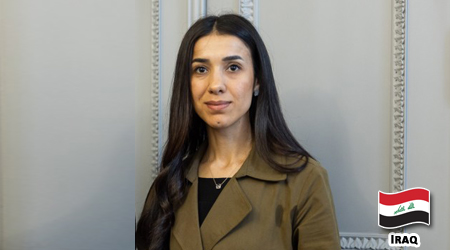
Nadia Murad
Elisabeth B. Weintz Humanitarian Award 2018
Nadia Murad, an Iraqi Yazidi human rights activist and a Nobel Peace Prize laureate, has transformed her survival of the 2014 Yazidi genocide into a formidable global movement for peace and humanitarian aid. Her work is primarily focused on ending the use of sexual violence as a weapon of war and restoring dignity and life to communities shattered by conflict.Global Advocacy and Peacekeeping Efforts
Murad's activism operates at the highest levels of global governance. As the first UNODC Goodwill Ambassador for the Dignity of Survivors of Human Trafficking and a co-recipient of the 2018 Nobel Peace Prize, she has been a relentless voice for survivors on the international stage. She successfully advocated for the adoption of UN Security Council Resolution 2379, which created an investigative team (UNITAD) to collect evidence of ISIS's crimes for future prosecution, viewing justice as essential to lasting peace. She also played a key role in UN Security Council Resolution 2467, which expanded the commitment to end sexual violence in conflict with a survivor-centric approach. Her work led to the development of the Murad Code, a global code of conduct for gathering information on conflict-related sexual violence that prioritizes the safety and ethical treatment of survivors.Rebuilding and Humanitarian Aid through Nadia's Initiative
At the grassroots level, Murad's efforts are channelled through Nadia's Initiative, a non-profit organization dedicated to rebuilding communities in crisis. The organization's flagship project is the sustainable re-development of Sinjar, Iraq, the ancestral home of the Yazidi people that was systematically destroyed by ISIS. The initiative's programs are community-driven and focus on critical services to allow displaced Yazidis to return home. These include the restoration of education, healthcare, livelihoods, water and sanitation (WASH), and women's empowerment projects, such as building schools, rehabilitating farmland, and supporting women's small businesses. This work is foundational to peace-building, ensuring that communities have the security and resources to heal and prevent future atrocities.
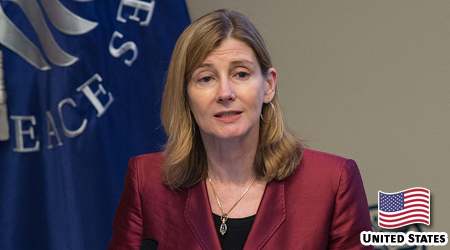
Nancy Lindborg
Elisabeth B. Weintz Humanitarian Award 2017
Nancy Lindborg has dedicated her career to the intersection of humanitarian aid, conflict mitigation, and peace-building, holding leadership roles in major non-profit and government organizations. Her work consistently focuses on addressing the root causes of violence in fragile and conflict-affected regions.Peace-Making and Conflict Resolution Leadership
Lindborg is a prominent figure in the field of peace-making, most notably through her tenure as the President and CEO of the United States Institute of Peace (USIP) from 2015 to 2020. At USIP, she led an institution dedicated to preventing and resolving violent conflict globally by:Integrating Peace-building: Advocating for the integration of diplomacy, development, and security efforts to achieve sustained peace, rather than relying solely on military or short-term aid responses.Addressing Fragility: Focusing on fragile states, which she identifies as the source of most humanitarian and security crises. She emphasizes that fragility is a breakdown of the social contract between a government and its people.Promoting Dialogue and Negotiation: Championing practical peace tools like mediation, negotiation, and dialogue to bring people together in conflict-affected areas.Humanitarian and Crisis Response Activities
Lindborg's extensive background includes significant experience in large-scale humanitarian response and resilience-building:USAID Leadership: As the Assistant Administrator for the Bureau for Democracy, Conflict and Humanitarian Assistance (DCHA) at the U.S. Agency for International Development (USAID), she directed large teams and coordinated U.S. government responses to major global crises.Key Crisis Responses: This included leading DCHA teams in response to the Syria Crisis, the Arab Spring, major droughts in the Sahel and Horn of Africa, and the Ebola crisis.Mercy Corps: Prior to government service, she spent 14 years as the President of Mercy Corps, helping to grow the organization into a respected global entity known for its innovative programs in challenging environments.Current Focus: Her focus on global issues continues in her current role as President and CEO of The David and Lucile Packard Foundation, where she oversees national and global grants that include improving communities and protecting the planet.Her work emphasizes the need to invest in prevention to get "ahead of the conflict curve," arguing that addressing the root causes of violence is the most effective way to reduce the need for costly humanitarian and military interventions later.

Peter Maurer
Elisabeth B. Weintz Humanitarian Award 2016
Peter Maurer is a prominent figure in international humanitarian aid and peace-making, best known for his decade as the President of the International Committee of the Red Cross (ICRC) from 2012 to 2022.Key Humanitarian and Peace-Making Activities
Maurer's work has been defined by humanitarian diplomacy, the strengthening of international humanitarian law (IHL), and innovations in aid delivery in complex conflict zones.President of the ICRC (2012–2022): He led the organization through numerous and increasingly complex crises, including those in Syria, Myanmar (Rohingya crisis), and Ukraine. His presidency focused on strengthening the ICRC's neutrality and independence to ensure access to all victims of armed conflict, often involving delicate negotiations with both state and non-state actors on the ground.Strengthening International Humanitarian Law: He consistently engaged with states and other actors to advocate for the respect and application of IHL, particularly regarding the protection of civilians, prisoners of war, and humanitarian workers. He emphasized that the failure to respect IHL is a major driver of human suffering.Humanitarian Innovation: Maurer was instrumental in launching the world's first humanitarian impact bond, an innovative financing mechanism to fund rehabilitation centers and improve long-term outcomes for people with disabilities in conflict-affected areas.Diplomatic Background: Prior to the ICRC, his career in the Swiss diplomatic service included serving as the Ambassador and Permanent Representative of Switzerland to the United Nations in New York and as the Swiss Secretary of State for Foreign Affairs. This experience provided him with a deep understanding of multilateral networks and security challenges, which he applied to his humanitarian work.Post-ICRC Focus: Currently, as President of the Board of the Basel Institute on Governance, he has pivoted to focus on one of the underlying causes of humanitarian crises: corruption and poor governance, arguing they fuel conflicts, squander aid, and impede sustainable development and peace.Maurer often stresses that while the ICRC's mission is humanitarian—to mitigate the impact of conflict—it must be supported by political will, as humanitarian action cannot be a substitute for sustainable political solutions and peace negotiations.