


Peace Prize of the German Book Trade


Peace Prize of the German Book Trade
The Peace Prize of the German Book Trade is an international peace prize . The award is presented annually at the Frankfurt Book Fair in the Paulskirche ( Frankfurt am Main ) to a personality “who has made an outstanding contribution to the realization of the idea of peace, primarily through their work in the fields of literature, science and art.”The Peace Prize is awarded by the German Book Trade Association and comes with prize money of 25,000 euros. The honor at the Frankfurt Book Fair, the largest book fair in the world, is associated with international publicity. In 2023, the awards ceremony was held on October 22nd; The award went to the Indian-British writer Salman Rushdie .The Peace Prize goes back to the initiative of a few writers and publishers in 1949 and was first awarded in Hamburg in 1950 as the “Peace Prize of German Publishers”. In 1951 it became a price for the entire book trade by the German Book Trade Association. It was awarded posthumously for the first time in 1972. The award winners are determined by the Board of Trustees. Suggestions can come from anyone and must be sufficiently justified and documented.
| Sl | Name | Country | Flag | Year | Awarded For |
|---|---|---|---|---|---|
| 77 | Karl Schlögel | Germany | 2025 | Commitment to serving the international understanding between nations and cultures through knowledge and literature. | |
| 76 | Anne Applebaum | United States | 2024 | Commitment to serving the international understanding between nations and cultures through knowledge and literature. | |
| 75 | Salman Rushdie | India | 2023 | Commitment to serving the international understanding between nations and cultures through knowledge and literature. | |
| 74 | Serhiy Shadan | Ukrine | 2022 | Commitment to serving the international understanding between nations and cultures through knowledge and literature. | |
| 73 | Tsitsi Dangarembga | Zimbabwe | 2021 | Commitment to serving the international understanding between nations and cultures through knowledge and literature. | |
| 72 | Amartya Sen | India | 2020 | Commitment to serving the international understanding between nations and cultures through knowledge and literature. | |
| 71 | Sebastiao Salgado | Brazil | 2019 | Commitment to serving the international understanding between nations and cultures through knowledge and literature. | |
| 70 | Aleida Assmann and Jan Assmann | Germany | 2018 | Commitment to serving the international understanding between nations and cultures through knowledge and literature. | |
| 69 | Margaret Atwood | Canada | 2017 | Commitment to serving the international understanding between nations and cultures through knowledge and literature. | |
| 68 | Carolin Emcke | Germany | 2016 | Commitment to serving the international understanding between nations and cultures through knowledge and literature. | |
| 67 | Navid Kermani | Germany | 2015 | Commitment to serving the international understanding between nations and cultures through knowledge and literature. | |
| 66 | Jaron Lanier | United States | 2014 | Commitment to serving the international understanding between nations and cultures through knowledge and literature. | |
| 65 | Svetlana Alexievich | Belarus | 2013 | Commitment to serving the international understanding between nations and cultures through knowledge and literature. | |
| 64 | Liao Yiwu | China | 2012 | Commitment to serving the international understanding between nations and cultures through knowledge and literature. | |
| 63 | Boualem Sansal | Algeria | 2011 | Commitment to serving the international understanding between nations and cultures through knowledge and literature. | |
| 62 | David Grossman | Isreal | 2010 | Commitment to serving the international understanding between nations and cultures through knowledge and literature. | |
| 61 | Claudio Magris | Italy | 2009 | Commitment to serving the international understanding between nations and cultures through knowledge and literature. | |
| 60 | Anselm Kiefer | Germany | 2008 | Commitment to serving the international understanding between nations and cultures through knowledge and literature. | |
| 59 | Saul Friedländer | Isreal | 2007 | Commitment to serving the international understanding between nations and cultures through knowledge and literature. | |
| 58 | Wolf Lepenies | Germany | 2006 | Commitment to serving the international understanding between nations and cultures through knowledge and literature. | |
| 57 | Orhan Pamuk | Turkey | 2005 | Commitment to serving the international understanding between nations and cultures through knowledge and literature. | |
| 56 | Péter Esterházy | Hungary | 2004 | Commitment to serving the international understanding between nations and cultures through knowledge and literature. | |
| 55 | Susan Sontag | United States | 2003 | Commitment to serving the international understanding between nations and cultures through knowledge and literature. | |
| 54 | Chinua Achebe | Nigeria | 2002 | Commitment to serving the international understanding between nations and cultures through knowledge and literature. | |
| 53 | Jürgen Habermas | Germany | 2001 | Commitment to serving the international understanding between nations and cultures through knowledge and literature. | |
| 52 | Assia Djebar | Algeria | 2000 | Commitment to serving the international understanding between nations and cultures through knowledge and literature. | |
| 51 | Fritz Stern | United States | 1999 | Commitment to serving the international understanding between nations and cultures through knowledge and literature. | |
| 50 | Martin Walser | Germany | 1998 | Commitment to serving the international understanding between nations and cultures through knowledge and literature. | |
| 49 | Yasar Kemal | Turkey | 1997 | Commitment to serving the international understanding between nations and cultures through knowledge and literature. | |
| 48 | Mario Vargas Llosa | Dominica | 1996 | Commitment to serving the international understanding between nations and cultures through knowledge and literature. | |
| 47 | Annemarie Schimmel | Germany | 1995 | Commitment to serving the international understanding between nations and cultures through knowledge and literature. | |
| 46 | Jorge Semprún | Spain | 1994 | Commitment to serving the international understanding between nations and cultures through knowledge and literature. | |
| 45 | Friedrich Schorlemmer | Germany | 1993 | Commitment to serving the international understanding between nations and cultures through knowledge and literature. | |
| 44 | Amos Oz | Isreal | 1992 | Commitment to serving the international understanding between nations and cultures through knowledge and literature. | |
| 43 | György Konrád | Hungary | 1991 | Commitment to serving the international understanding between nations and cultures through knowledge and literature. | |
| 42 | Karl Dedecius | Germany | 1990 | Commitment to serving the international understanding between nations and cultures through knowledge and literature. | |
| 41 | Václav Havel | Czech | 1989 | Commitment to serving the international understanding between nations and cultures through knowledge and literature. | |
| 40 | Siegfried Lenz | Germany | 1988 | Commitment to serving the international understanding between nations and cultures through knowledge and literature. | |
| 39 | Hans Jonas | Germany | 1987 | Commitment to serving the international understanding between nations and cultures through knowledge and literature. | |
| 38 | Wladyslaw Bartoszewski | Poland | 1986 | Commitment to serving the international understanding between nations and cultures through knowledge and literature. | |
| 37 | Teddy Kollek | Isreal | 1985 | Commitment to serving the international understanding between nations and cultures through knowledge and literature. | |
| 36 | Octavio Paz | Mexico | 1984 | Commitment to serving the international understanding between nations and cultures through knowledge and literature. | |
| 35 | Manès Sperber | Australia | 1983 | Commitment to serving the international understanding between nations and cultures through knowledge and literature. | |
| 34 | George F. Kennan | United States | 1982 | Commitment to serving the international understanding between nations and cultures through knowledge and literature. | |
| 33 | Lew Kopelew | Germany | 1981 | Commitment to serving the international understanding between nations and cultures through knowledge and literature. | |
| 32 | Ernesto Cardenal | Nicaragua | 1980 | Commitment to serving the international understanding between nations and cultures through knowledge and literature. | |
| 31 | Yehudi Menuhin | United States | 1979 | Commitment to serving the international understanding between nations and cultures through knowledge and literature. | |
| 30 | Astrid Lindgren | Sweden | 1978 | Commitment to serving the international understanding between nations and cultures through knowledge and literature. | |
| 29 | Leszek Kolakowski | Poland | 1977 | Commitment to serving the international understanding between nations and cultures through knowledge and literature. | |
| 28 | Max Frisch | Switzerland | 1976 | Commitment to serving the international understanding between nations and cultures through knowledge and literature. | |
| 27 | Alfred Grosser | Germany | 1975 | Commitment to serving the international understanding between nations and cultures through knowledge and literature. | |
| 26 | Frère Roger | Switzerland | 1974 | Commitment to serving the international understanding between nations and cultures through knowledge and literature. | |
| 25 | Club of Rome | Italy | 1973 | Commitment to serving the international understanding between nations and cultures through knowledge and literature. | |
| 24 | Janusz Korczak | Poland | 1972 | Commitment to serving the international understanding between nations and cultures through knowledge and literature. | |
| 23 | Marion Gräfin Dönhoff | Germany | 1971 | Commitment to serving the international understanding between nations and cultures through knowledge and literature. | |
| 22 | Alva und Gunnar Myrdal | Germany | 1970 | Commitment to serving the international understanding between nations and cultures through knowledge and literature. | |
| 21 | Alexander Mitscherlich | Germany | 1969 | Commitment to serving the international understanding between nations and cultures through knowledge and literature. | |
| 20 | Léopold Sédar Senghor | France | 1968 | Commitment to serving the international understanding between nations and cultures through knowledge and literature. | |
| 19 | Ernst Bloch | Germany | 1967 | Commitment to serving the international understanding between nations and cultures through knowledge and literature. | |
| 18 | Kardinal Augustin Bea | Germany | 1966 | Commitment to serving the international understanding between nations and cultures through knowledge and literature. | |
| 17 | Willem Vissert 't Hooft | Netherlands | 1966 | Commitment to serving the international understanding between nations and cultures through knowledge and literature. | |
| 16 | Nelly Sachs | Germany | 1965 | Commitment to serving the international understanding between nations and cultures through knowledge and literature. | |
| 15 | Gabriel Marcel | France | 1964 | Commitment to serving the international understanding between nations and cultures through knowledge and literature. | |
| 14 | Carl Friedrich von Weizsäcker | Germany | 1963 | Commitment to serving the international understanding between nations and cultures through knowledge and literature. | |
| 13 | Paul Tillich | United States | 1962 | Commitment to serving the international understanding between nations and cultures through knowledge and literature. | |
| 12 | Sarvepalli Radhakrishnan | India | 1961 | Commitment to serving the international understanding between nations and cultures through knowledge and literature. | |
| 11 | Victor Gollancz | United Kingdom | 1960 | Commitment to serving the international understanding between nations and cultures through knowledge and literature. | |
| 10 | Theodor Heuss | Germany | 1959 | Commitment to serving the international understanding between nations and cultures through knowledge and literature. | |
| 9 | Karl Jaspers | Germany | 1958 | Commitment to serving the international understanding between nations and cultures through knowledge and literature. | |
| 8 | Thornton Wilder | United States | 1957 | Commitment to serving the international understanding between nations and cultures through knowledge and literature. | |
| 7 | Reinhold Schneider | Germany | 1956 | Commitment to serving the international understanding between nations and cultures through knowledge and literature. | |
| 6 | Hermann Hesse | Germany | 1955 | Commitment to serving the international understanding between nations and cultures through knowledge and literature. | |
| 5 | Carl Jacob Burckhardt | Switzerland | 1954 | Commitment to serving the international understanding between nations and cultures through knowledge and literature. | |
| 4 | Martin Buber | Australia | 1953 | Commitment to serving the international understanding between nations and cultures through knowledge and literature. | |
| 3 | Romano Guardini | Germany | 1953 | Commitment to serving the international understanding between nations and cultures through knowledge and literature. | |
| 2 | Albert Schweitzer | France | 1951 | Commitment to serving the international understanding between nations and cultures through knowledge and literature. | |
| 1 | Max Tau | Germany | 1950 | Commitment to serving the international understanding between nations and cultures through knowledge and literature. |
Peace Prize of the German Book Trade Laureates (2030 ~ 2021)
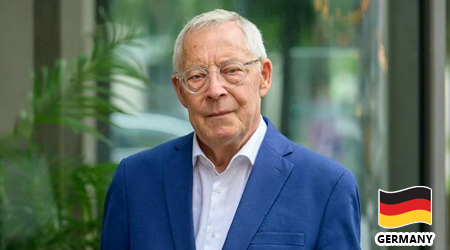
Karl Schlögel
Peace Prize of the German Book Trade 2025
Karl Schlögel (b. 1948, Hawangen, Bavaria) is one of Germany’s leading historians and essayists on Eastern Europe. Known for combining meticulous observation of everyday life with a spatial approach to history, he has reshaped the way scholars understand Russian and East European cultural history.Early Life and EducationSchlögel’s fascination with Eastern Europe began early—he first visited the Soviet Union in 1966 and witnessed the Prague Spring in 1968, an experience that profoundly influenced his worldview. He studied Eastern European history, philosophy, sociology, and Slavic studies at the Freie Universität Berlin, earning a doctorate in 1981 with a dissertation on Soviet labour conflicts.Academic and Intellectual CareerFrom 1990 to 2013, Schlögel taught Eastern European history at the Universities of Konstanz and Frankfurt (Oder), where he helped establish the Europa-Universität Viadrina as a centre for interdisciplinary study of Eastern Europe. Known for integrating teaching and fieldwork, he emphasized the cultural, urban, and political ties connecting Europe’s East and West.Major Themes and WorksSchlögel’s writing blends scholarly research with personal observation, reflecting his belief that history unfolds in both time and space. His early book Moskau lesen (1984) marked this distinctive style. Later works expanded his focus to all of Eastern and Central Europe, exploring themes of everyday life, urban identity, migration, and memory.Key works include:Im Raume lesen wir die Zeit (2003) — sets out his spatial theory of historiography.Terror und Traum: Moskau 1937 (2008) — examines Stalinist utopia and terror; won the 2009 Leipzig Book Prize for European Understanding.Das sowjetische Jahrhundert (2017; The Soviet Century, 2023) — a monumental 900-page “archaeology” of Soviet life, awarded the Leipzig Book Fair Prize.The Scent of Empires (2020) — traces 20th-century history through two perfumes, “Red Moscow” and “Chanel N°5.”American Matrix (2023) — compares U.S. and Soviet modernities.Public Engagement and Political ViewsSchlögel has been a prominent public intellectual and commentator on post-Soviet transformations. After visiting Ukraine during the 2014 Crimea crisis, he published Entscheidung in Kiew and Der Russland-Reflex (both 2015).Since Russia’s 2022 invasion of Ukraine, Schlögel has been an outspoken critic of Putin, rejecting “Russki Mir” ideology and any historical justifications for aggression. He argues that genuine peace is impossible without Ukrainian sovereignty and that Western hesitation to aid Ukraine betrays historical ignorance.LegacyThrough his vivid, spatially grounded narratives, Karl Schlögel has redefined how historians and readers perceive Eastern Europe—bridging scholarship, geography, and lived experience to portray the region as an integral part of Europe’s shared heritage.

Anne Applebaum
Peace Prize of the German Book Trade 2024
The Board of Trustees of the Peace Prize of the German Book Trade has chosen the Polish-American historian Anne Applebaum to be the recipient of this year’s Peace Prize. The award ceremony will take place on Sunday 20 October 2024 in the Church of St. Paul in Frankfurt am Main. The laudation will be held by the Russian historian Irina Scherbakowa.With her profound analyses of communist and post-communist systems in the Soviet Union and Russia, this Polish-American historian and journalist broadens our horizon and thereby reveals the mechanisms by which authoritarians grab hold of power and maintain their control. She also records and presents several witness testimonies that allow us to comprehend these mechanisms and gain further insight into them ourselves.Applebaum’s research into the interplay between economy and democracy, as well as her work on the effects of disinformation and propaganda on democratic societies, sheds light on how fragile these societies can be – especially when democracies are eroded from within by the electoral success of autocrats.In her publications on autocratic forms of government and their internationally operative networks, Applebaum succeeds at combining historiographic insights with highly alert observations on the current state of our world. At a time when democratic values and achievements are increasingly being caricatured and attacked, her work embodies an eminent and indispensable contribution to the preservation of democracy and peace.

Salman Rushdie
Peace Prize of the German Book Trade 2023
The Board of Trustees has elected the writer Salman Rushdie as the 2023 Peace Prize winner. The award ceremony took place on Sunday, October 22, 2023, in Frankfurt's Paulskirche. The laudatory speech was given by the writer Daniel Kehlmann.Since his 1981 masterpiece “Midnight Children,” Salman Rushdie has impressed with his interpretations of migration and global politics. In his novels and non-fiction books he combines narrative foresight with constant literary innovation, humor and wisdom. He describes the force with which violent regimes destroy entire societies, but also the indestructibility of the resistance spirit of individuals.Because the Iranian Ayatollah Khomeini issued a fatwa against him in 1989, Salman Rushdie lives in constant danger. Nevertheless, he remains one of the most passionate defenders of freedom of thought and language - not only his own, but also those of people whose views he does not share. At great personal risk, he is defending an essential prerequisite for peaceful coexistence.Shortly before the publication of his latest novel “Victory City,” he was the victim of an assassination attempt in August 2022. Despite the massive physical and psychological consequences that he is still struggling with, he continues to write: imaginatively and deeply humanely. We honor Salman Rushdie for his indomitability, his affirmation of life and for enriching the world with his joy of storytelling.
View More
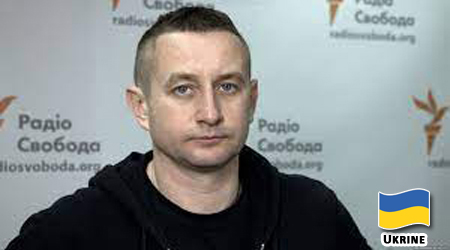
Serhiy Shadan
Peace Prize of the German Book Trade 2022
The Board of Trustees has elected the Ukrainian writer and musician Serhij Zhadan as the 2022 Peace Prize winner. The award ceremony took place on Sunday, October 23, 2022, in Frankfurt's Paulskirche. Sasha Marianna Salzmann gave the laudatory speech.The Börsenverein will award the Peace Prize of the German Book Trade to Serhij Zhadan in 2022. We honor the Ukrainian writer and musician for his outstanding artistic work and for his humanitarian attitude with which he reaches out to people in war and helps them at the risk of his life.In his novels, essays, poems and song lyrics, Serhij Zhadan takes us into a world that has experienced great upheavals and at the same time thrives on tradition. His texts tell how war and destruction enter this world and shock people. The writer finds his own language that shows us in an urgent and differentiated way what many people didn't want to see for a long time.Thoughtful and listening, in a poetic and radical tone, Serhij Zhadan explores how people in Ukraine try, despite all the violence, to lead an independent life determined by peace and freedom.

Tsitsi Dangarembga
Peace Prize of the German Book Trade 2021
The Board of Trustees has elected the writer and filmmaker Tsitsi Dangarembga from Zimbabwe as the 2021 Peace Prize winner. The award ceremony took place on Sunday, October 24, 2021, in Frankfurt's Paulskirche. Auma Obama gave the laudatory speech.The writer and filmmaker from Zimbabwe combines a unique narrative with a universal perspective in her artistic work and is therefore not only one of the most important artists in her country, but also a widely audible African voice in contemporary literature.In her trilogy of novels, Tsitsi Dangarembga uses the example of an adolescent woman to describe the struggle for the right to a dignified life and female self-determination in Zimbabwe. In doing so, she highlights social and moral conflicts that go far beyond regional references and open up resonance spaces for global questions of justice. In her films she addresses problems that arise from the clash between tradition and modernity. Their messages successfully reach a wide audience both in Zimbabwe and neighboring countries.Her artistic work is accompanied by her long-standing commitment to promoting culture in her country - and opening it up to women in particular. At the same time, she fights for freedom rights and political changes in Zimbabwe. Their current peaceful protest is against corruption, for which Tsitsi Dangarembga also accepts being prosecuted by the government. “If you want your suffering to stop, you have to act,” she demands. "Action comes from hope. This is the principle of belief and action."
Peace Prize of the German Book Trade Laureates (2020 ~ 2011)
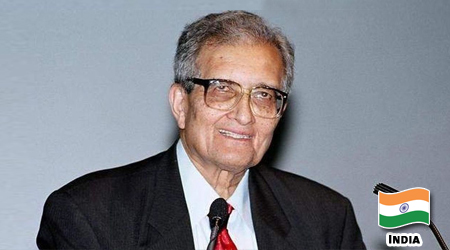
Amartya Sen
Peace Prize of the German Book Trade 2020
The Board of Trustees has elected the Indian economist and philosopher Amartya Sen as the 2020 Peace Prize winner. The award ceremony took place on Sunday, October 18, 2020, in the Paulskirche in Frankfurt. The laudatory speech by Federal President Frank-Walter Steinmeier was read out by the actor Burghart Klaußner.In 2020, the Börsenverein is awarding the Peace Prize of the German Book Trade to the economist Amartya Sen. We are honoring him as a philosopher who, as a thought leader, has been dealing with questions of global justice for decades and whose work to combat social inequality in terms of education and health today are more relevant than ever before. One of his most important demands is to measure social prosperity not only by economic growth, but also by the development opportunities, especially for the weakest.Amartya Sen highlights solidarity and negotiation as essential democratic virtues and proves that cultures do not have to be a source of conflict over identities. In powerful depictions he shows how poverty, hunger and illness are linked to a lack of liberal structures. With the "Human Development Index", the "Capabilities Approach" and the "Missing Women" he presented concepts early on that to this day set high standards for enabling, guaranteeing and evaluating equal opportunities and humane living conditions.His inspiring work is a call to promote a culture of political decision-making that is based on responsibility for others and does not deny anyone the right to have a say and self-determination.
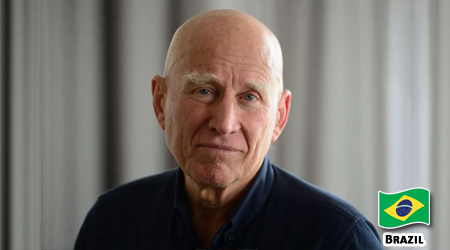
Sebastiao Salgado
Peace Prize of the German Book Trade 2019
The Board of Trustees has elected the Brazilian photographer Sebastião Salgado as the recipient of the 2019 Peace Prize. The award ceremony took place on October 20, 2019 in the Paulskirche in Frankfurt. The laudatory speech was given by the German film director Wim Wenders.In 2019, the Börsenverein awarded the Peace Prize of the German Book Trade to the Brazilian photographer Sebastião Salgado, honoring a visual artist who calls for social justice and peace with his photographs and gives urgency to the global debate about nature and climate protection. At the same time, Sebastião Salgado has created an institution with his “Instituto Terra” that makes a direct contribution to the revitalization of biodiversity and ecosystems.With his photographic work, which has been published in numerous exhibitions and books, he focuses on people uprooted by wars or climate catastrophes as well as those who are traditionally rooted in their natural environment. In this way, Sebastião Salgado succeeds in sensitizing people worldwide to the fate of workers and migrants and to the living conditions of indigenous peoples.By describing his stirring, black-and-white images as a "homage to the greatness of nature" and making the desecrated earth just as visible as its fragile beauty, the photographer gives us the chance to understand the earth as what it is it is: as a living space that does not belong to us alone and which must be preserved at all costs."
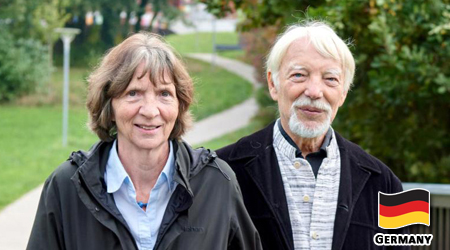
Aleida Assmann and Jan Assmann
Peace Prize of the German Book Trade 2018
The Board of Trustees has elected the German literary and cultural scientist Aleida Assmann and the German Egyptologist and cultural scientist Jan Assmann as the recipients of the 2018 Peace Prize. The award ceremony took place on October 14, 2018 in the Paulskirche in Frankfurt. The laudatory speech was given by the German-American literary scholar Hans Ulrich Gumbrecht.In 2018, the Börsenverein awarded the Peace Prize of the German Book Trade to Aleida and Jan Assmann, honoring a pair of researchers who have inspired and complemented each other's work for decades. With her scientifically based studies, the literary and cultural scientist Aleida Assmann takes up the ever-growing topics of historical forgetfulness and the culture of remembrance.In view of the growing political instrumentalization of recent German history, it provides a high level of enlightenment on questions of a nation's cultural memory. Her work points out that an open and honest approach to the past is a fundamental condition for peaceful coexistence.Through his extensive academic work, the Egyptologist and cultural scientist Jan Assmann has initiated international debates about fundamental questions about the cultural and religious conflicts of our time. With his writings on the connection between religion and violence as well as the genesis of intolerance and the claim to absolute truth, he makes an indispensable contribution to understanding the willingness and ability of religions for peace in today's global society.From this exciting, complementary unity that Aleida and Jan Assmann form, a two-part work has emerged that is of great importance for contemporary debates and, in particular, for peaceful coexistence in the world.
View More

Margaret Atwood
Peace Prize of the German Book Trade 2017
The Board of Trustees has elected the Canadian writer Margaret Atwood as the recipient of the 2017 Peace Prize. The award ceremony took place on October 15, 2017 in the Paulskirche in Frankfurt. The laudatory speech was given by the Austrian writer Eva Menasse.In 2017, the Börsenverein awarded the Peace Prize of the German Book Trade to Margaret Atwood. In her novels and non-fiction books, the Canadian writer, essayist and poet repeatedly shows her political sensitivity and her sensitivity to dangerous subliminal developments and currents.As one of the most important storytellers of our time, she places changing ways of thinking and behavior at the center of her work and fearlessly explores them in her utopian and dystopian works. By closely observing human contradictions, she shows how easily supposed normality can tip into the inhuman.Humanity, the pursuit of justice and tolerance characterize Margaret Atwood's attitude, who looks at the world with a keen awareness and deep knowledge of human nature and formulates her analyzes and concerns for us in a powerful and literary way. Through them we learn who we are, where we stand and what we owe to ourselves and to living together peacefully.
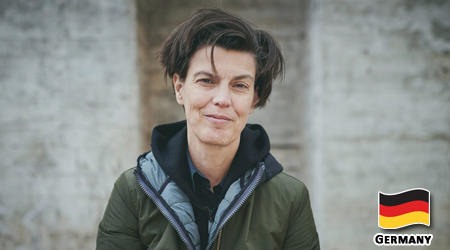
Carolin Emcke
Peace Prize of the German Book Trade 2016
The Board of Trustees has elected the German journalist and writer Carolin Emcke as the recipient of the 2016 Peace Prize. The award ceremony took place on October 23, 2016 in the Paulskirche in Frankfurt. The laudatory speech was given by the philosopher Seyla Benhabib, who lives in New York.In 2016, the Börsenverein awarded the Peace Prize of the German Book Trade to Carolin Emcke, honoring the journalist and publicist who makes an important contribution to social dialogue and peace with her books, articles and speeches.You pay particular attention to those moments, situations and topics in which the conversation threatens to break off or no longer seems possible. Carolin Emcke exposes herself to difficult living conditions and describes - especially in her essays and her reports from war zones - in a very personal and unprotected way how violence, hatred and speechlessness can change people. With analytical empathy, she appeals to the ability of everyone involved to find a way back to understanding and exchange.Carolin Emcke's work thus becomes a model for social action at a time when political, religious and cultural conflicts often no longer allow dialogue. She proves that it is possible and her work reminds us that we must face this task.”
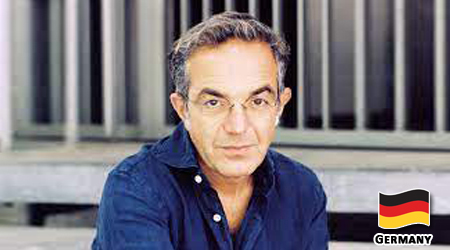
Navid Kermani
Peace Prize of the German Book Trade 2015
The Board of Trustees has elected the German orientalist, writer and essayist Navid Kermani as the recipient of the 2015 Peace Prize. The award ceremony took place on October 18, 2015 in the Paulskirche in Frankfurt. The laudatory speech was given by the literary scholar Norbert Miller.In 2015, the Börsenverein awarded the Peace Prize of the German Book Trade to Navid Kermani. The German writer, orientalist and essayist is one of the most important voices in our society, which more than ever has to face the experiences of people of different national and religious backgrounds in order to enable peaceful coexistence based on human rights.His academic work, in which he investigates questions of mysticism, aesthetics and theodicy, particularly in the area of Islam, shows Navid Kermani to be an author who is able to intervene in theological and social discourses with great expertise.Navid Kermani's novels and essays, but especially his reports from crisis areas, show how committed he is to the dignity of the individual human being and respect for different cultures and religions, and how committed he is to an open European society. that offers protection to refugees and gives space to humanity.”
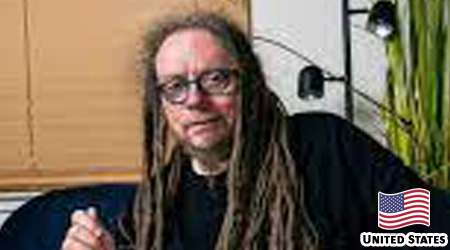
Jaron Lanier
Peace Prize of the German Book Trade 2014
The Board of Trustees has elected the American computer scientist, musician and writer Jaron Lanier as the recipient of the 2014 Peace Prize. The award ceremony took place on October 12, 2014 in the Paulskirche in Frankfurt. The laudatory speech was given by the German politician Martin Schulz.In 2014, the Börsenverein awarded the Peace Prize of the German Book Trade to Jaron Lanier, honoring the American computer scientist, musician and writer as a pioneer of the digital world who recognized the risks it poses for every person's freedom to live their lives.Jaron Lanier urgently points out the dangers that threaten our open society when the power of design is taken away from it and when people are reduced to digital categories despite gains in diversity and freedom. His most recent work, “Who Owns the Future” becomes a call to be vigilant against lack of freedom, abuse and surveillance and to provide the digital world with structures that respect the rights of the individual and promote democratic participation for all.With the demand to ensure a sustainable and economic value for the creative contribution of the individual on the Internet, Jaron Lanier is committed to preserving the human values that are the basis of peaceful coexistence, including in the digital world.
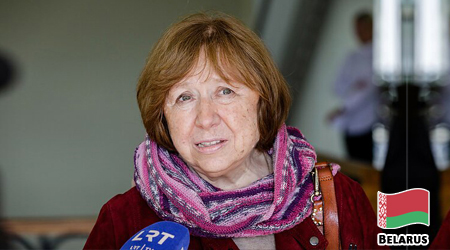
Svetlana Alexievich
Peace Prize of the German Book Trade 2013
The Board of Trustees has elected the Belarusian writer Svetlana Alexievich as the recipient of the 2013 Peace Prize. The award ceremony took place on October 13, 2013 in the Paulskirche in Frankfurt. The laudatory speech was given by the German historian Karl Schlögel.In 2013, the Börsenverein awarded the Peace Prize of the German Book Trade to Svetlana Alexiewitsch, honoring the Belarusian writer who traces the lives of her fellow human beings from Belarus, Russia and Ukraine and expresses their suffering and passions with humility and generosity.With the reports about Chernobyl, about the Soviet war in Afghanistan and about the unfulfilled hopes for a free country after the collapse of the Soviet empire, she allows a basic current of existential disappointment to be felt in the tragic chronicle of the people.Through the composition of her interviews, which also form the basis of her latest book “Secondhand Time,” Svetlana Alexiewitsch has found her own literary genre, a choral witness. As a moral memory, it questions whether peace, freedom and
justice might not be better alternatives.
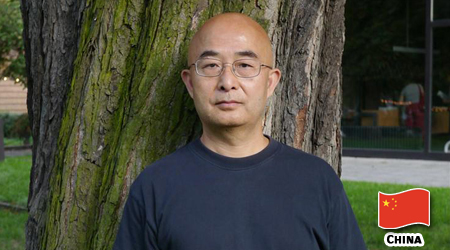
Liao Yiwu
Peace Prize of the German Book Trade 2012
The Board of Trustees of the Peace Prize of the German Book Trade has elected the Chinese writer Liao Yiwu as the recipient of the 2012 Peace Prize. The award ceremony took place on October 14, 2012 in the Paulskirche in Frankfurt. The laudatory speech was given by the German journalist and publisher Felicitas von Lovenberg.In 2012, the Börsenverein awarded the Peace Prize of the German Book Trade to Liao Yiwu, honoring the Chinese writer who spoke powerfully and fearlessly against political oppression and gave the disenfranchised in his country a widely audible voice.In his books and poems, Liao Yiwu creates a stirring literary monument to the people on the margins of Chinese society. The author, who has experienced first-hand what prison, torture and repression mean, bears witness to the outcasts of modern China as an unwavering chronicler and observer.The manuscript of his work “For a Song and a Hundred Songs,” in which he tells of the dehumanization caused by brute force in Chinese prisons, was confiscated by the authorities several times; he rewrote it again and again and was finally able to publish it in exile. As a people's writer in the broadest sense, he stands up for human dignity, freedom and democracy.
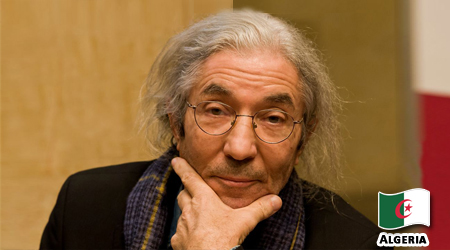
Boualem Sansal
Peace Prize of the German Book Trade 2011
The Board of Trustees of the Peace Prize of the German Book Trade has elected the Algerian writer Boualem Sansal as the recipient of the 2011 Peace Prize. The award ceremony took place on October 16, 2011 in the Paulskirche in Frankfurt. The laudatory speech was given by the Swiss German scholar Peter von Matt.In 2011, the Börsenverein awarded the Peace Prize of the German Book Trade to Boualem Sansal, honoring the Algerian writer who, as a passionate narrator, witty and compassionate, promoted the meeting of cultures in respect and mutual understanding.Boualem Sansal is one of the few intellectuals remaining in Algeria who openly criticizes the political and social conditions. With his persistent plea for free speech and public dialogue in a democratic society, he stands against every form of doctrinal delusion, terror and political arbitrariness. His focus is not only on his homeland, but on the entire world today.