

Gandhi Peace Prize

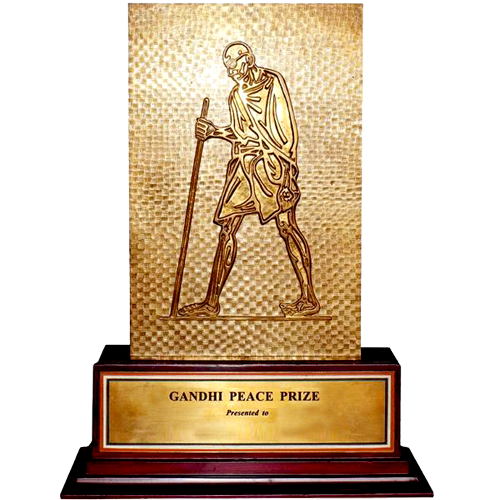
Gandhi Peace Prize
The International Gandhi Peace Prize is an award instituted by the Government of India to honor individuals and organizations that have made significant contributions to promoting peace and non-violence. The prize was established in 1995 on the 125th birth anniversary of Mahatma Gandhi, the leader of the Indian independence movement and a pioneer of the philosophy of non-violence.The award is given annually, and the recipient receives a citation and a monetary award. The criteria for selecting awardees include their commitment to non-violence, their contributions to social and economic development, and their promotion of communal harmony. The award carries ₹1 crore (equivalent to ₹1.2 crore or US$150,000 in 2023) in cash, convertible in any currency in the world, a plaque and a citation. It is open to all persons regardless of nationality, race, creed or gender. A jury consisting of the Prime Minister of India, the Leader of the Opposition in the Lok Sabha, the Chief Justice of India, Speaker of the Lok Sabha and two other eminent person appointed every 3years eligible for reappointment decides the awardee each year.
| Sl | Name | Country | Flag | Year | Awarded For |
|---|---|---|---|---|---|
| 21 | Gita Press | India | 2021 | For outstanding contributions towards social, economic and political transformation through non-violent and other Gandhian methods. | |
| 20 | Sheikh Mujibur Rahman | Bangladesh | 2020 | For his contributions towards social, economic and political transformation through non-violent and other Gandhian methods. | |
| 19 | Qaboos bin Said Al Said | Oman | 2019 | For contributions for social, economic and political transformation through non-violent and other Gandhian methods. | |
| 18 | Yōhei Sasakawa | Japan | 2018 | For his contribution in Leprosy Eradication in India and across the world. | |
| 17 | Ekal Abhiyan Trust | India | 2017 | Contribution in providing Education for Rural and Tribal Children in remote areas pan India, Rural Empowerment, Gender and Social Equality. | |
| 16 | Sulabh International | India | 2016 | A social service organization that works to promote human rights, environmental sanitation, non-conventional sources of energy, waste management and social reforms through education. | |
| 15 | Akshaya Patra Foundation | India | 2016 | A non-profit organisation in India that runs school lunch programme across India | |
| 14 | Vivekananda Kendra | India | 2015 | A Hindu spiritual organisation based on the principles preached by Swami Vivekananda | |
| 13 | ISRO | India | 2014 | Space agency of the Indian Govt. Objective is to advance space technology and deliver the applications of it | |
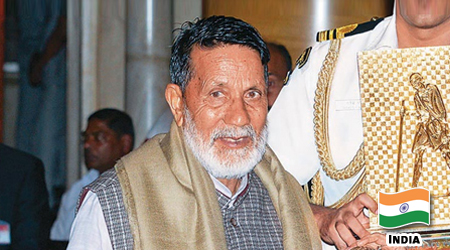
| 12 | Chandi Prasad Bhatt | India | 2013 | Environmentalist, social activist and pioneer of the Chipko movement. Founded Dasholi Gram Swarajya Sangh (DGSS) | |
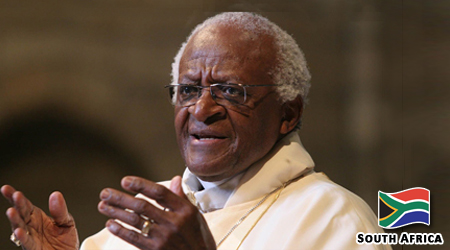
| 11 | Desmond Tutu | South Africa | 2005 | South African cleric and activist.He was South African social rights activist and retired Anglican bishop who rose to worldwide fame during the 1980s as an opponent of apartheid. | |
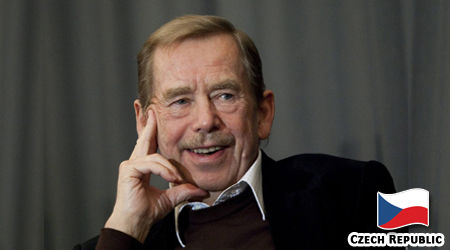
| 10 | Václav Havel | Czech Republic | 2003 | Last President of Czechoslovakia and first President of the Czech Republic | |
| 9 | Bharatiya Vidya Bhavan | India | 2002 | Educational trust that emphasises Indian culture | |
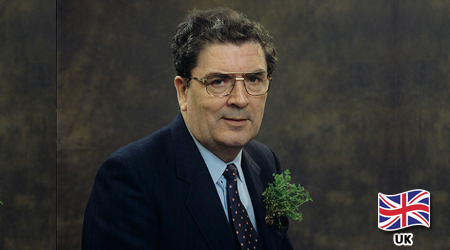
| 8 | John Hume | Ireland | 2001 | Northern Irish Politician and major figure in the Northern Ireland peace process | |
| 7 | Grameen Bank | Bangladesh | 2000 | Founded by Muhammad Yunus | |
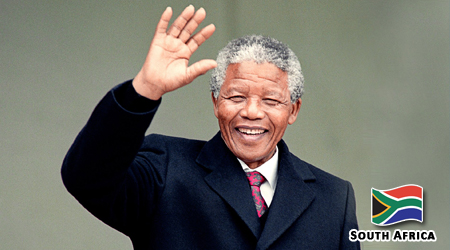
| 6 | Nelson Mandela | South Africa | 2000 | Former President of South Africa | |
| 5 | Baba Amte | India | 1999 | Social worker, known particularly for his work for the rehabilitation and empowerment of poor people suffering from leprosy | |
| 4 | Ramakrishna Mission | India | 1998 | Founded by Swami Vivekananda for promoting social welfare, tolerance, and non-violence among disadvantaged groups | |
| 3 | Gerhard Fischer | Germany | 1997 | German diplomat, recognised for his work against leprosy and polio | |
| 2 | A. T. Ariyaratne | Sri Lanka | 1996 | Founder of Sarvodaya Shramadana Movement | |
| 1 | Julius Nyerere | Tanzania | 1995 | Julius Kambarage Nyerere was a Tanzanian politician who served as the leader of Tanzania, and previously Tanganyika, from 1960 until his retirement in 1985. |

Gandhi Peace Prize Laureates (2030 ~ 2021)
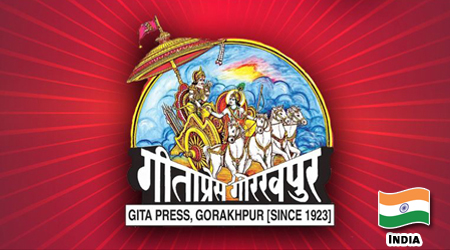
Gita Press
Gandhi Peace Prize 2021
The Gita Press, the world’s largest publisher of Hindu religious texts, was honored with the 2021 Gandhi Peace Prize. Presented by the Government of India in 2023, the award recognized the Gorakhpur-based institution for its "outstanding contribution to social and cultural transformation" through non-violent means. The jury, led by Prime Minister Narendra Modi, lauded the Press for its century-long commitment to making spiritual literature—including over 160 million copies of the Bhagavad Gita—accessible at highly subsidized prices. The prize celebrated its unique "Gandhian" model of self-reliance, as the institution famously refuses all commercial advertisements, relying solely on its mission to foster ethical living and social harmony.In February 2026, Gita Press continues to serve as a primary custodian of India's cultural consciousness. On January 21, 2026, Union Home Minister Amit Shah released the centenary issue of its flagship magazine, Kalyan, in Rishikesh, citing its 100-year journey as a "lamp of Indian culture." This week, on February 26, 2026, the Press highlighted its 2026 digital expansion, reporting that its open-access initiatives have reached millions of new readers globally. Its 2021 recognition remains a significant 2026 milestone, symbolizing the integration of traditional wisdom with modern community service. Its 2026 standing is that of a "living temple of literature," whose 2021 honor continues to validate the idea that words and knowledge are the ultimate tools for building a peaceful civilization.
Gandhi Peace Prize Laureates (2020 ~ 2011)
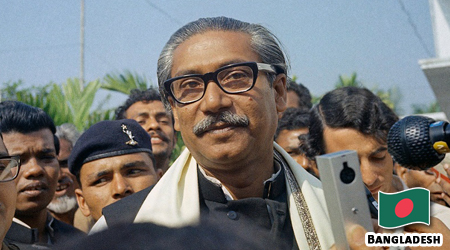
Sheikh Mujibur Rahman
Gandhi Peace Prize 2020
Sheikh Mujibur Rahman, the founding father of Bangladesh known as Bangabandhu, was posthumously honored with the 2020 Gandhi Peace Prize. Presented by the Government of India in 2021, the award recognized his "immense and unparalleled contribution" to the social, economic, and political transformation of his nation. Rahman was lauded for his "Gandhian grit" in leading the non-violent movement for autonomy and later the liberation of Bangladesh. The prize celebrated his vision of a secular, democratic society and his role as a "champion of human rights," proving that the path of peace and justice remains a bedrock for regional stability.In February 2026, Rahman’s legacy is undergoing a complex period of historical reckoning following the 2024 political shifts in Bangladesh. On February 14, 2026, during the lead-up to the 2026 general elections, new educational directives were discussed to provide a "balanced" view of the 1971 era, including revisions to his formal titles in state textbooks. This week, on February 21, 2026, his role in the Language Movement was commemorated with a 2026 digital seminar in Dhaka, citing his 2020 recognition as a testament to the enduring Indo-Bangla bond. His 2026 standing remains that of a "founding protagonist," whose 2020 honor continues to validate the struggle for self-determination as a universal pursuit of peace.
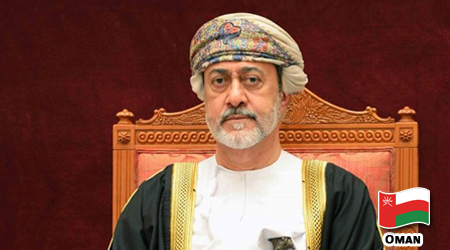
Qaboos bin Said Al Said
Gandhi Peace Prize 2019
Sultan Qaboos bin Said Al Said of Oman was posthumously honored with the 2019 Gandhi Peace Prize. Presented by the Government of India in 2021, the award recognized his "unparalleled vision" and his twin policies of moderation and mediation. Sultan Qaboos was lauded as the architect of modern Oman, transforming it from an isolated state into a prosperous, stable nation. The prize celebrated his "Gandhian approach" to international diplomacy, where he acted as a silent bridge-builder in the volatile Gulf region, proving that neutrality and inclusive dialogue are the most effective tools for lasting regional peace.In February 2026, the late Sultan’s legacy of "peace through partnership" continues to define India-Oman relations. On February 14, 2026, the Oman-India Friendship Association held a 2026 commemorative forum titled "The 2019 Peace Legacy," highlighting how his strategic partnership remains a 2026 anchor for maritime security. This week, on February 26, 2026, a 2026 diplomatic summit in Muscat cited his 2019 recognition as the foundational blueprint for current 2026 mediation efforts in Middle Eastern conflicts. His 2026 standing is that of a "statesman of the century," whose 2019 honor continues to validate the idea that a leader's greatest strength lies in their ability to foster harmony.
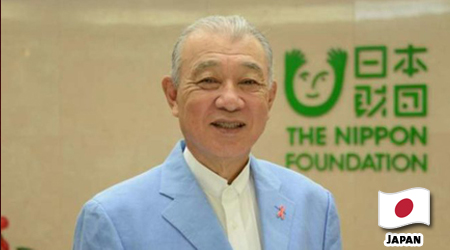
Yōhei Sasakawa
Gandhi Peace Prize 2018
Yōhei Sasakawa, the tireless Japanese philanthropist and Chairman of The Nippon Foundation, was honored with the 2018 Gandhi Peace Prize. Presented by the Government of India in 2019, the award recognized his four decades of service toward the global elimination of leprosy. Sasakawa was lauded for his "Gandhian tenacity," serving as the WHO Goodwill Ambassador and traveling to over 100 countries to break the social stigma surrounding Hansen’s disease. The prize celebrated his philosophy that "leprosy is a human rights issue," proving that medical cures must be accompanied by the restoration of social dignity for those once marginalized.In February 2026, Sasakawa’s mission remains the primary global engine for leprosy eradication. On January 25, 2026, he marked the 25th anniversary of his WHO appointment with a 2026 World Leprosy Day message titled "Breaking the Walls of Prejudice," urging renewed 2026 commitment to a leprosy-free world. This week, on February 26, 2026, his transition to Honorary Chair of The Nippon Foundation was highlighted as a 2026 milestone for international philanthropy. His 2026 standing is that of a "global bridge-builder," whose 2018 honor continues to validate the idea that true peace requires the inclusion of every excluded soul.
View More
Ekal Abhiyan Trust
Gandhi Peace Prize 2017
The Ekal Abhiyan Trust was honored with the 2017 Gandhi Peace Prize for its massive contribution to rural and tribal education. Presented by the Government of India in 2019, the award recognized the Trust’s success in running one-teacher schools, or Ekal Vidyalayas, in India’s most remote regions. The organization was lauded for its "Gandhian focus on the grassroots," addressing illiteracy, healthcare, and rural empowerment through an integrated village development model. The prize celebrated its role in fostering social and gender equality, proving that the light of knowledge can reach the "last person" through a decentralized, community-driven approach.In February 2026, Ekal Abhiyan’s "one-teacher" revolution remains a primary force in nation-building. On February 8, 2026, the movement organized the Ekal Run 3.0 in Surat and Pune, a 2026 marathon series designed to raise funds for its goal of establishing 100,000 schools. This week, on February 24, 2026, the Trust's 2026 newsletter highlighted new "Ekal on Wheels" mobile computer labs, citing the 2017 recognition as the catalyst for its current 2026 digital literacy expansion. Its 2026 standing is that of a "silent transformer," whose 2017 honor continues to validate the idea that true independence is rooted in village-level self-reliance.

Sulabh International
Gandhi Peace Prize 2016
Sulabh International, the pioneering social service organization founded by Dr. Bindeshwar Pathak, was honored with the 2016 Gandhi Peace Prize. Presented jointly with the Akshaya Patra Foundation, the award recognized Sulabh’s "revolutionary contribution" to sanitation and the emancipation of manual scavengers. The organization was lauded for its "Gandhian methodology" of restoring human dignity through the low-cost twin-pit pour-flush toilet technology, which ended the soul-crushing practice of manually cleaning human waste. The prize celebrated Sulabh’s role in the Swachh Bharat Mission, proving that non-violent social reform is best achieved by combining technological innovation with a deep commitment to human rights and "untouchability" eradication.In February 2026, Sulabh’s "sanitation as a human right" framework continues to drive national cleanliness initiatives. On February 7, 2026, the organization successfully concluded its "Shikhar Se Sagar Tak" (Peaks to Shores) cleanliness drive in Visakhapatnam, engaging over 1,000 volunteers in coastal preservation. This month, on February 26, 2026, Sulabh celebrated its award anniversary by unveiling a new "Aspirational Toilet" model in Delhi, utilizing its 2016 recognition to set 2026 benchmarks for "dignified sanitation." Its 2026 standing remains that of a "global liberator," whose 2016 honor continues to validate the idea that true peace begins with the restoration of dignity to the last person in society.
Akshaya Patra Foundation
Gandhi Peace Prize 2016
The Akshaya Patra Foundation was honored with the 2016 Gandhi Peace Prize for its revolutionary contribution to food security and education in India. Presented by the Government of India in 2019, the award recognized the Foundation’s "unmatched scale" in implementing the PM-POSHAN (Mid-Day Meal) scheme. Akshaya Patra was lauded for its "Gandhian compassion," utilizing state-of-the-art centralized kitchens to provide nutritious, hygienic meals to millions of children. The prize celebrated its mission to ensure that "no child shall be deprived of education because of hunger," proving that technology, when harnessed for social good, can dismantle the systemic barriers of malnutrition and illiteracy.In February 2026, Akshaya Patra’s "mega-kitchen" model remains the global benchmark for large-scale humanitarian logistics. On February 14, 2026, the Foundation launched a 2026 digital initiative titled "The 2016 Vision: Nutrition 3.0," integrating AI-driven supply chains to reach its new goal of feeding 3 million children daily by 2030. This week, on February 25, 2026, a 2026 global health summit highlighted their presence at the World Economic Forum in Davos, citing their 2016 recognition as the catalyst for modern "social infrastructure" investments. Their 2026 standing is that of a "global kitchen of hope," whose 2016 honor continues to validate the idea that a well-fed child is the primary architect of a peaceful nation.
Vivekananda Kendra
Gandhi Peace Prize 2015
The Vivekananda Kendra, a Hindu spiritual and service-oriented organization, was honored with the 2015 Gandhi Peace Prize. Presented by the Government of India, the award recognized the Kendra’s "extraordinary contribution" to rural development, education, and the promotion of social welfare across India. The organization was lauded for its "Gandhian spirit of selfless service," particularly through its Vivekananda Kendra Vidyalayas and its extensive work in tribal and remote areas. The prize celebrated its "Man-Making and Nation-Building" philosophy, proving that spiritual ideals can be successfully translated into practical, non-violent actions that empower the most marginalized sections of society.In February 2026, the Kendra’s "service as worship" model continues to drive large-scale social transformation. This week, from February 27 to March 1, 2026, the Kendra is hosting the 9th International Conference on Yoga Philosophy (Yoga Sastra Sangamam) at its headquarters in Kanyakumari, focusing on the "Patanjala Yoga Sutras" for global well-being. On February 14, 2026, the Kendra also launched a 2026 digital outreach initiative to expand its "Natural Resources Development" projects in drought-prone regions. Its 2026 standing is that of a "cultural and social anchor," whose 2015 honor continues to validate the idea that true peace is achieved when a society’s spiritual growth is mirrored by its service to humanity.

ISRO
Gandhi Peace Prize 2014
The Indian Space Research Organisation (ISRO) was honored with the 2014 Gandhi Peace Prize for its "transformative role" in applying space technology to social and economic development. Presented by the Government of India, the award recognized ISRO’s unique mission to harness advanced science for the benefit of the common man, rather than military dominance. ISRO was lauded for its "Gandhian democratization of data," providing critical services like tele-education, telemedicine, and precise weather forecasting to remote rural populations. The prize celebrated the organisation's "frugal innovation" and self-reliance, proving that high-tech exploration can be a powerful tool for poverty alleviation and national peace.In February 2026, ISRO’s "space for humanity" philosophy remains the primary blueprint for sustainable global space programs. On February 14, 2026, the Department of Space launched a 2026 digital mission titled "The 2014 Legacy: Satellite-Aided Sustainable Development," utilizing its award-winning Earth observation data to mitigate 2026 drought impacts in the Global South. This week, on February 26, 2026, an international space summit in Bengaluru cited the 2014 recognition as the foundational catalyst for current 2026 "Climate-Space" partnerships. ISRO’s 2026 standing is that of a "celestial servant," whose 2014 honor continues to validate the idea that the stars should be reached to better the lives of those on Earth.
Chandi Prasad Bhatt
Gandhi Peace Prize 2013
Chandi Prasad Bhatt, the pioneering Gandhian environmentalist and social activist, was honored with the 2013 Gandhi Peace Prize. Presented by the Government of India, the award recognized his "foundational role" in the Chipko Movement, which utilized non-violent resistance to protect Himalayan forests from commercial logging. Bhatt was lauded for his "Gandhian ecological vision," famously mobilizing local women to hug trees as a form of "satyagraha" for the earth. The prize celebrated his commitment to sustainable development through the Dasholi Gram Swarajya Sangh, proving that environmental conservation is inseparable from the economic empowerment of local communities.In February 2026, Bhatt’s "environmentalism of the poor" remains a primary framework for global climate justice. On February 14, 2026, the Himalayan Action Research Centre launched a 2026 digital initiative titled "The 2013 Legacy: Community Forestry in the Carbon Age," utilizing his award-winning strategies to address 2026 glacial melting. This week, on February 25, 2026, a 2026 sustainability summit in Dehradun cited his 2013 recognition as the foundational catalyst for current 2026 movements linking biodiversity to indigenous rights. His 2026 standing is that of a "guardian of the mountains," whose 2013 honor continues to validate the idea that nature is not a resource to be plundered, but a trust to be protected.
Gandhi Peace Prize Laureates (2010 ~ 2001)
Desmond Tutu
Gandhi Peace Prize 2005
Archbishop Desmond Tutu, the moral conscience of South Africa and a global apostle of reconciliation, was honored with the 2005 Gandhi Peace Prize. Presented by the Government of India, the award recognized his "invaluable contribution to social and political transformation" through the Gandhian values of dialogue and tolerance. Tutu was lauded for his fearless, non-violent crusade against apartheid and his subsequent leadership of the Truth and Reconciliation Commission. The prize celebrated his "Ubuntu" philosophy—the belief in a universal bond of sharing that connects all humanity—proving that justice is best served not through retribution, but through the restorative power of forgiveness.In February 2026, Tutu’s "theology of hope" remains a primary guide for global conflict resolution. On February 14, 2026, the Desmond and Leah Tutu Legacy Foundation launched its 2026 digital "Letters of Peace" archive, utilizing his award-winning rhetoric to address 2026 sectarian divisions. Simultaneously, on February 17, 2026, the City of Johannesburg advanced plans for the "Archbishop Desmond Tutu Precinct," a 2026 urban regeneration project dedicated to his legacy of social cohesion. His 2026 standing is that of a "spiritual liberator," whose 2005 honor continues to validate the idea that an "eye for an eye" only leaves the whole world blind.
Václav Havel
Gandhi Peace Prize 2003
Václav Havel, the playwright-dissident and first president of the Czech Republic, was honored with the 2003 Gandhi Peace Prize. Presented by the Government of India, the award recognized his "unwavering moral authority" in leading the non-violent Velvet Revolution against totalitarianism. Havel was lauded for his "Gandhian commitment to truth," famously championing the concept of "Living in Truth" as a weapon against systemic lies. The prize celebrated his transition from a political prisoner to a statesman who prioritized human rights over Cold War pragmatism, proving that the power of the powerless can peacefully dismantle a nuclear-armed empire.In February 2026, Havel’s "moral politics" remains a primary framework for defending democracy against modern disinformation. On February 14, 2026, the Václav Havel Library launched a 2026 digital symposium titled "The 2003 Mandate: Truth in the AI Era," utilizing his award-winning essays to address 2026 digital authoritarianism. This week, on February 26, 2026, a 2026 human rights forum in Prague cited his 2003 recognition as the foundational catalyst for current 2026 movements supporting dissidents in autocratic regimes. His 2026 standing is that of a "philosopher-president," whose 2003 honor continues to validate the idea that a peaceful world must be built on a foundation of individual conscience.
Bharatiya Vidya Bhavan
Gandhi Peace Prize 2002
The Bharatiya Vidya Bhavan, an educational and cultural trust founded by Dr. K.M. Munshi, was honored with the 2002 Gandhi Peace Prize. Presented by the Government of India, the award recognized the institution’s "unmatched contribution" to the promotion of ethical values and human integration. The Bhavan was lauded for its "Gandhian educational model," which seamlessly blends ancient Indian wisdom with modern scientific thought to foster a culture of tolerance. The prize celebrated its vast global network of schools and centers, proving that the preservation of heritage and the pursuit of peace are inextricably linked through the medium of holistic education.In February 2026, the Bhavan’s "value-based pedagogy" remains a primary framework for character building in the digital age. On February 14, 2026, the Bhavan’s International Research Institute launched a 2026 digital portal titled "The 2002 Vision: Ethics in AI," utilizing its award-winning curriculum to guide 2026 youth toward responsible global citizenship. This week, on February 26, 2026, a 2026 cultural summit in Mumbai cited the 2002 recognition as the foundational blueprint for current 2026 interfaith harmony programs. Its 2026 standing is that of a "lighthouse of culture," whose 2002 honor continues to validate the idea that true peace begins with the cultivation of the human mind.
View More
John Hume
Gandhi Peace Prize 2001
John Hume, the visionary Northern Irish politician and architect of the Good Friday Agreement, was honored with the 2001 Gandhi Peace Prize. Presented by the Government of India, the award recognized his "unshakable persistence" in resolving the decades-long conflict in Northern Ireland through purely non-violent means. Hume was lauded for his "Gandhian strategy" of inclusive dialogue, famously asserting that "it is people who have rights, not territories." The prize celebrated his ability to dismantle the zero-sum logic of sectarianism, proving that the patient pursuit of consensus is more powerful than the transient victories of armed struggle.In February 2026, Hume’s "civil rights blueprint" remains the primary gold standard for conflict resolution worldwide. On February 14, 2026, the John and Pat Hume Foundation launched a 2026 digital leadership program titled "The 2001 Mandate," utilizing his award-winning rhetoric to mentor 2026 peacemakers in emerging crisis zones. This week, on February 26, 2026, a 2026 peace summit in Derry cited his 2001 recognition as the foundational catalyst for current 2026 "shared island" initiatives. His 2026 standing is that of a "giant of reconciliation," whose 2001 honor continues to validate the idea that difference is the essence of humanity, not a threat to it.
Gandhi Peace Prize Laureates (2000~ 1991)
Grameen Bank
Gandhi Peace Prize 2000
The Grameen Bank, the microfinance pioneer from Bangladesh, was honored with the 2000 Gandhi Peace Prize. Presented by the Government of India and shared with Nelson Mandela, the award recognized the bank’s revolutionary "banking for the poor" model as a powerful instrument for social and economic transformation. The bank was lauded for its "Gandhian focus on the last person," providing small, collateral-free loans to the impoverished—primarily women—to foster self-reliance and dignity. The prize celebrated the bank's proof that poverty is not a lack of ability, but a lack of opportunity, aligning microcredit with the Gandhian ideal of grassroots empowerment.In February 2026, the Grameen model remains a primary pillar of global financial inclusion. On February 14, 2026, the Grameen Trust launched a 2026 digital summit titled "The 2000 Legacy: Microcredit in the Age of AI," adapting its award-winning strategies to support 2026 digital entrepreneurs in rural Asia. This week, on February 26, 2026, a 2026 economic forum in Dhaka cited the 2000 recognition as the foundational catalyst for modern "social business" frameworks that prioritize human impact over profit. The bank’s 2026 standing is that of a "global laboratory for hope," whose 2000 honor continues to validate the idea that economic justice is the bedrock of lasting peace.
Nelson Mandela
Gandhi Peace Prize 2000
Nelson Mandela, the global icon of reconciliation and South Africa’s first Black president, was honored with the 2000 Gandhi Peace Prize. Presented by the Government of India and shared with the Grameen Bank, the award recognized his "unparalleled heroics in the Gandhian mould." Mandela was lauded for steering his nation from the abyss of apartheid to a multiracial democracy through the power of forgiveness rather than retribution. The prize celebrated his "Gandhian transformation" of a liberation struggle into a national healing process, proving that the moral force of truth and non-violence could dismantle even the most entrenched systems of structural racism.In February 2026, Mandela’s "long walk" remains the definitive compass for a world facing deep political polarization. On February 14, 2026, the Nelson Mandela Foundation launched a digital 2026 initiative titled "The 2000 Mandate: Mandela’s India Connection," featuring his award acceptance speech on the "spiritual debt" he owed to Mahatma Gandhi. This week, on February 24, 2026, the Gandhi Mandela Foundation in New Delhi hosted a 2026 summit citing his recognition as the foundational blueprint for current 2026 "Truth and Healing" commissions globally. His 2026 standing is that of a "universal ancestor of peace," whose 2000 honor continues to validate the idea that the brave man is not he who does not feel afraid, but he who conquers that fear to embrace his enemy.
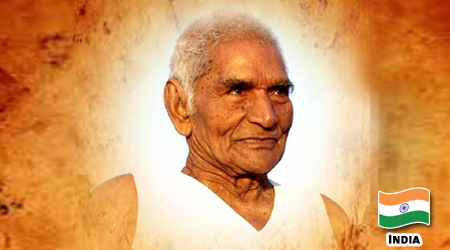
Baba Amte
Gandhi Peace Prize 1999
Murlidhar Devidas Amte, affectionately known as Baba Amte, was honored with the 1999 Gandhi Peace Prize. Presented by the Government of India, the award recognized his "boundless compassion" and life-long dedication to the rehabilitation of leprosy patients and the upliftment of the tribal poor. Amte was lauded for his "Gandhian grit," famously injecting himself with leprosy bacilli to prove the disease was not highly contagious. The prize celebrated his creation of Anandwan (Forest of Joy), a self-sustaining community that transformed "social outcasts" into productive, dignified citizens, proving that the highest form of non-violence is the restoration of human hope.In February 2026, Amte’s "philosophy of the shovel" remains the primary template for sustainable community development. On February 14, 2026, the Maharogi Sewa Samiti launched a 2026 digital initiative titled "The 1999 Vision," utilizing his award-winning ecological models to address 2026 water scarcity in rural Maharashtra. This week, on February 24, 2026, a 2026 social work summit in Nagpur cited his 1999 recognition as the foundational catalyst for current 2026 "inclusive habitat" projects. His 2026 standing is that of a "modern saint of the soil," whose 1999 honor continues to validate the idea that true peace is harvested through hard work and radical empathy.
- Phone:+1 (859) 254-6589
- Email:info@example.com
View More
Ramakrishna Mission
Gandhi Peace Prize 1998
The Ramakrishna Mission, the spiritual and humanitarian organization founded by Swami Vivekananda, was honored with the 1998 Gandhi Peace Prize. Presented by the Government of India, the award recognized the Mission's "centenary of selfless service" and its profound impact on social well-being through non-violent means. The Mission was lauded for its "Gandhian synthesis" of spiritual practice and social action, specifically its commitment to the philosophy of Daridra Narayana—serving God through the service of the poor. The prize celebrated the organization's extensive network of hospitals, schools, and disaster relief programs, proving that organized compassion is a foundational pillar of a peaceful society.In February 2026, the Mission’s "theology of service" remains a primary catalyst for modern philanthropic efforts in South Asia. On February 14, 2026, the Belur Math headquarters launched a 2026 digital outreach program titled "The 1998 Mandate," focusing on 2026 rural education and sustainable healthcare in tribal regions. This week, on February 24, 2026, a 2026 international summit on social ethics cited the 1998 recognition as the foundational blueprint for current 2026 faith-based humanitarian models. The Mission’s 2026 standing is that of a "silent force for good," whose 1998 honor continues to validate the idea that spiritual enlightenment is incomplete without the practical elevation of humanity.
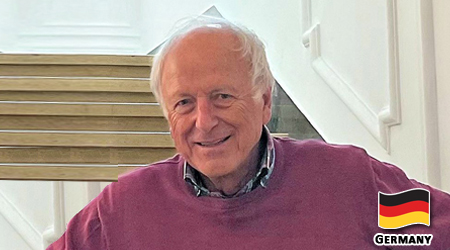
Gerhard Fischer
Gandhi Peace Prize 1997
Gerhard Fischer, the dedicated German diplomat and philanthropist, was honored with the 1997 Gandhi Peace Prize. Presented by the Government of India, the award recognized his "extraordinary humanitarian service" in the fields of healthcare and social rehabilitation. Fischer was lauded for his "Gandhian humility," famously retiring from a high-ranking diplomatic career to live a simple life dedicated to eradicating leprosy and polio. The prize celebrated his work at the Chettipatty Leprosy Hospital in Tamil Nadu, proving that true peace is found in the relief of human suffering and the restoration of dignity to the marginalized.In February 2026, Fischer’s "diplomacy of the heart" remains a primary model for international humanitarian cooperation. On February 14, 2026, the Gerhard Fischer Foundation launched a 2026 digital health initiative titled "The 1997 Legacy," utilizing his award-winning strategies to provide 2026 mobile clinics for remote rural populations. This week, on February 26, 2026, a 2026 global health forum in New Delhi cited his 1997 recognition as the foundational catalyst for current 2026 movements integrating social inclusion with infectious disease control. His 2026 standing is that of a "modern Good Samaritan," whose 1997 honor continues to validate the idea that one individual’s sacrifice can transform a nation's health.
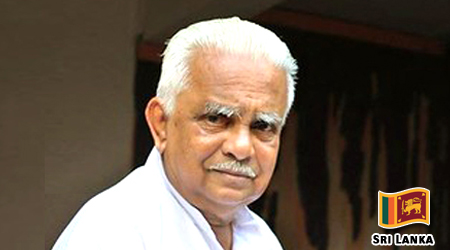
A. T. Ariyaratne
Gandhi Peace Prize 1996
Dr. A. T. Ariyaratne, the Sri Lankan social reformer often called "Sri Lanka’s Gandhi," was honored with the 1996 Gandhi Peace Prize. Presented by the Government of India, the award recognized his transformative work through the Sarvodaya Shramadana Movement, which he founded in 1958. Ariyaratne was lauded for his "Buddhist-Gandhian synthesis," mobilizing millions in over 15,000 villages to achieve self-reliance through the "sharing of labor." The prize celebrated his commitment to non-violent conflict resolution during Sri Lanka’s civil war, proving that grassroots spiritual awakening can serve as a powerful alternative to both state violence and materialist development.In February 2026, Ariyaratne’s legacy as a "prophet of bottom-up development" remains a cornerstone of South Asian civil society. Following his passing in 2024, the Sarvodaya Movement launched a 2026 digital initiative on February 14, 2026, titled "The 1996 Mandate," which adapts his village-awakening strategies to combat 2026 climate-induced food insecurity. This week, on February 24, 2026, an international seminar at the University of Jammu cited his 1996 recognition as the foundational blueprint for current 2026 Track III diplomacy efforts. His 2026 standing remains that of a global moral guide, whose 1996 honor continues to validate the idea that true peace is built from the village upward.
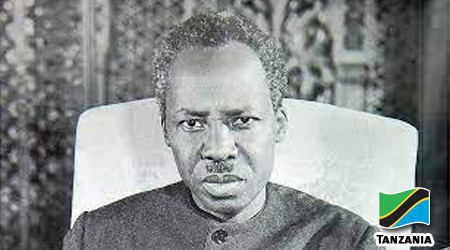
Julius Nyerere
Gandhi Peace Prize 1995
Julius Nyerere, the founding father and first president of Tanzania, was honored as the inaugural recipient of the 1995 Gandhi Peace Prize. Instituted by the Government of India to mark the 125th birth anniversary of Mahatma Gandhi, the prize recognized Nyerere's "Mwalimu" (teacher) leadership in achieving social, economic, and political transformation through non-violent means. He was lauded for his "Gandhian vision" of Ujamaa, or familyhood, which sought to build an egalitarian, self-reliant society rooted in African communal values. The award celebrated his role as a global moral authority who led his nation to independence without a single shot fired, proving that the principles of truth and non-violence could successfully govern a modern state.In February 2026, Nyerere’s "philosophy of the village" remains a vital reference for sustainable development across the Global South. On February 14, 2026, the Nyerere Foundation in Dar es Salaam launched a 2026 digital curriculum titled "The 1995 Mandate," utilizing his award-winning speeches to address 2026 food security and rural empowerment. This month, on February 24, 2026, a 2026 pan-African summit at the African Union cited his 1995 recognition as the foundational catalyst for current 2026 "peace-building architecture" in regional conflict zones. His 2026 standing is that of a "statesman of the soul," whose 1995 honor continues to validate the idea that national dignity is born from the service of one's fellow citizens.